
Last updated November 14, 2026
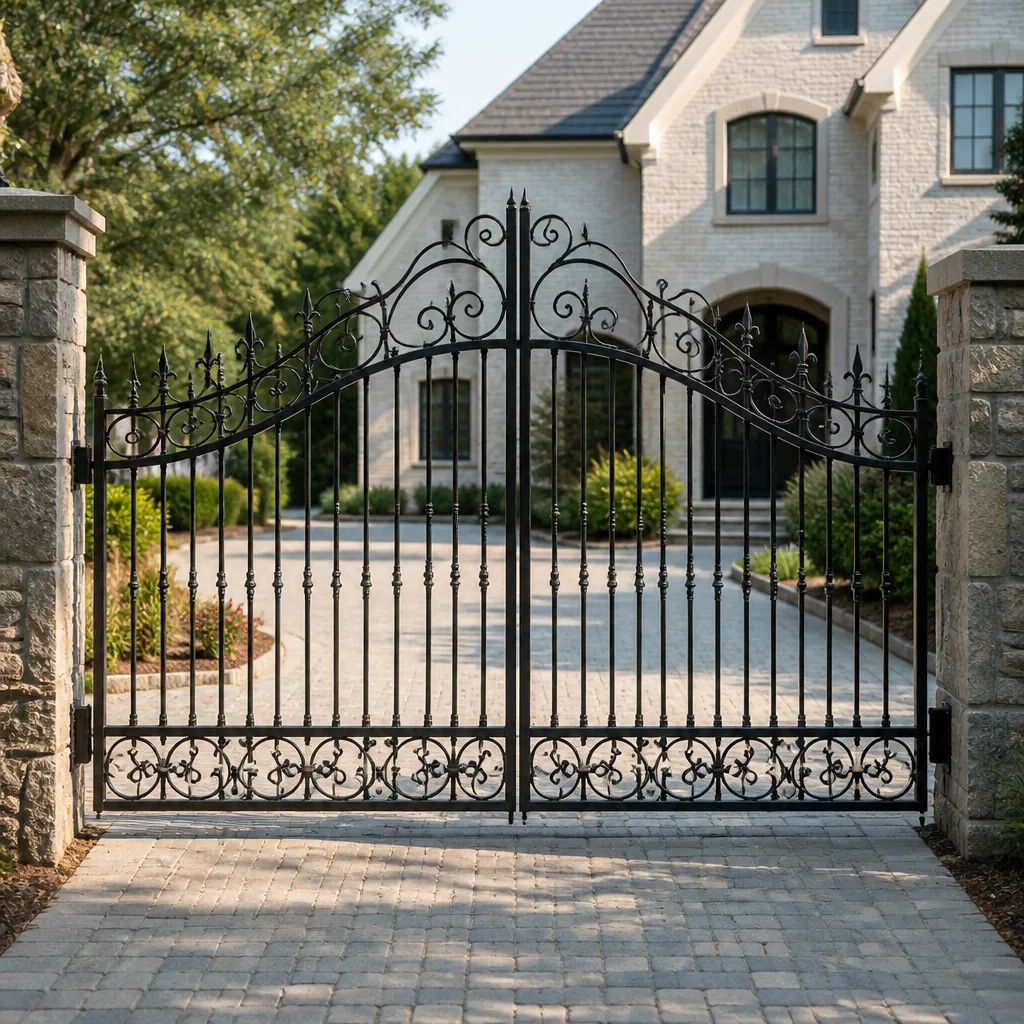 Wrought iron
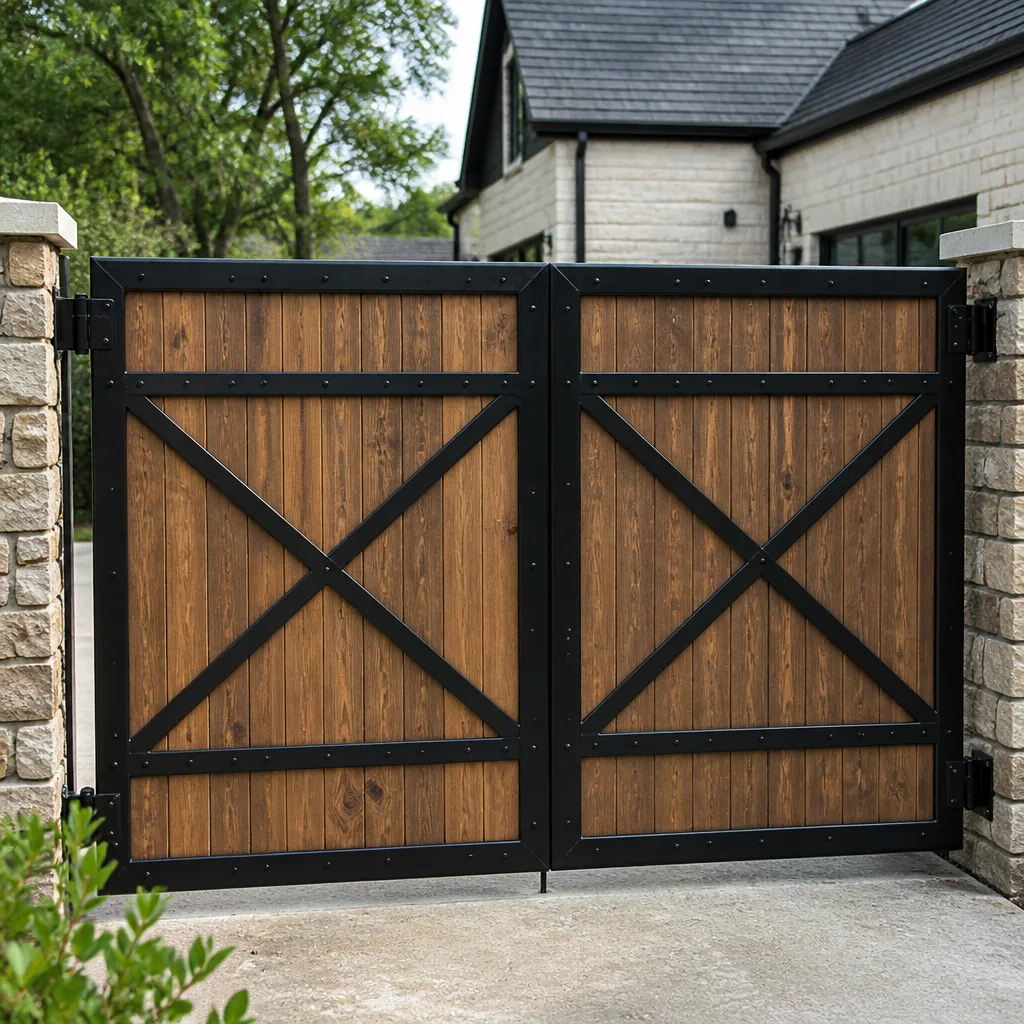 Wood & steel frame
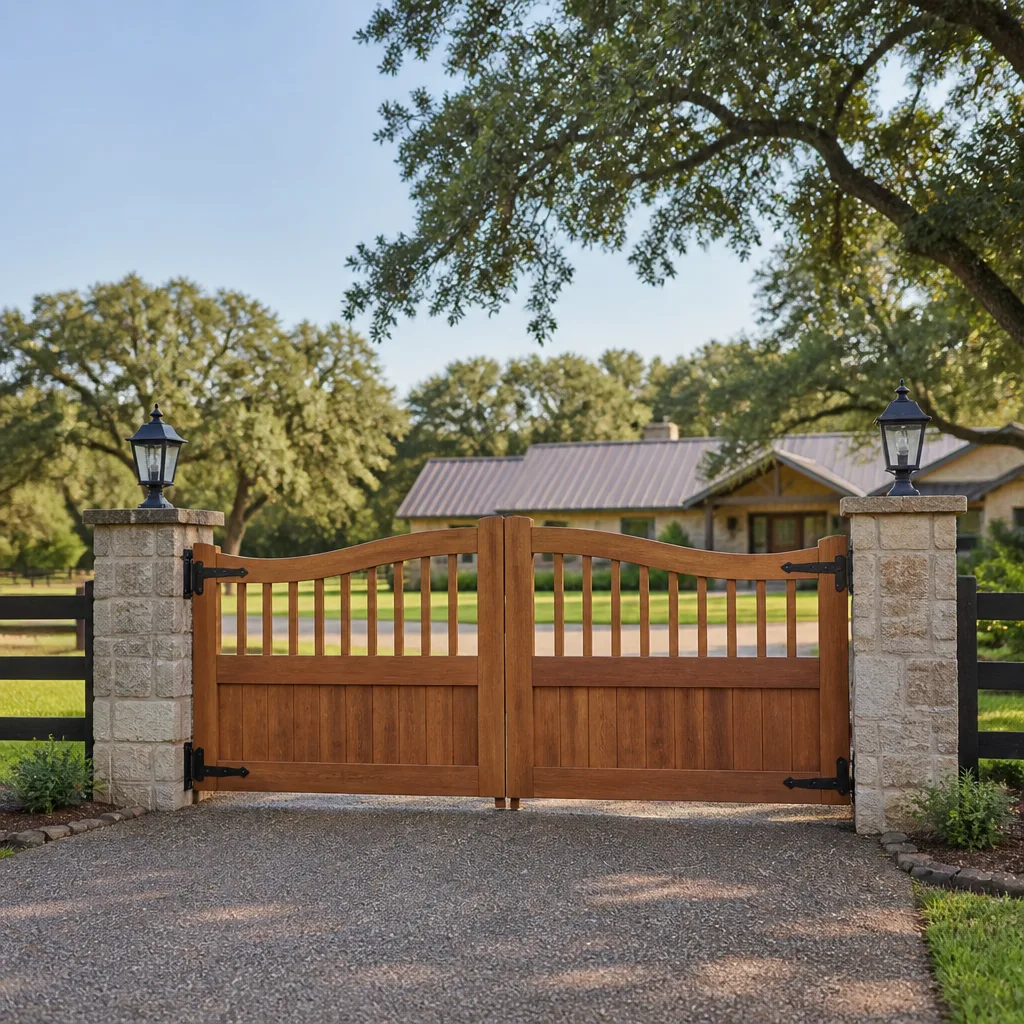 Farm & ranch
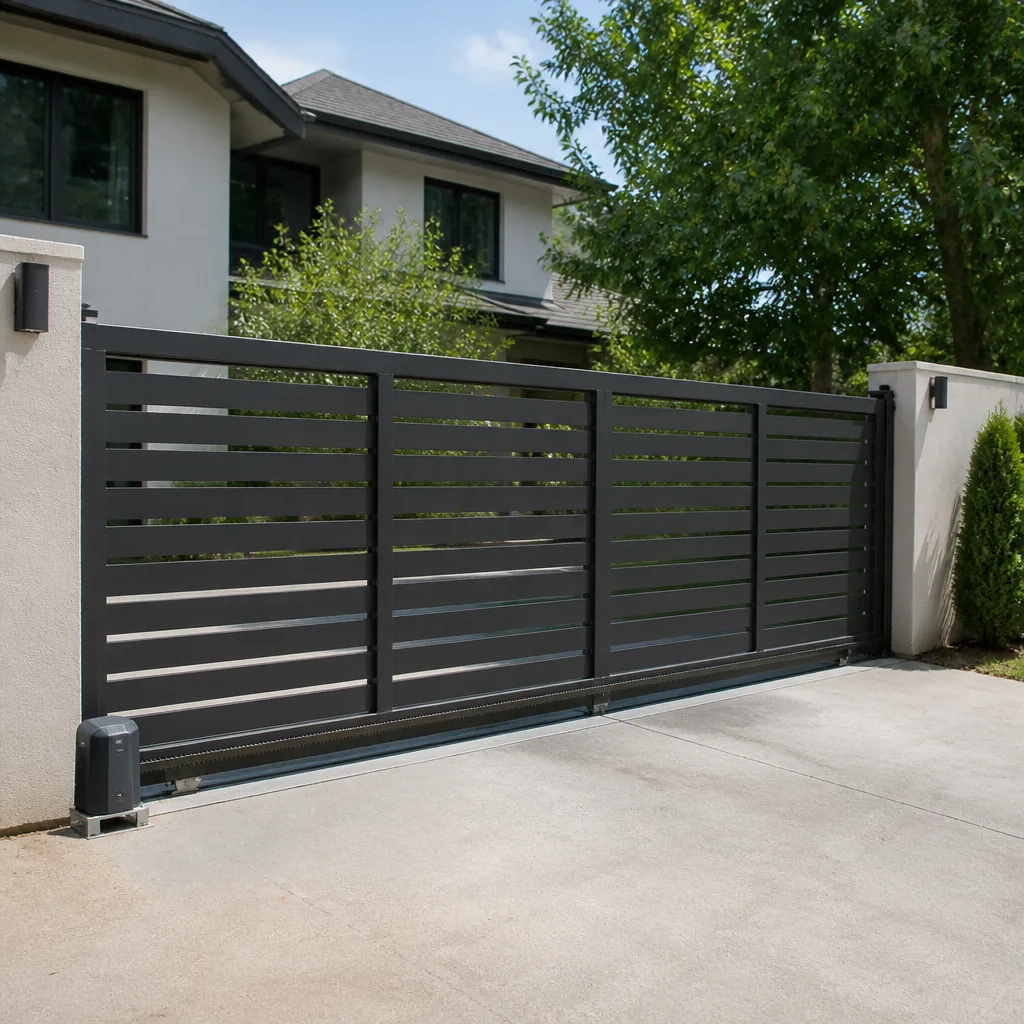 Sliding driveway gates
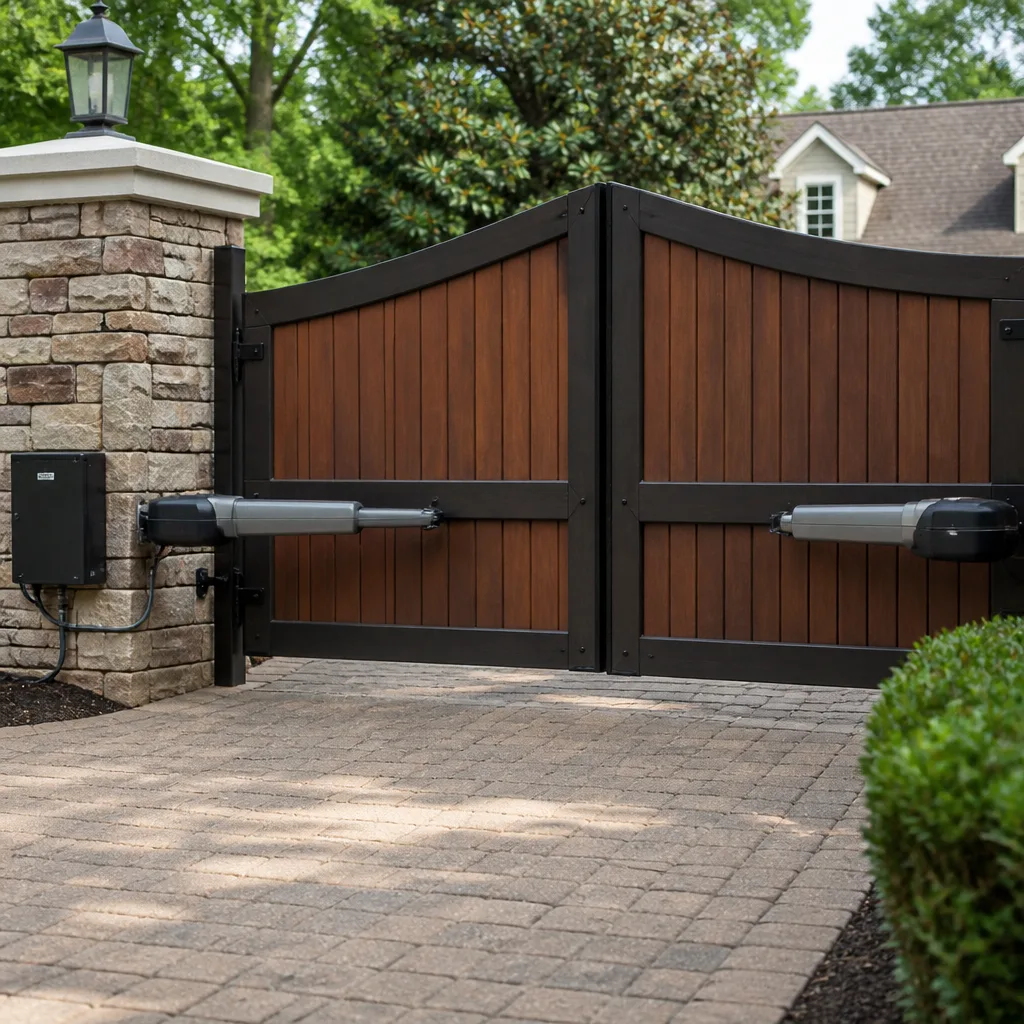 LiftMaster operators
Free on-site gate assessment - hinges, posts, and your LiftMaster or Nice gate operator checked before anything is quoted
The assessment is free and the quote is the invoice.
Get your free estimateGate Repair Permits, Codes & Inspections in Hillsboro, OR: What You Need to Know
Most homeowners in Hillsboro assume that gate repair never needs a permit. For plenty of jobs, that’s true, and the assumption can make the whole process faster and cheaper. But the assumption goes wrong the moment the work touches the operator’s electrical supply, the control board wiring, or a structural footing. A contractor who tells you “you don’t need a permit for this” without first asking whether your operator is hardwired to a dedicated circuit or whether a footing is being replaced is guessing. You own the liability if they guess wrong. This guide breaks down the actual thresholds in Oregon and Washington County, what public records are worth keeping, and how to tell the difference between a mechanical repair and a permitted electrical or structural project.
Quick Answer
In Hillsboro, routine gate repair – adjusting hinges, replacing a roller, swapping a remote, repairing a manual latch – typically does not require a permit. Work that touches line-voltage electrical (a hardwired operator, new circuit, control board replacement involving power wiring) generally requires an electrical permit under the Oregon Electrical Specialty Code. Replacing a gate post or footing, or altering a structural support, usually triggers a Washington County building permit. A licensed contractor should be able to tell you which side of the line your job falls on before any work begins.
Styles & brands we work with
- Wrought iron
- Wood & steel frame
- Farm & ranch
- Sliding driveway gates
- LiftMaster operators
Table of Contents
- Where Does Gate Repair Trigger a Permit in Hillsboro?
- When Does Gate Work Need an Electrical Permit in Oregon?
- When Does Washington County Require a Building Permit for Gate Work?
- What Counts as “Like-for-Like” Replacement?
- How Unpermitted Work Affects Insurance and Oregon Disclosure
- The HOA and CC&R Overlay in Hillsboro Planned Communities
- What a Compliant Inspection Record Looks Like
- How to Vet a Gate Contractor for Code Compliance
Where Does Gate Repair Trigger a Permit in Hillsboro?
The threshold is not about the gate itself. It’s about what the repair touches. Hillsboro sits within Washington County, which operates its own building department and enforces the Oregon Structural Specialty Code and the Oregon Electrical Specialty Code alongside the city’s development rules. Whether a repair falls under those codes depends on the scope, not on what the gate looks like when the technician pulls into the driveway.
A rough way to sort it:
- No permit typically required: Hinge replacement, roller and track lubrication, manual latch work, remote programming, battery replacement, sensor alignment that involves only the low-voltage side of the operator, and general preventative adjustments.
- Electrical permit territory: Adding or relocating a dedicated circuit for a hardwired operator, replacing a control board when the repair involves disconnecting and reconnecting line voltage, replacing a hardwired operator with a new hardwired unit, or running new wiring to a keypad or intercom pedestal.
- Building permit territory: Replacing a gate post that has rotted, cracked, or shifted, re-pouring a footing, changing the size or weight rating of the gate leaf, or altering a structural support that the mechanism relies on.
Two-level homes in the Jackson School neighborhood and older properties off West Main tend to have manual gates that fall into the first category. Newer builds in Reed’s Crossing and South Hillsboro are more likely to have hardwired operators on dedicated circuits, which pulls the second category into play. That difference matters because a technician who mostly works on manual gates may not recognize when a hardwired repair crosses into electrical permit territory.
When we do an on-site estimate, we ask two questions before quoting anything: how is the operator powered, and is any part of the post or footing being replaced? Those two answers determine whether the job is a straight repair or a permitted project. A contractor who skips those questions is guessing.
When Does Gate Work Need an Electrical Permit in Oregon?
The Oregon Electrical Specialty Code applies to line-voltage work. If a repair involves disconnecting and reconnecting conductors that carry mains voltage, the work falls under the code, and the person doing it is expected to hold the appropriate electrical license. That’s the line. A plug-in operator that runs on a low-voltage transformer and lives in a weatherproof enclosure is not the same job as a hardwired operator tied into a dedicated circuit at the panel.
Here’s how the two categories usually sort out:
- Plug-in, low-voltage operators: Many residential systems – including many Ghost Controls and Linear residential units – are designed around a plug-in transformer that steps mains power down to low voltage before it reaches the control board. Repair work on the low-voltage side typically does not trigger an electrical permit.
- Hardwired, line-voltage operators: Commercial-grade systems from BFT, and residential operators wired into a dedicated circuit rather than a plug, involve line voltage at the operator. Repair or replacement of the supply side or the terminal connections generally falls under the Oregon Electrical Specialty Code and needs a licensed electrical contractor if a permit is pulled.
- New circuits or new wiring runs: Running a new dedicated circuit from the panel to the gate, or adding wiring to a new keypad pedestal or intercom, is electrical work. It needs a permitted electrical contractor, and the inspection happens before the circuit is energized.
A gate technician who handles motor, control board, and sensor diagnosis but is not licensed for line-voltage electrical work cannot legally perform the supply-side portion. That’s not a knock on the technician – it’s how the codes divide responsibility. The right answer on a hardwired job is usually a two-part project: the gate specialist handles the mechanical and operator control side, and a licensed electrician handles the line-voltage supply. A contractor who pretends otherwise is taking on risk they may not be licensed to carry.
One detail worth knowing: unpermitted electrical work is not always obvious. A connection that works today can fail inspection years later when a home is sold and a buyer’s inspector looks closely at the panel schedule. The best practice is to ask, before any work starts, whether the repair touches line voltage. Get the answer in writing on the estimate.
When Does Washington County Require a Building Permit for Gate Work?
Washington County’s building department enforces the Oregon Structural Specialty Code, and the trigger for a permit on gate work is structural, not cosmetic. Adjusting, lubricating, or repairing moving parts is generally not a permitted activity. Replacing a footing, changing the post, or altering the gate’s structural support is.
The clearest way to sort it: is the repair restoring something to the condition it was in, or is it replacing the structural elements themselves? Restoring is repair. Replacing a post that’s rotted or a footing that’s shifted is usually a permitted project.
- Step one: identify what’s being replaced. If the rotted post is the only thing coming out, and a new post of the same dimensions and embedment goes in, that’s a post replacement. A building permit is typically required.
- Step two: check the footing depth. A post that failed because it was set too shallow needs a new footing, not just a new post. Footings go to proper depth for the soil and the load; the inspector will want to see the excavation before the concrete is poured.
- Step three: submit a drawing. Washington County generally wants a simple site plan and a post/footing detail before issuing a permit for a gate post replacement. The drawing shows the gate location, the post size, and the footing dimensions.
- Step four: schedule the inspection. Footing inspections usually happen after the hole is dug and before the pour. Final inspection happens after the post is set and the gate is hung.
Hillsboro properties on sloped lots – common in the hills west of town and in older neighborhoods with grade changes – tend to see more footing failures because runoff moves against the post. A gate on a slope that leans after heavy rain is a footing problem, not a hinge problem. If the footing is being replaced, that’s a Washington County permit project, not a repair call.
When a structural element is involved, an on-site estimate is the right starting point. Nobody can price a footing replacement over the phone. Call (855) 251-3899 for a free estimate; the written quote is what sets the final price, and it’s always agreed before any work begins.
What Counts as “Like-for-Like” Replacement?
“Like-for-like” is the phrase that gets tossed around in gate work the most, and it’s the one homeowners misunderstand most often. In practical terms, like-for-like means the new component matches the old one in size, weight rating, material, and function – and it’s installed in the same location without changing the structural system or the electrical load.
Here’s what usually qualifies:
- Replacing a drive motor on a LiftMaster operator with a motor of the same model line and rating, in the same housing, on the same mount.
- Swapping a BFT control board for a board of the same model number, wired the same way to the same terminals.
- Replacing a remote or a keypad with a unit that programs to the existing operator without adding a new circuit.
- Replacing a bent roller, a worn hinge, or a manual latch with a component of the same dimensions.
What usually does not qualify:
- Replacing a hardwired operator with a plug-in unit, or vice versa – that changes the electrical supply and typically needs an electrical permit.
- Upgrading from a single-swing to a dual-swing gate, or from a sliding gate to a swing gate – that’s a new installation, not a replacement.
- Swapping a lighter-duty operator for a heavier one that draws more current, because the circuit may need to be upgraded.
- Replacing a post with a different material grade (for example, standard pressure-treated for a post that had been set in a concrete collar with a larger footprint) – the footing is part of the structural system.
A useful check: if a homeowner sells the property in three years, could they explain the repair to a buyer’s inspector using only the written record? If the answer is yes, it’s likely like-for-like. If it involves “we swapped out the whole thing for a newer model,” the file needs a permit, not just a receipt.
How Unpermitted Work Affects Insurance and Oregon Disclosure
Unpermitting is rarely a same-day problem. It becomes a problem the first time a claim is filed, or the first time the house goes on the market. Oregon’s Seller’s Property Disclosure Statement asks the seller to disclose material facts about the property, and a permitted-versus-unpermitted repair history sits squarely in that category. When a buyer’s inspector flags a hardwired operator with no permit history, the seller is the one answering questions.
On the insurance side, the sequence looks like this:
- A gate-related loss happens. A hardwired operator shorts out and damages a control board, or a footing failure causes the gate to fall on a vehicle.
- The adjuster looks at the repair history. If the wiring or footing was recently replaced, the adjuster will ask for the permits and inspection records. No records means a coverage question.
- The claim is adjusted or denied based on the record. Unpermitted electrical work is one of the fastest ways to turn a covered loss into a denied claim, because the insurer can argue the installation itself was the cause.
- The homeowner retains the problem. Whether or not the claim is paid, the unpermitted work stays in the property’s history.
None of this happens on a routine hinge replacement. It happens on jobs where the scope crossed the permit line and nobody wrote it down. That’s why the estimate document matters – the written record is what makes a repair defensible years later. A gate company that specializes exclusively in gate systems knows which repairs cross the electrical or structural thresholds. A handyman or fence company that touches gates occasionally may not, and the homeowner carries the exposure either way.
It’s worth asking any contractor, before work begins, whether the job needs a permit. If they can’t answer clearly, that’s the answer you need.
The HOA and CC&R Overlay in Hillsboro Planned Communities
Hillsboro’s newer planned communities – Reed’s Crossing, South Hillsboro, parts of the AmberGlen area, and the cluster of developments along the west side of town – add a private layer to the public code requirements. The HOA’s CC&Rs and architectural review process sit on top of the Washington County permit requirements. Both apply. Neither replaces the other.
What the HOA layer usually covers:
- Exterior appearance. Gate color, material, finish, and style must match the community’s approved palette. A new gate or post of the wrong color usually gets flagged.
- Architectural review before work. Most associations require an architectural review application before structural changes – including post replacement – proceed. Some also require it before adding or replacing an operator.
- Noise and operating hours. For commercial or shared-access gates, some associations restrict operator noise levels or the hours the gate cycles. This is where a brand choice matters – a quieter operator from Linear or a smoothly ramped unit from BFT can avoid a complaint that a heavier or older operator would trigger.
- Restricted contractors. Some HOAs maintain an approved-contractor list. Even if the work itself doesn’t require a permit, using an unapproved contractor can create a separate compliance issue.
The practical order of operations for a Hillsboro HOA property is: architectural review first, Washington County permit second (if the scope triggers one), work third, inspection fourth, and a copy of every document into the home file. Doing these out of order usually means re-doing an inspection or a paint color.
Not every Hillsboro neighborhood has an HOA. Older areas around downtown, Jackson Bottom, and the streets just off Cornell and Baseline mostly don’t. But where they exist, the extra layer is real, and a gate contractor who has worked in Reed’s Crossing or South Hillsboro before will know the pattern.
What a Compliant Inspection Record Looks Like
The inspection record is the file you want to be able to hand to a buyer’s inspector in five years. It’s not just the permit card – it’s the paper trail that shows what was done, by whom, and to what standard. When a gate job crosses into permitted territory, a proper record contains six things.
- The permit application and issued permit. A copy of the permit with its number and issue date, kept alongside the estimate.
- The inspector’s sign-off. For electrical permits, this is the final inspection sticker or signed card. For building permits on a post replacement, it’s the footing inspection approval and the final inspection sign-off.
- The contractor’s license number and the license classification. The record should show who performed the work and under what license.
- The manufacturer’s documentation for the operator or components. The model, the serial number, and the installation manual – especially important for control board replacements on brands like BFT or Linear, where a different board revision changes the wiring.
- A dated photo record. Before and after photos of the work, including the footing excavation if a post was replaced, and the panel connection if a hardwired operator was involved.
- The final written estimate and invoice. Both documents should show the pre-agreed price, which is the number that sets the final amount, and clear language about what was and wasn’t permitted.
Ask any contractor for the file at the close of the job. A gate specialist who works in permitted territory regularly already has the format; a contractor who rarely pulls permits may not. The request itself is a good test of who you’re hiring.
How to Vet a Gate Contractor for Code Compliance
The questions below are what separates a gate specialist from a generalist who happens to own a gate tool. Ask them before the estimate, not after.
- “Is your license active and what class is it?” Confirm it for the work being proposed. A gate repair license and an electrical contractor’s license are not the same thing.
- “Does this job touch line voltage, and if so who is doing that part?” On a hardwired operator repair, the answer should be a licensed electrical contractor. If it isn’t, ask why.
- “Will this repair trigger a Washington County building permit?” If a post or footing is being replaced, the answer should be yes. If the contractor says no without inspecting, get a second estimate.
- “How will you document the work for my home file?” A gate specialist produces a file by default. A generalist usually hands you a receipt and drives off.
- “What’s the write-up on my operator when you finish?” Brands vary widely. A system running on a Viking or Ghost Controls residential operator has different control board behavior than a commercial FAAC or DoorKing unit. A technician fluent in the specific brand will describe the failure clearly, not guess at it.
Our technicians have up to 8 years of experience diagnosing and repairing gate systems across nine major brands, including commercial and residential lines, and we work within Washington County’s permit framework when a job crosses the line. If your gate is electric and the repair touches the supply side, we’ll tell you clearly which part of the job needs a licensed electrician. Gates are all we do, and we’d rather say so than guess.
Common Mistakes to Avoid
- Assuming every repair is permit-free. Mechanical repairs usually are. Electrical supply work and footing replacements in Hillsboro usually are not. Sort the scope first, then decide about the permit.
- Letting a handyman touch a hardwired operator. A general handyman is not licensed for line-voltage electrical work. If the job crosses that line, the work needs a licensed electrical contractor, and the gate specialist handles the operator and mechanical side.
- Skipping the HOA architectural review in Reed’s Crossing or South Hillsboro. The county permit is one layer; the HOA review is another. Both need to happen, and usually in that order.
- Replacing a post without replacing the footing. In Hillsboro’s clay-heavy soils, a new post set in an old footing usually fails again within a season. Footing and post go together, and the footing is where the Washington County permit lives.
- Taking a verbal “you don’t need a permit” at face value. Get the permit answer in writing on the estimate. If the answer changes later, you have the paper trail.
- Not keeping the inspection record. The permit card, the sign-off, and the photos are the file. Without them, a future buyer’s inspector has questions and you have fewer answers.
- Choosing a contractor by price alone on a hardwired job. A low bid on a line-voltage repair sometimes means the electrical portion is being folded into the gate bill without the license to back it. Ask who’s doing the electrical work, and verify the class.
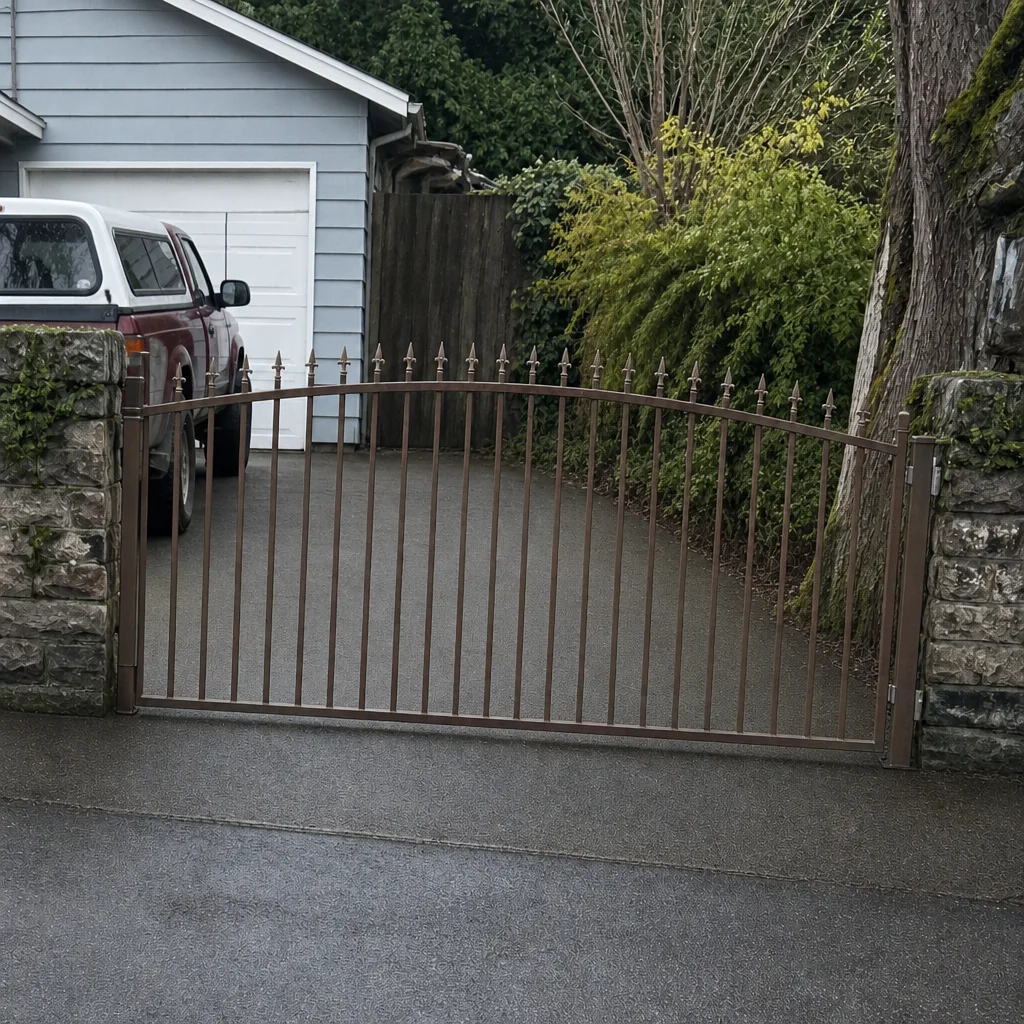
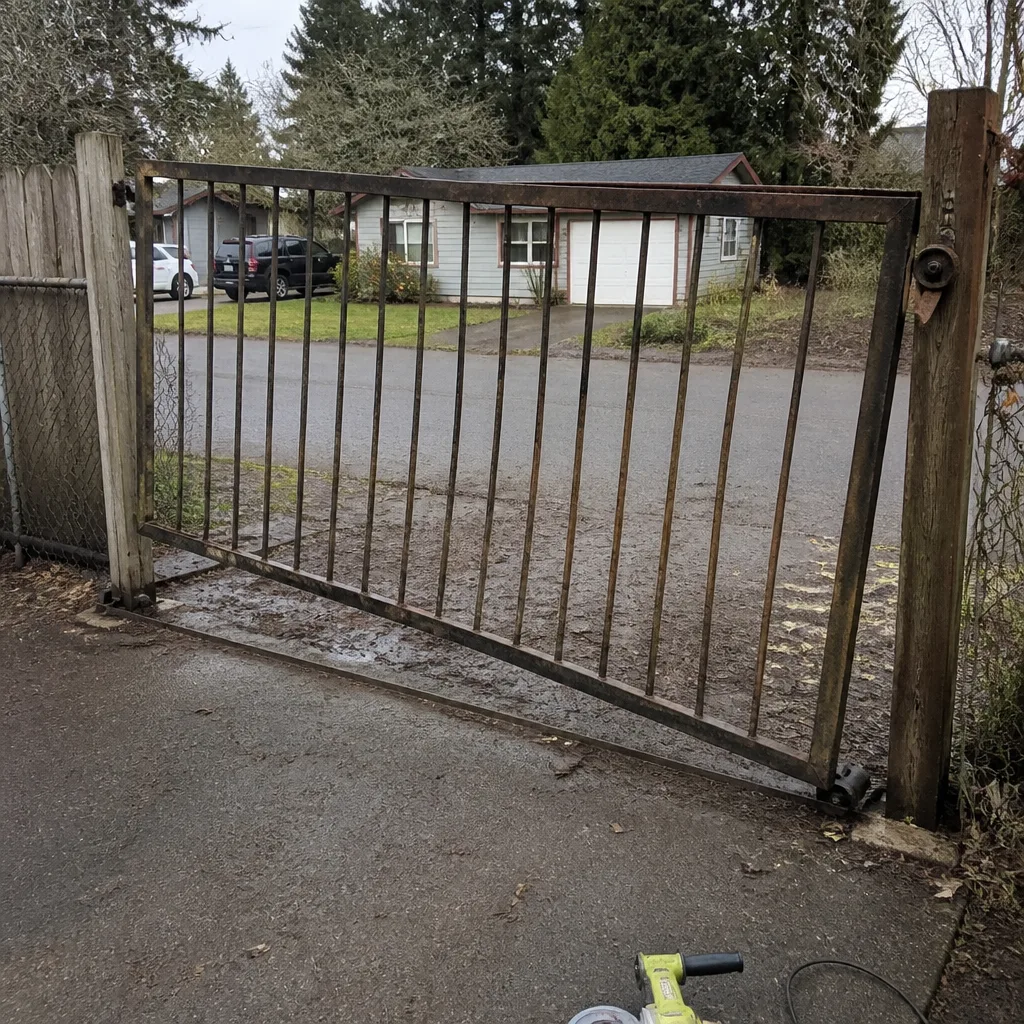
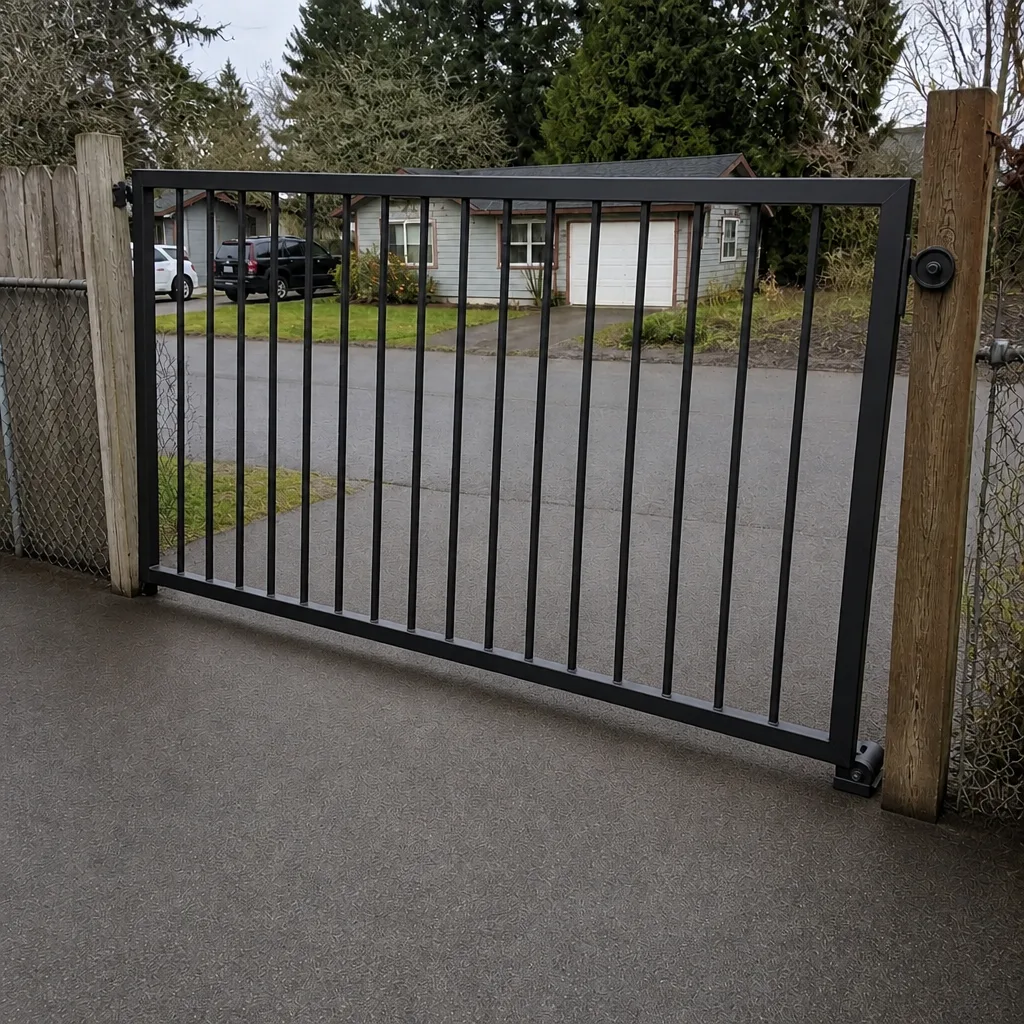
See the difference
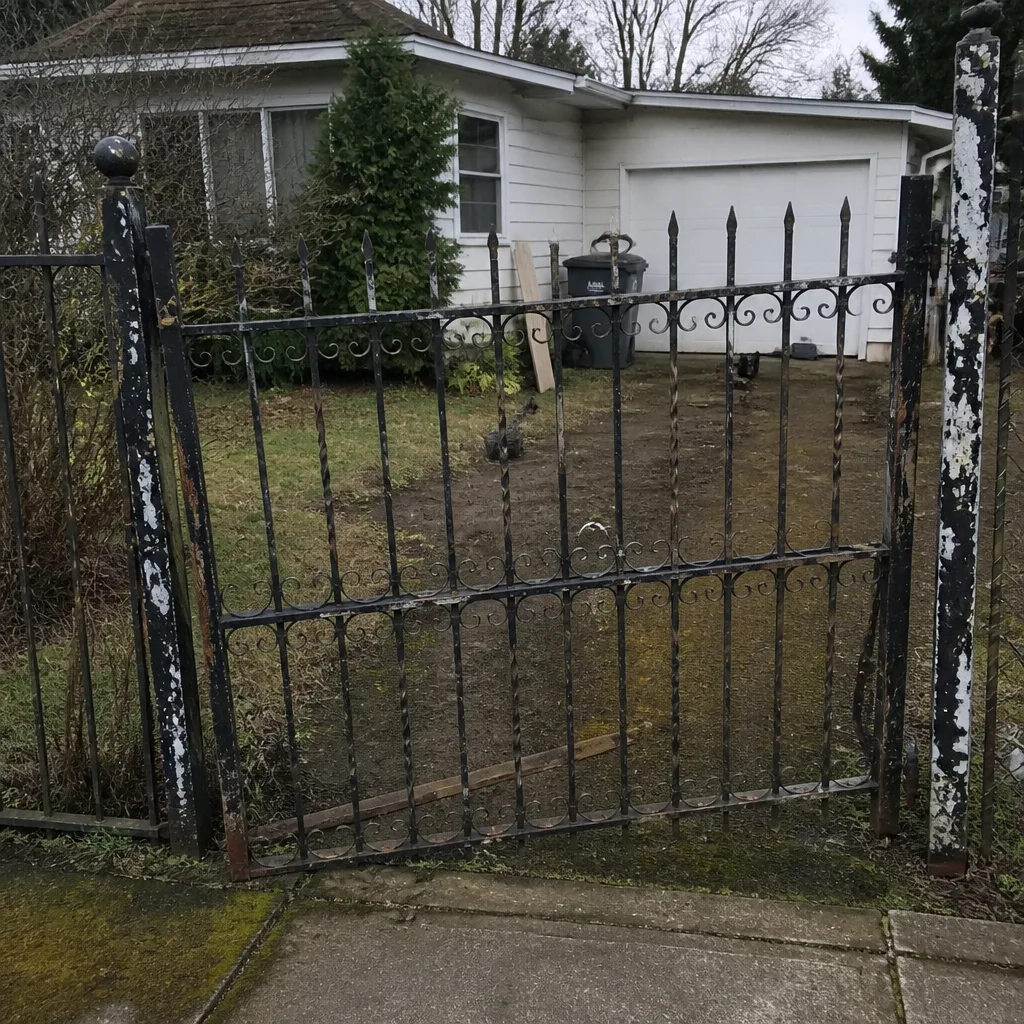 Before
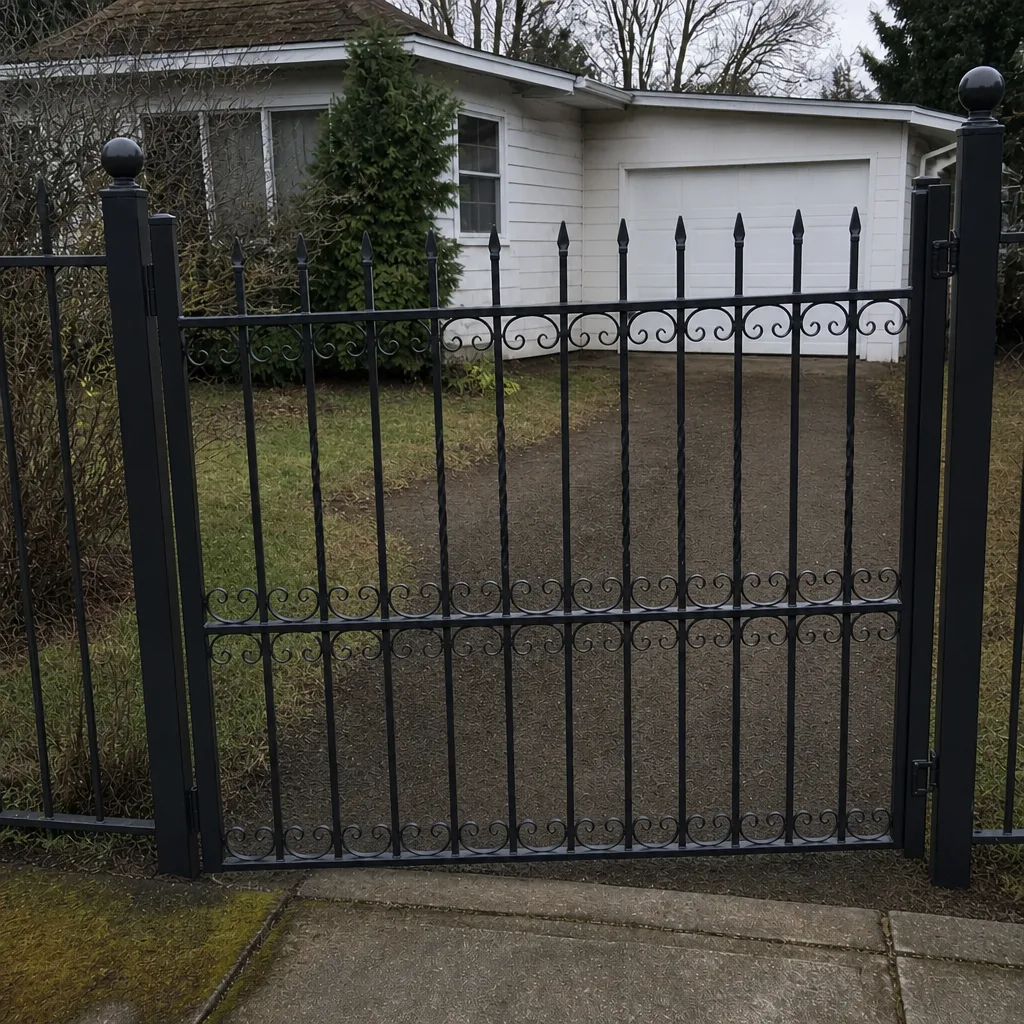 After
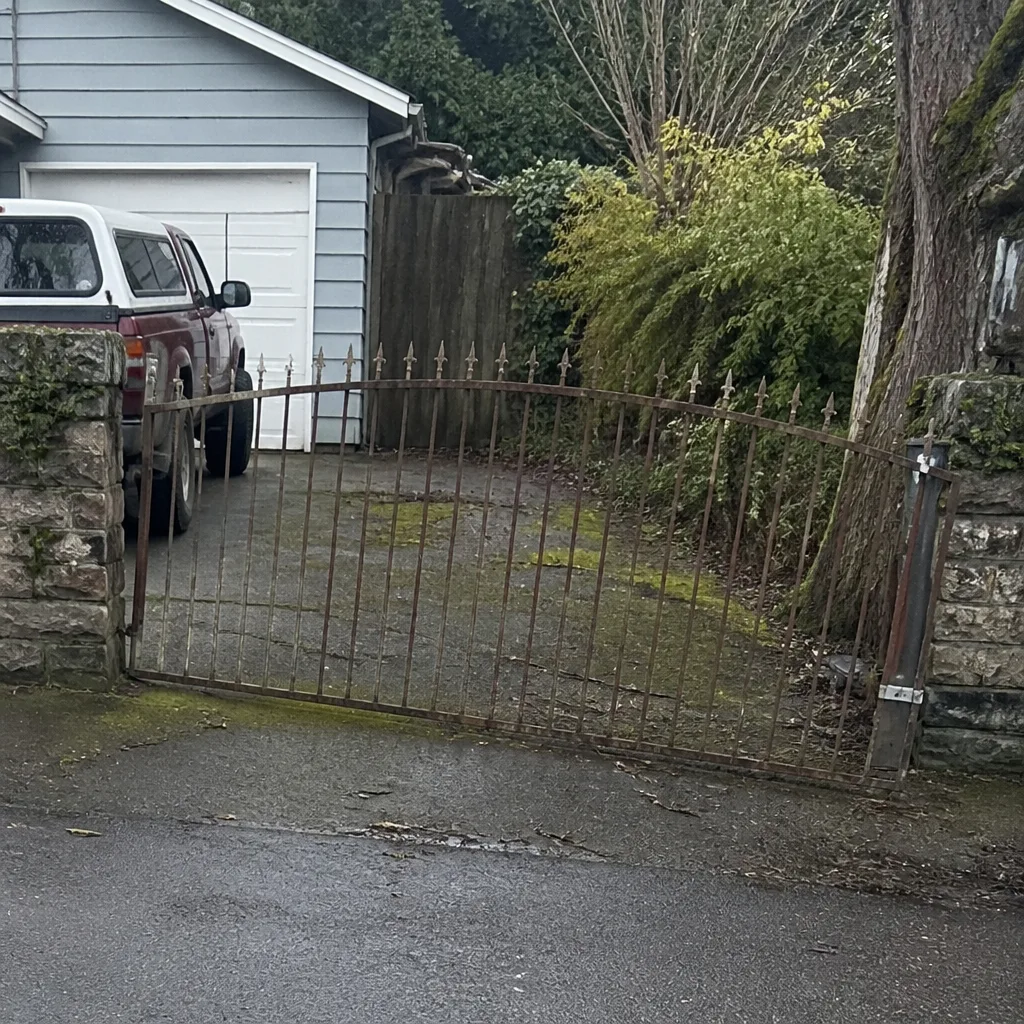 Before
 After
 Before
 After
When to Call a Professional
Call a gate specialist when the gate won’t open or close reliably, when the operator cycles and stops, when a keypad or remote stops programming, or when the gate has started to sag. On a Hillsboro property, also call when the gate leans after heavy rain – a footing problem is not something to fix with a wrench. If the repair touches a hardwired operator’s electrical supply or replaces a footing, the work is in permitted territory and needs the right license on the job. Our gate repair Hillsboro team handles both the mechanical side and the operator diagnosis, and we work with licensed electricians when a job crosses into line-voltage territory. Gate Repair Hillsboro offers free estimates in Hillsboro – call (855) 251-3899.
Frequently Asked Questions
It depends on what the repair touches. Mechanical repairs to a manual gate or to the mechanical components of an automated gate generally do not need a permit. Repairs that touch a hardwired operator’s electrical supply, run a new circuit, or replace a structural footing usually do – electrical work falls under the Oregon Electrical Specialty Code and post or footing replacements fall under Washington County building permits. Call (855) 251-3899 for a free estimate; we’ll tell you which category your job is in before any work starts.
When the operator is hardwired to a dedicated circuit, yes – replacing it typically requires an electrical permit and a licensed electrical contractor to perform the line-voltage supply work. When the replacement unit is a plug-in, low-voltage operator and the existing plug-in setup stays as-is, an electrical permit usually isn’t triggered. The written estimate should spell out which scenario applies to your property. Call (855) 251-3899 with the model number of your existing operator and we can talk through the likely path.
Usually yes. A gate post replacement is a structural change, and Washington County generally requires a permit with a footing inspection before the concrete is poured and a final inspection after the gate is hung. Repairing a post that’s still structurally sound – tightening hardware, shimming, re-anchoring – is different from replacing the post, and repair work usually doesn’t trigger the permit. When in doubt, ask the county building department directly. Call (855) 251-3899 for a free on-site estimate; nobody can price a footing replacement over the phone.
Unpermitted electrical or structural work can turn a covered insurance claim into a denied one, because the insurer can argue the unpermitted installation caused the loss. On the sale side, Oregon’s Seller’s Property Disclosure Statement asks about material facts, and unpermitted repair history is material. The safeguard is a written record: permit number, inspection sign-off, contractor license class, and dated photos kept with the home file. Call (855) 251-3899 and we’ll walk through what your file should include.
Often yes. Associations in Reed’s Crossing, South Hillsboro, and other planned communities typically require an architectural review application before structural changes, and some require it before operator replacement. The HOA approval is a private permission layer that sits on top of Washington County permits – both apply, neither replaces the other. Ask your HOA for the written architectural review process before scheduling the work. Call (855) 251-3899 if you’d like help reading the CC&R language about gates.
We service nine major brands, including commercial-grade systems from FAAC, BFT, and DoorKing and residential lines from LiftMaster, Linear, Viking, Ghost Controls, Elite, and Mighty Mule. That breadth matters when a repair crosses into control board or operator diagnosis, because the correct replacement part depends on the specific brand and model. Understanding the brand is the difference between a diagnosis and a guess. Call (855) 251-3899 for a free estimate on any of these systems.
The Bottom Line
The permit question on gate work in Hillsboro comes down to two thresholds: line-voltage electrical and structural footings. Mechanical repairs and low-voltage work usually stay in permit-free territory. Hardwired operator work crosses into the Oregon Electrical Specialty Code and usually needs a licensed electrical contractor. Post or footing replacement crosses into the Washington County building permit process and needs an inspection before the concrete goes in. HOA architectural review sits on top of both in planned communities. The single habit that protects a homeowner is getting the permit answer in writing on the estimate, and keeping the inspection record in the home file. If the scope changes on the day of the work, the file is what makes the change defensible. Read more about gate repair and electric gate repair on our service pages, or learn about the neighborhoods we work in across Hillsboro.
If you’re not sure whether your gate job crosses into permitted territory, that’s the right time to call. Gate Repair Hillsboro offers free estimates and we’ll tell you clearly which part of the job needs a permit and which part doesn’t. Call (855) 251-3899. We answer 24/7. Fast dispatch from 7am to 7pm, Sunday through Friday.
Written by the team at Gate Repair Hillsboro.