
Last updated November 14, 2026
 Wrought iron
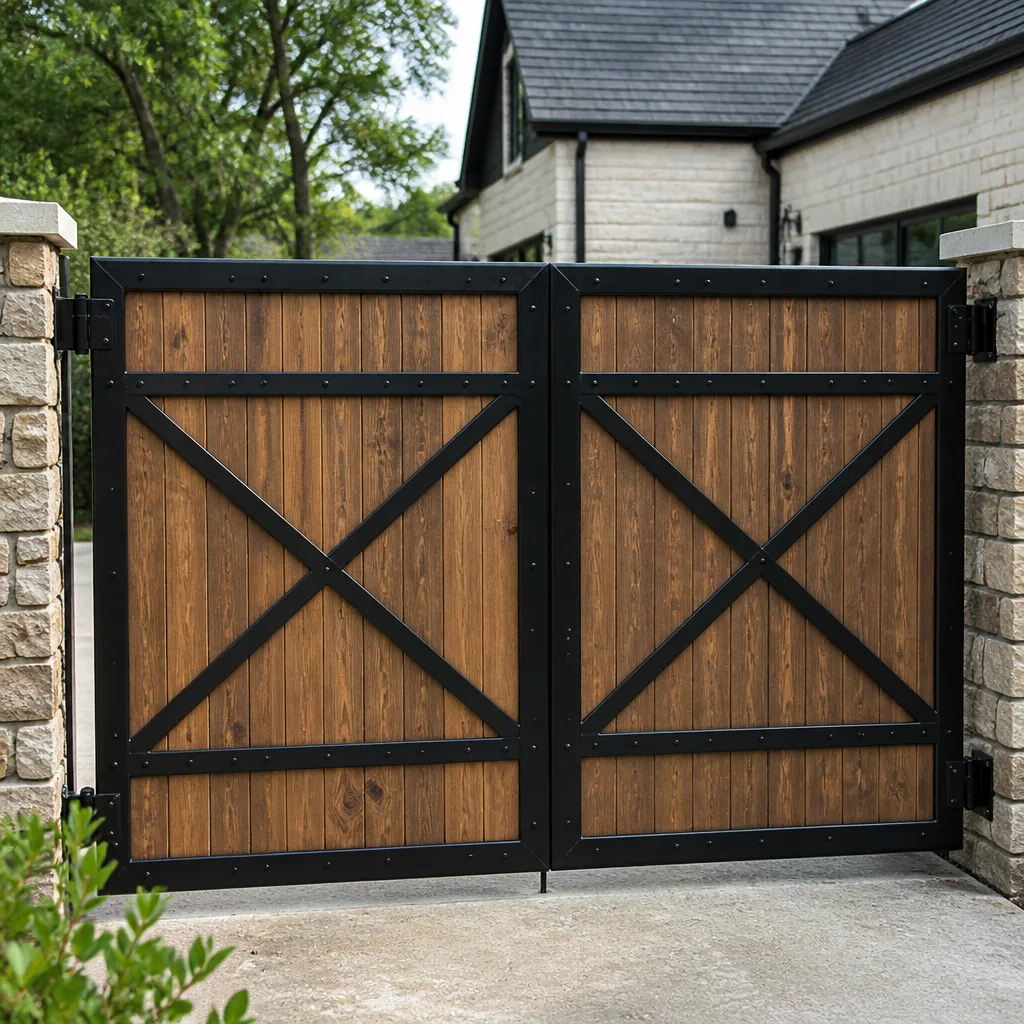 Wood & steel frame
 Farm & ranch
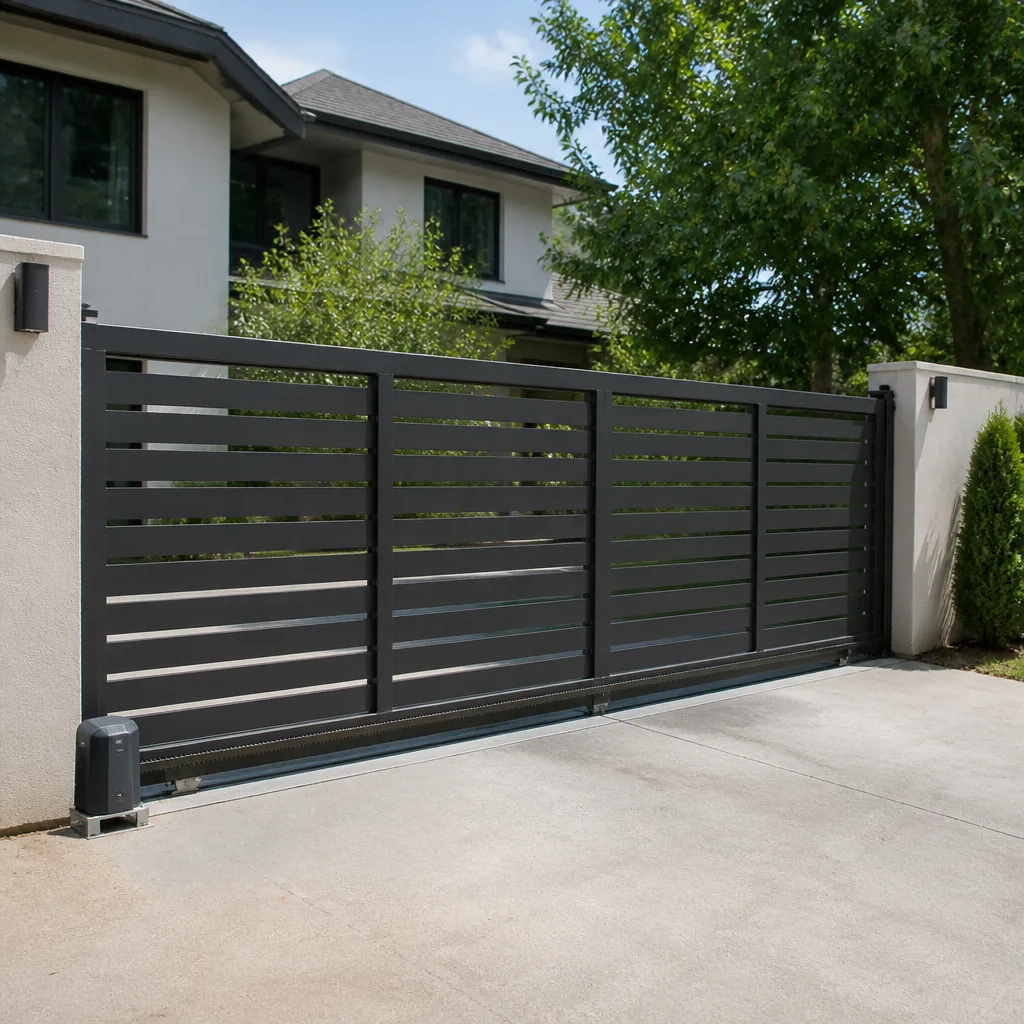 Sliding driveway gates
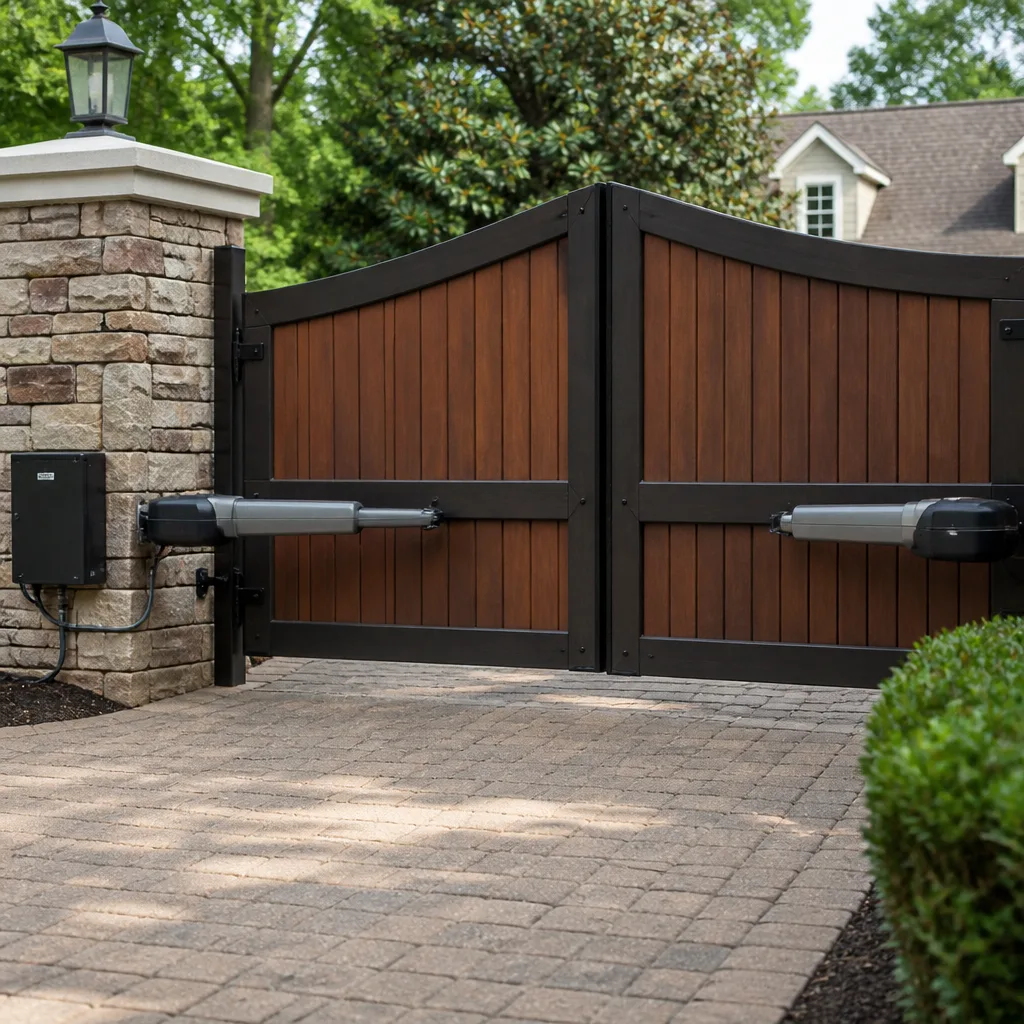 LiftMaster operators
Free on-site gate assessment - hinges, posts, and your LiftMaster or Nice gate operator checked before anything is quoted
The assessment is free and the quote is the invoice.
Get your free estimateGate Repair Warning Signs: A Hillsboro Homeowner’s Reference Guide
“It’s just getting a little slow” is the sentence we hear most often before a repair bill grows. Slow is not a symptom; it’s a category. A gate that hesitates before it moves and a gate that starts, stalls, then starts again feel similar from the driver’s seat, yet one points to a control board input delay and the other to a force overload mid-travel. Different components. Different repair paths. Different cost. This guide maps twelve observable behaviors to the parts most likely to blame, decodes what grinding, clicking and humming actually tell you, and explains why Hillsboro’s wet winters surface faults that drier climates hide. Read it once, and you’ll describe your gate’s problem like a technician.
Quick Answer
Gate repair warning signs that matter most are changes in behavior, not vague “slowness”: reversing mid-travel, ignoring the remote but obeying the keypad, grinding on one side only, or a gate that restarts itself after stopping. Each behavior points to a specific component (limit switch, safety loop, operator gearbox, control board). In Hillsboro, wet-season moisture on limit switches and buried loop detectors is the most common driver of these symptoms. Any gate that reverses into a person or vehicle should be taken out of service until it’s diagnosed.
Styles & brands we work with
- Wrought iron
- Wood & steel frame
- Farm & ranch
- Sliding driveway gates
- LiftMaster operators
Table of Contents
- Behavior-to-Component Diagnostic Matrix
- What the Sound Tells You: Grinding, Clicking and Humming
- Why “It Works Fine Most of the Time” Is Often the Costliest Repair
- Safety-Critical Signs That Mean Stop Using the Gate
- Signs You Can Monitor for Now
- How Hillsboro’s Wet Conditions Create Specific Warning Patterns
- A Step-by-Step Homeowner Diagnostic Walk-Through
- When to Call a Professional
Behavior-to-Component Diagnostic Matrix
The single most useful thing a homeowner can do is describe the behavior precisely. “It’s acting up” gives a technician nothing. “It reverses about two feet into closing, every time, but only when it’s dark out” gives them a starting point. Here’s how twelve common behaviors map to the components we typically find responsible.
- Reverses mid-travel with no obstruction: most often a misaligned or moisture-fouled safety device – a photo-eye, safety edge, or loop detector logic fault. On Ghost Controls operators, phantom reverses often trace to a photo-eye knocked slightly out of line.
- Won’t respond to the remote but responds to the keypad: typically a receiver or remote pairing issue rather than the operator itself. Easier and cheaper than it sounds.
- Won’t respond to anything: control board, power supply, or a blown fuse at the operator. Electrical diagnosis territory, not a DIY fix.
- Starts, stops, then restarts: an in-travel force overload – the board senses resistance and backs off. Often a worn hinge, dragging wheel, or debris in the track rather than the operator.
- Hesitates two to three seconds before moving: control board input delay or a failing capacitor on the operator. Usually not a mechanical fault at all.
- Moves in one direction only: a limit switch stuck in its end-of-travel state, or a directional relay on the control board. Common on Linear and Viking slide operators.
- Grinding on one side only: mechanical – a hinge bearing, roller, or gearbox on that side. Never an electrical issue when it’s this localized.
- Slams or jolts at the end of travel: limit switch out of adjustment, or a failed soft-stop setting. On heavy swing gates this is a real liability.
- Drifts or sags when closed: hinge wear, post settling, or worn track rollers. On slide gates it can mean the gate is riding off the track.
- Beeps or chirps on its own: usually a low-battery indicator on a solar or battery-backup operator, or a safety device sending a fault signal.
- Stops halfway and stays put: an obstruction detected mid-travel that the board can’t clear, or a limit switch that’s lost position.
- Closes on a car or person despite an obstruction: safety device failure. This is a stop-use-immediately sign, covered in detail below.
We see all twelve of these regularly on gate repair calls across the Hillsboro area, and matching behavior to component is what turns a vague complaint into a same-day fix. Gates are all we do, so we’re not reverse-engineering a gate operator between other jobs.
What the Sound Tells You: Grinding, Clicking and Humming
Sound is a diagnostic shortcut. Within five seconds of hearing a gate operate, an experienced technician can often tell whether the fault is mechanical or electrical. Here’s the decoder.
Grinding
Grinding is almost always mechanical. It means metal is moving against metal without the interference it expects. On swing gates it’s most often a worn hinge bearing, a seized roller, or a gearbox losing lubrication. On slide gates it’s typically track debris, a worn wheel, or the gate riding off its track. Grinding gets worse, never better, and left alone it turns a bearing replacement into a hinge rebuild.
Clicking
A single click at the start of travel is normal – that’s a relay engaging. Repeated clicking without movement is usually the control board trying and failing to command the operator: a low battery, a stuck relay, or a safety loop cycling. Rapid clicking during reversal is frequently a loop detector re-triggering on a vehicle that’s already gone.
Humming
The operator hums but the gate doesn’t move. That’s the motor receiving power but the mechanism unable to turn – a bound hinge, a seized gearbox, or a foreign object jammed in the track. Stop and shut the system down if you hear this; running a humming motor strains it toward replacement.
Silence
No sound at all isn’t a symptom to ignore – it’s a signal. On a powered gate, silence with the remote pressed usually means the control board isn’t receiving the signal, power isn’t reaching the operator, or a fuse has blown. Electrical diagnosis, and not a homeowner task.
Why “It Works Fine Most of the Time” Is Often the Costliest Repair
Intermittent faults are expensive precisely because they’re intermittent. A gate that fails one morning in ten feels manageable, so the repair waits. Meanwhile the underlying condition – a moisture-fouled limit switch, a photo-eye that only faults in low light, a hinge that binds only after the morning cold – keeps working on whatever it fails against. When it’s a hinge, that’s your hinge. When it’s the control board, that’s your board.
Here’s the physics without the jargon: intermittent faults are threshold problems. A limit switch sits just below the threshold where it registers “at end of travel.” Most days, dry air keeps it below the threshold and the gate runs. On a wet morning, a drop of water in the switch housing pushes it over the threshold, and the gate faults. It self-clears within hours, so the fault looks gone. It isn’t. The threshold has shifted, and next wet morning it will fault again – and each fault stresses whatever component the gate relies on to recover.
The pattern to watch for is consistency. “Fails once a week” is not the same as “fails every time it rains,” and the differences are diagnostic. If your gate in Hillsboro fails more in winter and early spring than in summer, that’s a moisture-threshold fault. If it fails at the same time every morning, that’s temperature and thermal expansion. If it fails after a specific vehicle, that’s a loop detector sizing issue. Each of these is a different repair, and each is far cheaper to fix on the first symptom than after six months of failed recoveries.
Safety-Critical Signs That Mean Stop Using the Gate
Some warning signs let you keep operating the gate while you schedule a repair. Others mean the gate should come out of service today. Distinguishing between them is not a matter of judgment – it’s the difference between a scheduled repair and a serious injury.
Stop using the gate immediately if:
- The gate closes on a person, vehicle or object without reversing. Safety-device failure is the highest-risk sign in this guide.
- The gate reverses while someone is still in its path, then closes on its next cycle. This is a loop detector or photo-eye intermittently failing, and the safety device cannot be trusted.
- You hear humming with no movement. The motor is running against a jammed mechanism, and a gate can release suddenly when it gives.
- The gate swings or slides freely when the operator isn’t engaged – a mechanical failure of the gate itself that puts heavy panels outside operator control.
- You see scorching, a burning smell, or bare wiring at the operator housing or along the power run to the gate. Electrical hazards are not scheduled repairs.
For any of these, put the gate in manual and keep it there until a technician has diagnosed the fault. If your gate is on an access-control system or serves a business driveway, this is a property-manager call, not a wait-and-see.
Signs You Can Monitor for Now
Not every warning sign is a red alert. Some are yellow: worth watching, worth writing down, not worth disrupting access to your property today. These are the ones that let you schedule a repair on your terms.
- Gradual slowdown over weeks – a worn bearing, a tired capacitor, or a gearbox losing lubrication. Note when it started.
- Occasional grinding on one side – hinge wear. It’s not dangerous yet, but it will be as it worsens.
- A single remote that’s lost range – often just a battery, sometimes the receiver. Easy to test by trying the keypad.
- Intermittent reverse-with-no-obstruction that resolves within the same cycle. Still worth diagnosing – it may become a safety fault.
- Cosmetic surface rust on gate panels and hardware. Normal in Hillsboro. Not a warning sign on its own, but a prompt to check hinges and limit switches at the same time.
The rule of thumb: if the sign describes the gate working correctly, monitor it. If it describes the gate failing to do what it should, schedule a technician. Comfortable monitoring doesn’t mean ignoring the observation – keep a note of when the sign appears, how often, and what the conditions were. That note is the beginning of the diagnostic conversation. For a broader view of what we see and fix across the region, the Hillsboro service overview is the place to start.
How Hillsboro’s Wet Conditions Create Specific Warning Patterns
Climate shapes which warning signs you see first. Hillsboro’s wet winters and cool spring mornings push three specific fault patterns to the top of the list, and they look different from the patterns homeowners in drier regions report.
Limit switches that fault on wet mornings
A limit switch tells the operator when the gate has reached end-of-travel. It’s a small electrical component, often exposed to weather at the gate post. When moisture works into the switch housing during the fall and winter rains, the switch’s electrical properties shift just enough that the operator misreads gate position. The symptom is a gate that runs correctly on dry days and misbehaves – stops early, fails to close, or reverses at the end of travel – on wet ones. This is one of the most common Hillsboro gate symptoms, and it’s a moisture-threshold issue, not a bad operator.
Waterlogged loop detectors
Loop detectors are buried in the driveway to sense vehicles. They’re sealed, but they age, and in Hillsboro’s wet season an older loop’s seal can fail enough that water affects the detector sensitivity. The behavior is unique: the gate holds open longer than it should, or the operator behaves as if a vehicle is present when none is. On a commercial entrance that runs dozens of vehicles a day, waterlogged loop symptoms show up within days of the first sustained rain.
Photo-eyes that fault in low light and rain
Photo-eye pairs on swing gates are particularly sensitive to alignment. Wet-season condensation or low winter light changes how reliably the beams land on their receivers. The symptom – “works in daylight but fails at dinner time” – is a classic Hillsboro pattern. On BFT and Ghost Controls swing operators, photo-eye misalignment is the single most frequent cause of phantom reverses we diagnose.
These aren’t reasons to avoid an automated gate in Hillsboro. They’re reasons to know the seasonal symptoms so you notice one when it appears, and to have the gate inspected before winter rather than after the first failure.
A Step-by-Step Homeowner Diagnostic Walk-Through
Before you call, take ten minutes to write down what you’re seeing. A precise description shortens the diagnostic path on the technician’s end, and on a busy week it can be the difference between a same-day fix and a return visit.
- Try the keypad and the remote separately. If the remote fails but the keypad works, the problem is in the remote pairing or receiver – far cheaper than an operator fault.
- Note the exact point in travel where the gate fails. Start of opening, mid-travel, at end of travel, or during reversal. Each points to different parts.
- Note whether the failure correlates with weather. Wet-only, cold-morning-only, low-light-only – or no pattern at all.
- Listen carefully on one full cycle. Grinding, clicking, humming or silence. Each tells you whether the fault is mechanical or electrical.
- Look at the travel path. Debris in the track, a sagging gate, worn rollers, or a gate riding off the track are visible with a slow walk along the travel path.
- Check the safety devices last. Don’t disable anything to test it. Note whether photo-eyes are visibly out of line or lenses are dirty, and whether reversing happens with no obstruction present.
- Write down what you find and when it started. If the diagnosis leads to a technician, that note becomes the case history.
This walk-through is diagnostic only. It tells you what kind of fault you’re dealing with, not how to fix it. When the fault is at the operator, the control board, or the safety devices, the next step is electric gate repair by a specialist, not a weekend project. Operator wiring and gate power are dangerous, and the safety devices are precisely what protect the people driving through.
Common Mistakes to Avoid
- Replacing the remote before testing the keypad. Remotes are cheap; replacing one solves the wrong problem if the receiver is the culprit. Test the keypad first – it costs nothing and tells you exactly where the fault sits.
- Ignoring an intermittent fault because it’s “not happening right now.” Intermittent faults always resolve between failures, so waiting for one to be reproducible is watching it get worse. Call when you first notice the pattern.
- Clearing a jammed track by forcing the gate. Forcing a jammed slide gate can put it off its track or bind the gearbox into a full replacement. Better to diagnose the obstruction first.
- Disabling the photo-eyes or safety edge “just to test.” A disabled safety device can be the difference between a scheduled repair and a serious injury. Never do it, not even for five minutes.
- Assuming a slow gate needs a new operator. Many slow gates need a hinge or a capacitor, not an operator swap. Replace the operator only after the mechanical side has been cleared.
- Skipping the pre-winter inspection. Hillsboro’s wet-season warnings show up first in November, not January. An inspection in October catches limit-switch and loop-detector wear before it’s a failure.
- Calling a general handyman for an operator fault. A gate operator has a control board, safety inputs and a limit-switch circuit. Generalist repairs often stop at cosmetic fixes and leave the electrical fault in place.
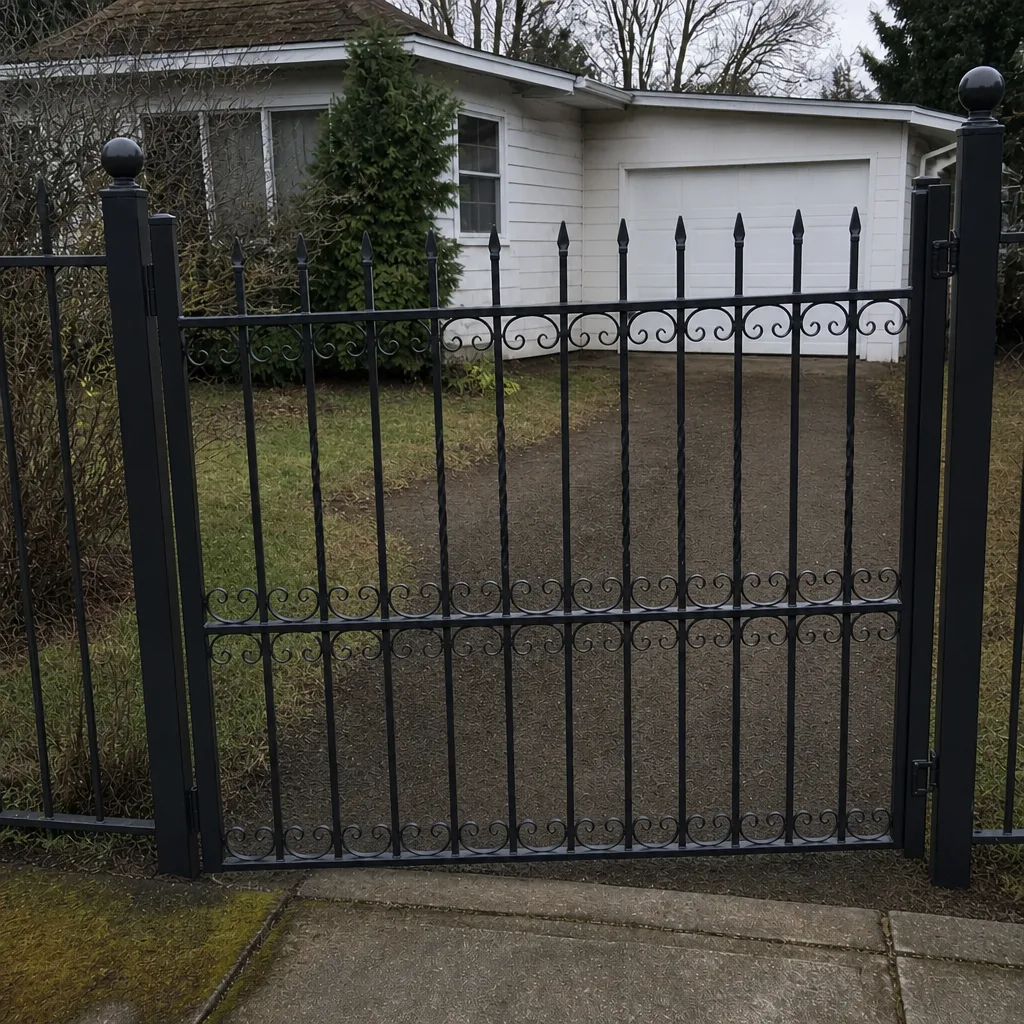
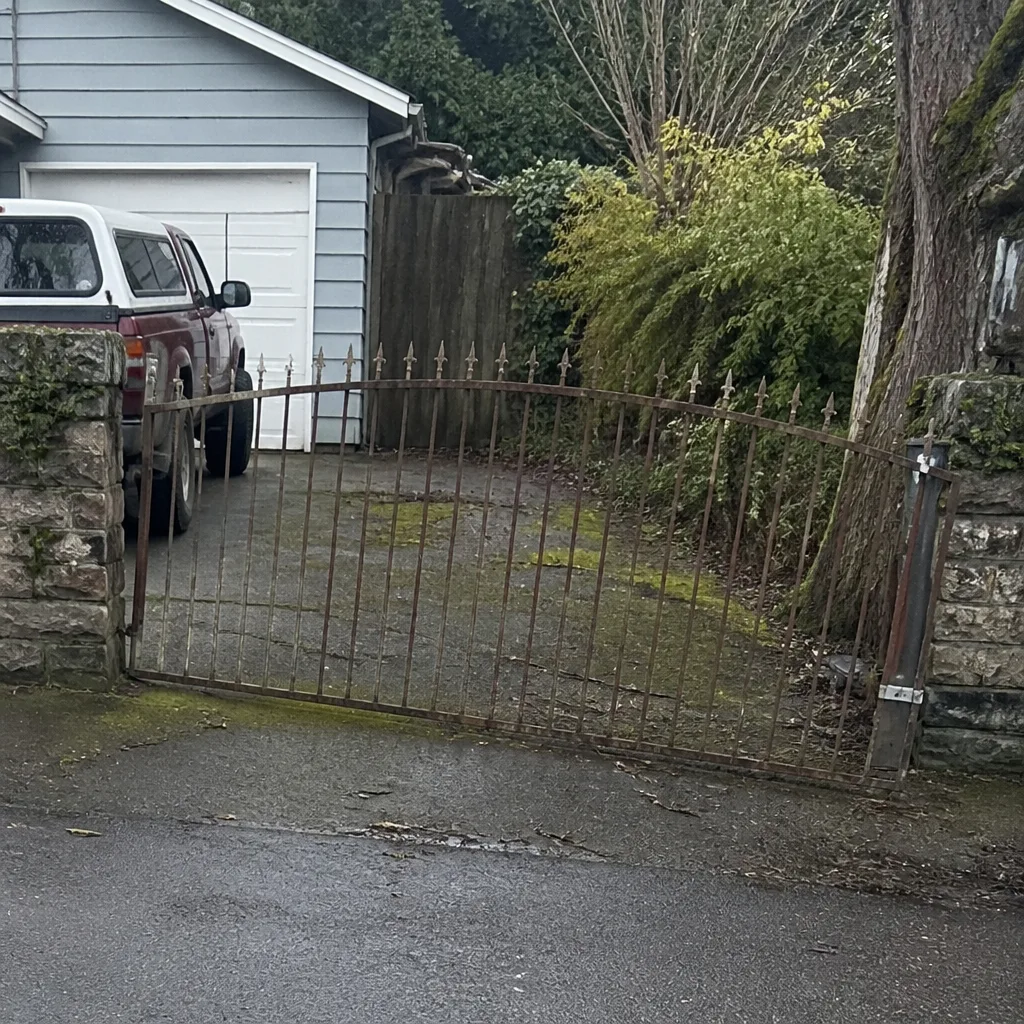
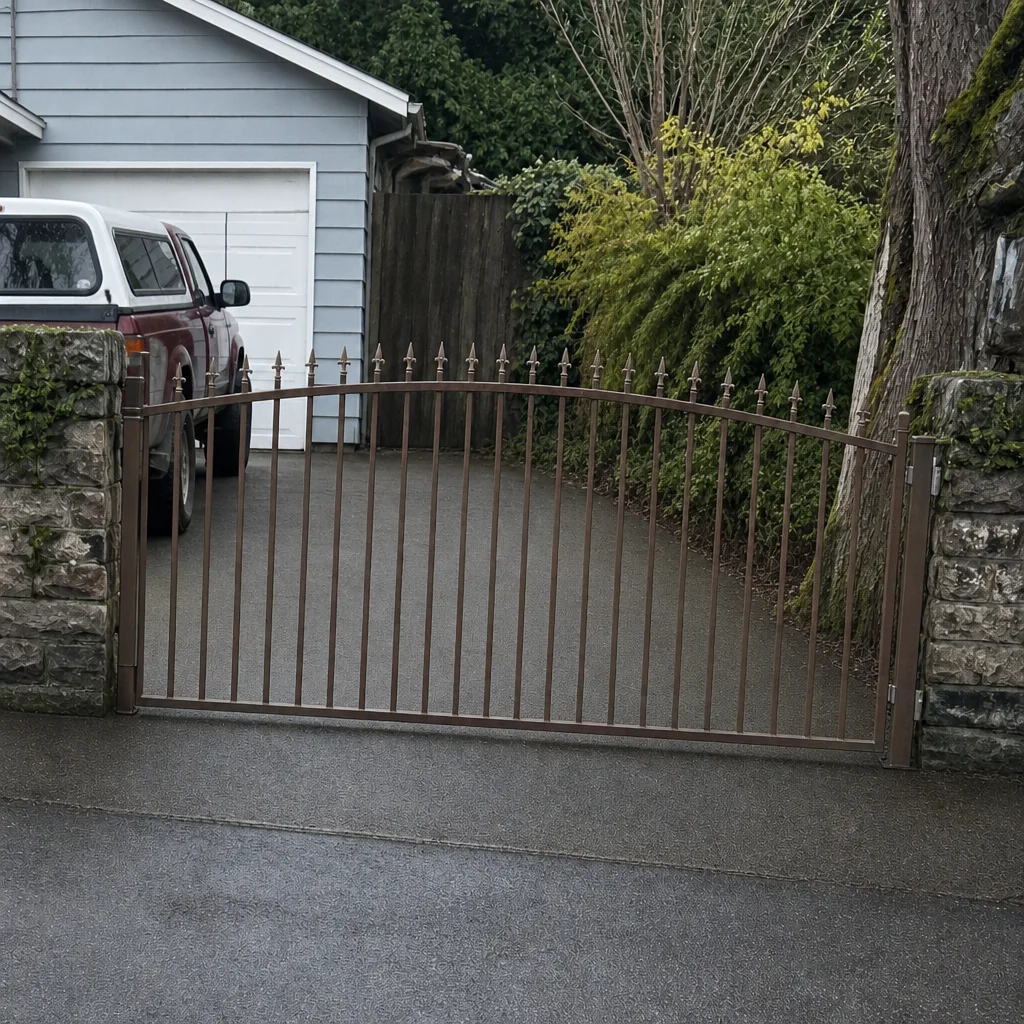
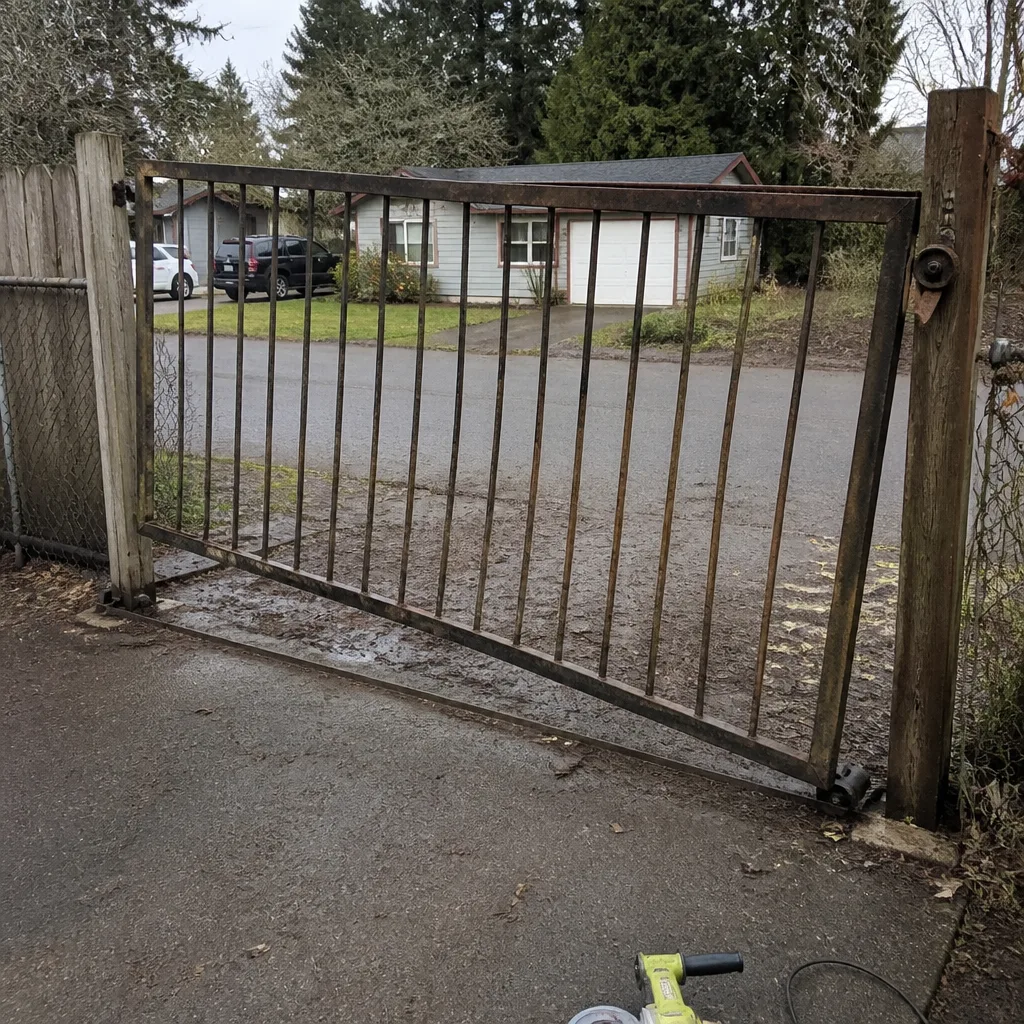
See the difference
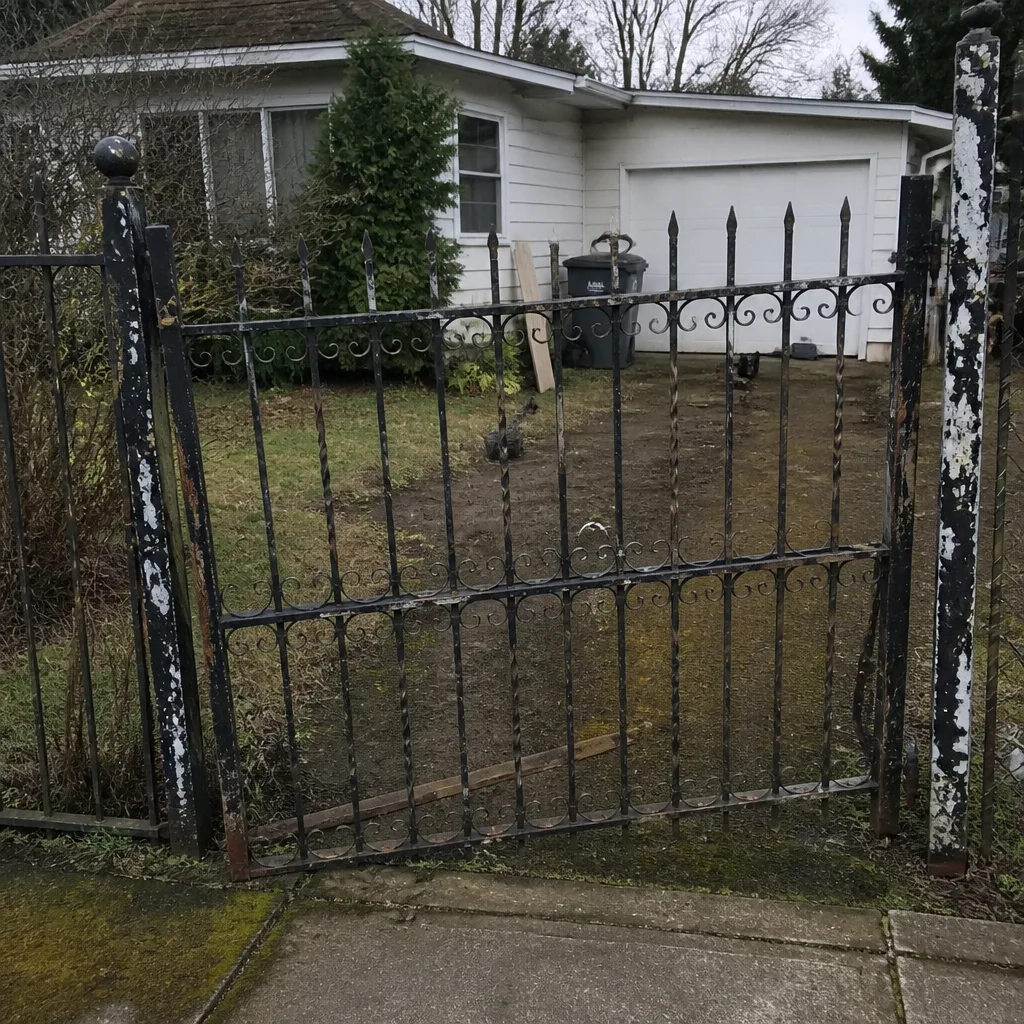 Before
 After
 Before
 After
 Before
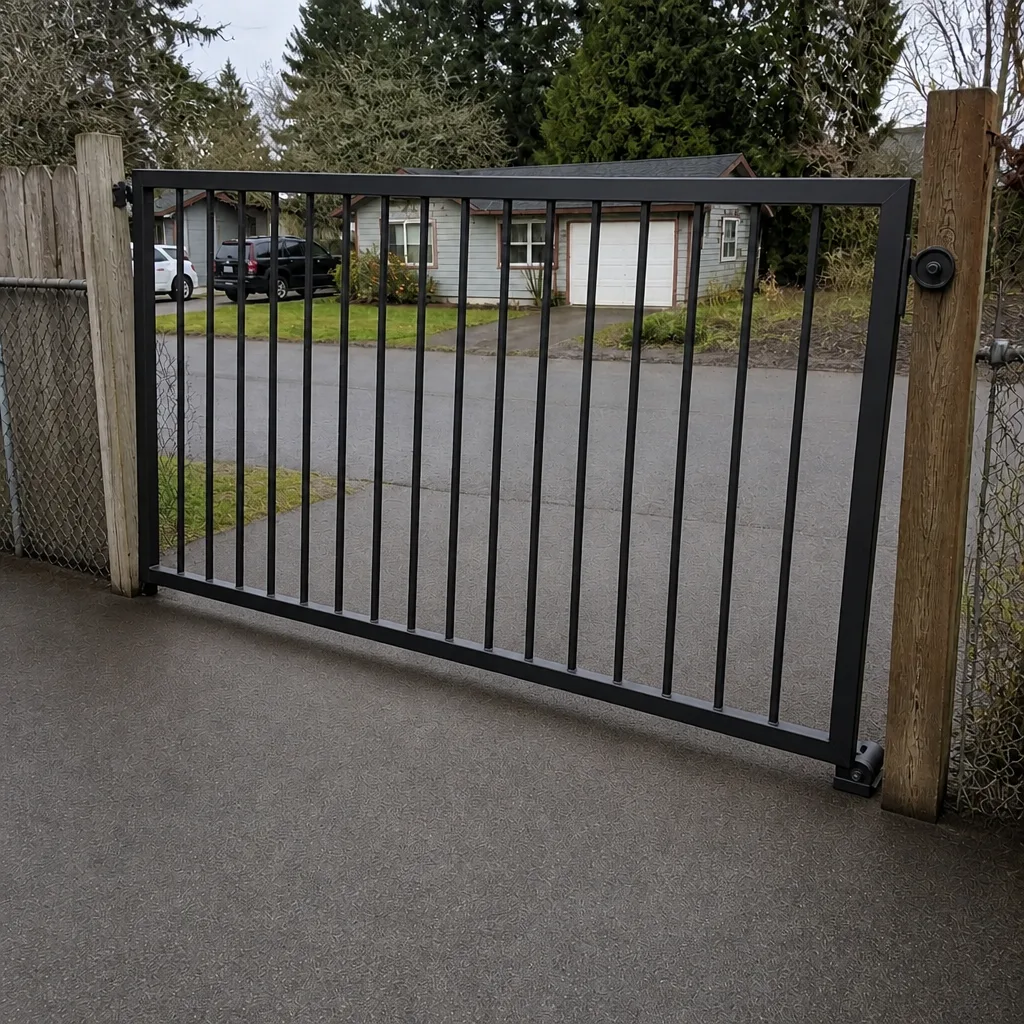 After
When to Call a Professional
Call a gate specialist when the fault is at the operator, the control board, the safety devices, or the power run. These are electrical and mechanical systems that require diagnosis, not guesswork. In our experience, three scenarios come up most often: the gate behaves unpredictably and you can’t pin down why; a safety device faults even once; or you’ve noticed two or more warning signs from the matrix at the same time. When that’s your situation, it’s worth having someone with diagnostic-grade knowledge look at it. Whether your system is a BFT swing operator, a Linear slide gate, a Viking residential unit, or a Ghost Controls setup, the fault points to a specific component and the diagnosis is usually fast. Gate Repair Hillsboro offers free estimates in Hillsboro – call (855) 251-3899. We answer 24/7. Fast dispatch from 7am to 7pm, Sunday through Friday. Our technicians have up to 8 years of experience across the brands we service, and we’ve been on plenty of these exact diagnostic calls.
Frequently Asked Questions
The most common warning sign is a gate that works on dry days and misbehaves on wet ones – typically a limit switch taking on moisture during the fall and winter rains. It shows up as the gate stopping early, failing to close, or reversing at end of travel. Call (855) 251-3899 for an exact quote and a same-day diagnosis if you’re seeing this pattern.
Yes, most mechanical and many electrical gate faults can be diagnosed and repaired the same day once we’ve seen the gate. Common parts – hinges, rollers, capacitors, limit switches, and remote receivers – are the kinds of failures that fit a same-day visit. Call (855) 251-3899 for an exact quote – estimates are free.
No. A gate that reverses without an obstruction should be taken out of service until it’s diagnosed. Phantom reverses are usually a failing safety device – a photo-eye, safety edge, or loop detector – and the same failure can allow the gate to close on a vehicle or person. Call us before you cycle it again.
Weather-dependent faults are threshold faults: a component sits just below the point where it fails, and moisture or cold pushes it over. Limit switches fouled by moisture and hinges that bind in cold are the two most common in Hillsboro. It’s not a rarer problem – it’s the same component failing at a lower threshold. Call (855) 251-3899 to schedule an inspection.
Yes, a slide gate off its track is a straightforward mechanical repair once we’ve seen it – usually worn wheels, track damage, or the gate panels dropping out of the carriage. Do not force it back onto the track yourself; a gate panel can weigh hundreds of pounds and the carriage can fail under load. Call for an on-site estimate.
Gate repair in Hillsboro is priced per job by a written estimate that we set after we’ve seen the gate, so the exact price depends on the component and the brand. We don’t guess at numbers over the phone – the written estimate is the price, and the price is set and agreed before any work starts. Call (855) 251-3899 for a free estimate.
The Bottom Line
Warning signs matter because they tell you which component is failing, not just that something is wrong. A gate that hesitates, a gate that restarts mid-travel, and a gate that hums without moving are three different repairs – and treating them as one vague “slowness” is how homeowners end up paying for an operator when they needed a hinge. Write down the behavior, note the weather correlation, listen for grinding, clicking, humming or silence, and stop the gate the moment any safety sign appears. In Hillsboro, wet-season faults around limit switches and loop detectors are the ones to expect, so a pre-winter inspection is time well spent. Gates are all we do, and we’d rather diagnose your gate correctly than replace parts by trial. Call (855) 251-3899 for a free estimate. We answer 24/7. Fast dispatch from 7am to 7pm, Sunday through Friday.
For a starting point on our main gate repair Hillsboro service, that page covers the full range of what we handle.
Written by the team at Gate Repair Hillsboro.