
Last updated November 14, 2026
 Wrought iron
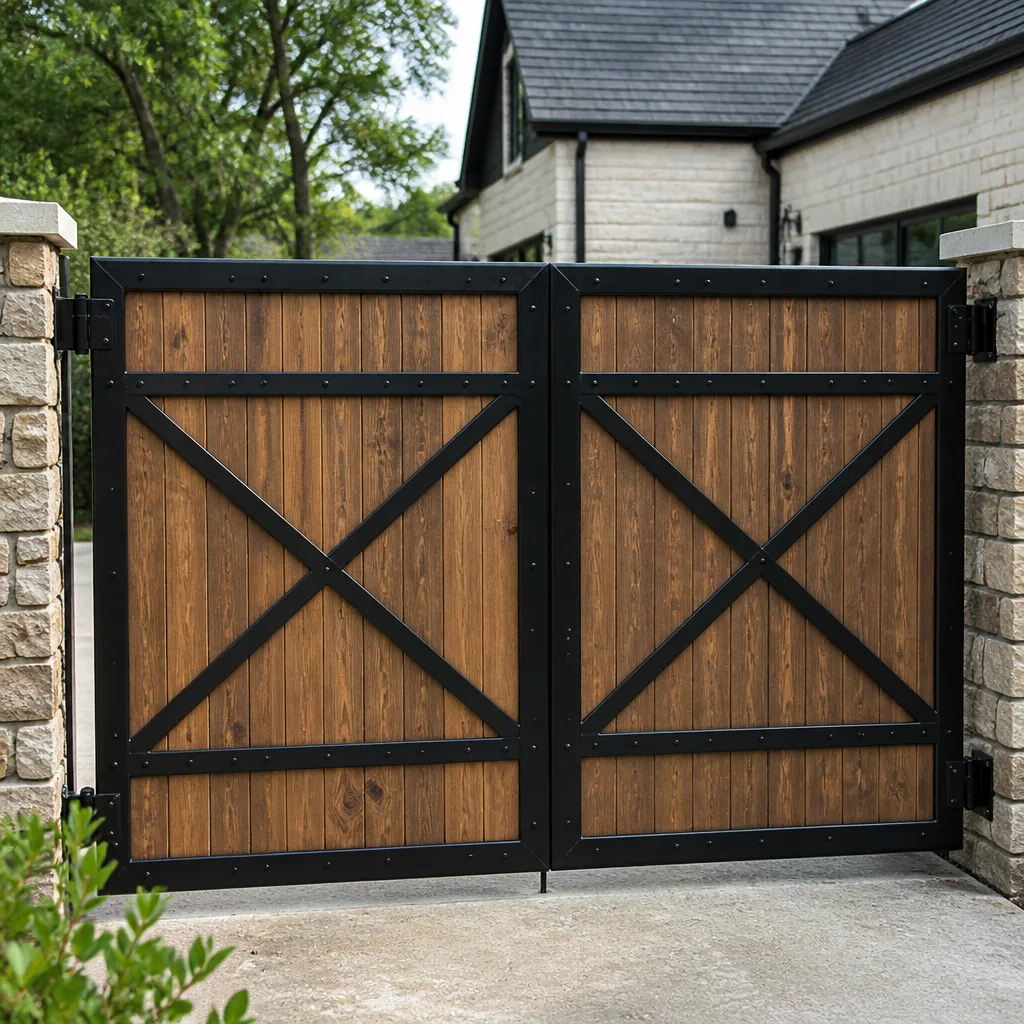 Wood & steel frame
 Farm & ranch
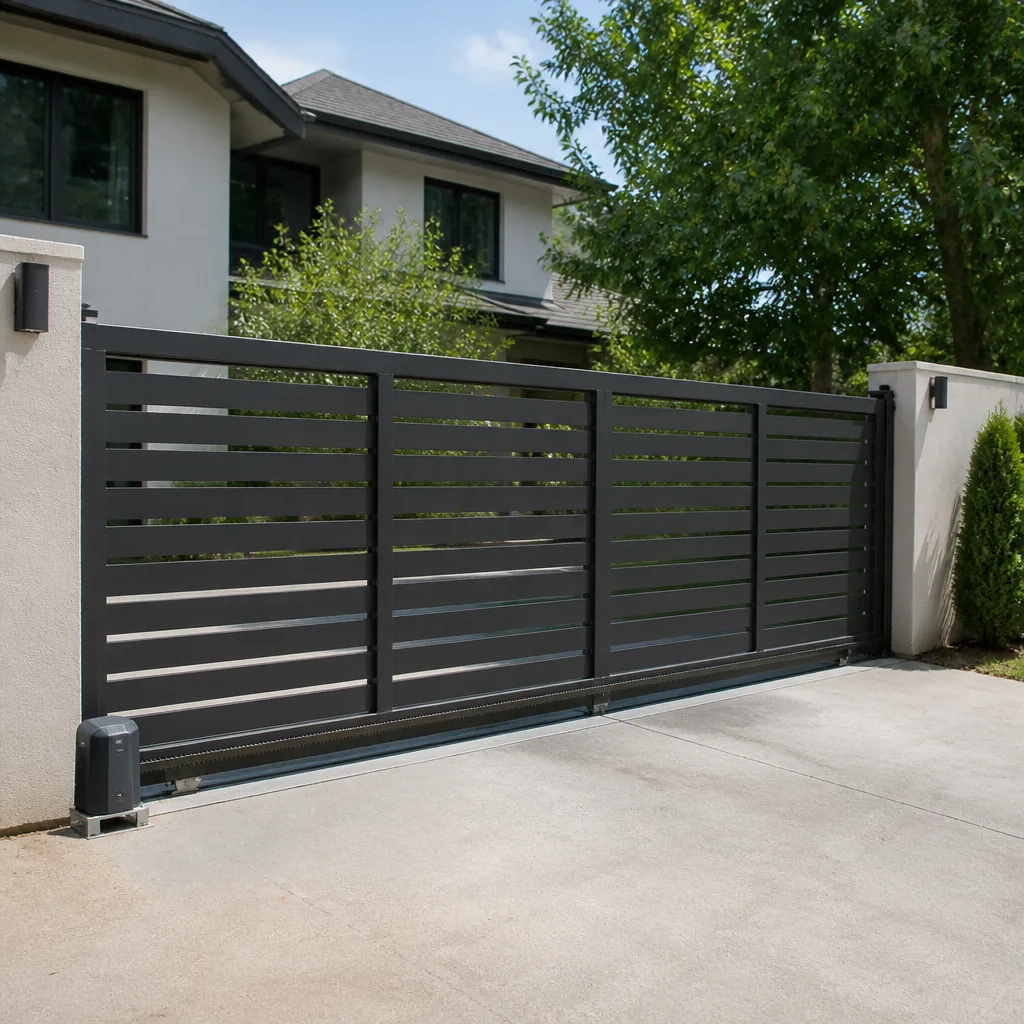 Sliding driveway gates
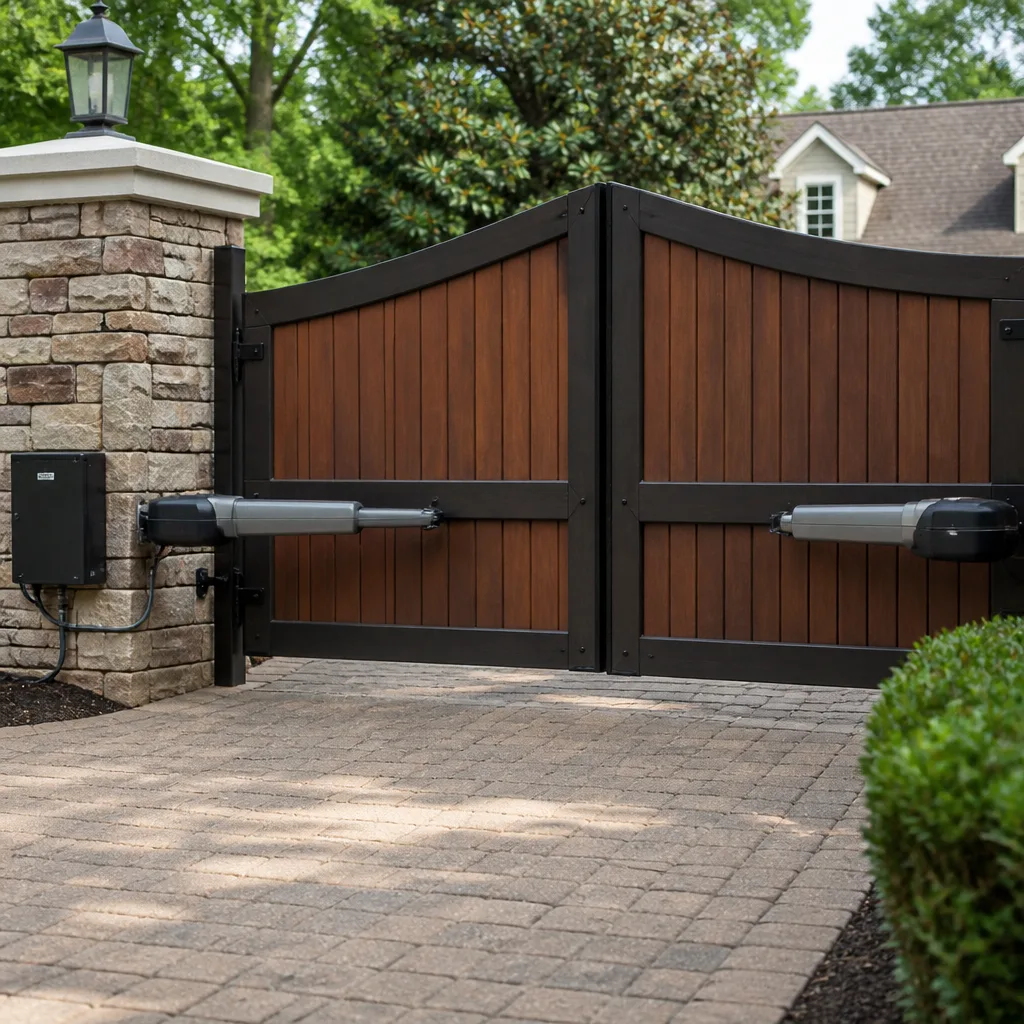 LiftMaster operators
Free on-site gate assessment - hinges, posts, and your LiftMaster or Nice gate operator checked before anything is quoted
The assessment is free and the quote is the invoice.
Get your free estimateGate Repair Maintenance Schedule: What to Do and When
The part of your gate most likely to fail catastrophically is the hinge bearing or pivot bushing, and it’s the one item almost every annual maintenance checklist skips. It shows no visible wear until it’s already gone, then a heavy leaf drops, binds, or drags the operator to a halt. Here in Hillsboro, where wet winters and the occasional hard freeze work on metal and cast parts for months on end, that failure arrives faster than most owners expect. This guide breaks gate maintenance into three separate schedules – monthly, seasonal, and annual – because collapsing them into one yearly visit is exactly why gates fail early. You’ll learn which tasks you can do yourself in ten minutes and which need tools and brand software.
Quick Answer
Gate maintenance runs on three timelines, not one: monthly owner checks under ten minutes (alignment, manual release, sensor path clearance), seasonal tasks tied to the Pacific Northwest’s wet winters and freeze cycles (seal inspection before the rain, hardware checks after a freeze), and annual technician work that needs tools and brand-specific software (limit switch calibration, control board diagnostics, loop detector tuning). Skip the monthly layer and small problems grow into operator failures before the yearly visit happens.
Styles & brands we work with
- Wrought iron
- Wood & steel frame
- Farm & ranch
- Sliding driveway gates
- LiftMaster operators
Table of Contents
- Why One Annual Visit Isn’t Enough
- The Monthly Ten-Minute Check
- Seasonal Tasks for Hillsboro’s Wet Winters and Freeze Cycles
- The Annual Technician Visit: What Requires Tools and Software
- Lubrication by Component Type
- Building a Maintenance Log That Pays Off Later
- Safety First: What You Should Never Adjust Yourself
Why One Annual Visit Isn’t Enough
A gate is a machine with parts moving in three different rhythms. Some wear daily and slowly – hinge bearings, roller wheels on a slide gate, pivot bushings. Some wear in response to weather – seals crack as the rainy season sets in, cast components develop micro-cracks after a hard freeze. And some drift out of adjustment only after months of accumulated small changes – limit switches, loop detector sensitivity, safety reversal force. A single annual inspection catches the drift but misses the daily wear and the weather response.
That matters in Hillsboro because the gate normally sits at the property edge, fully exposed. West Hills properties catch wind-driven rain and see more freeze cycles than the valley floor around downtown. A gate near Jackson Bottom Wetlands sits in damper air for weeks longer than one up on the slopes. The result: two gates of the same make and model age at different rates depending on where they sit in town, and the operator – whether it’s a LiftMaster residential unit or a commercial FAAC arm – doesn’t know the difference. It just works harder.
Three layers of attention maps to three different failure patterns. Monthly checks catch roughly half of the failures that would otherwise snowball – loose hinges, alignment drift, blocked sensor paths. Seasonal work catches the damage weather does. Annual technician work catches what only diagnostics can find. It’s worth noting the schedule itself is simple. What takes discipline is actually doing the monthly layer consistently.
This is why we tell customers the maintenance log matters more than the schedule document. A gate that’s been logged shows the pattern. A gate that hasn’t, forces the technician to start from scratch on every visit, which wastes the customer’s time and money.
The Monthly Ten-Minute Check
The monthly layer is the one every owner can and should do. It’s also the layer most people skip. Three tasks – visual alignment, manual release test, and debris clearance from sensor paths – catch about forty percent of the failures that would otherwise escalate into operator repairs or emergency calls.
1. Visual alignment check
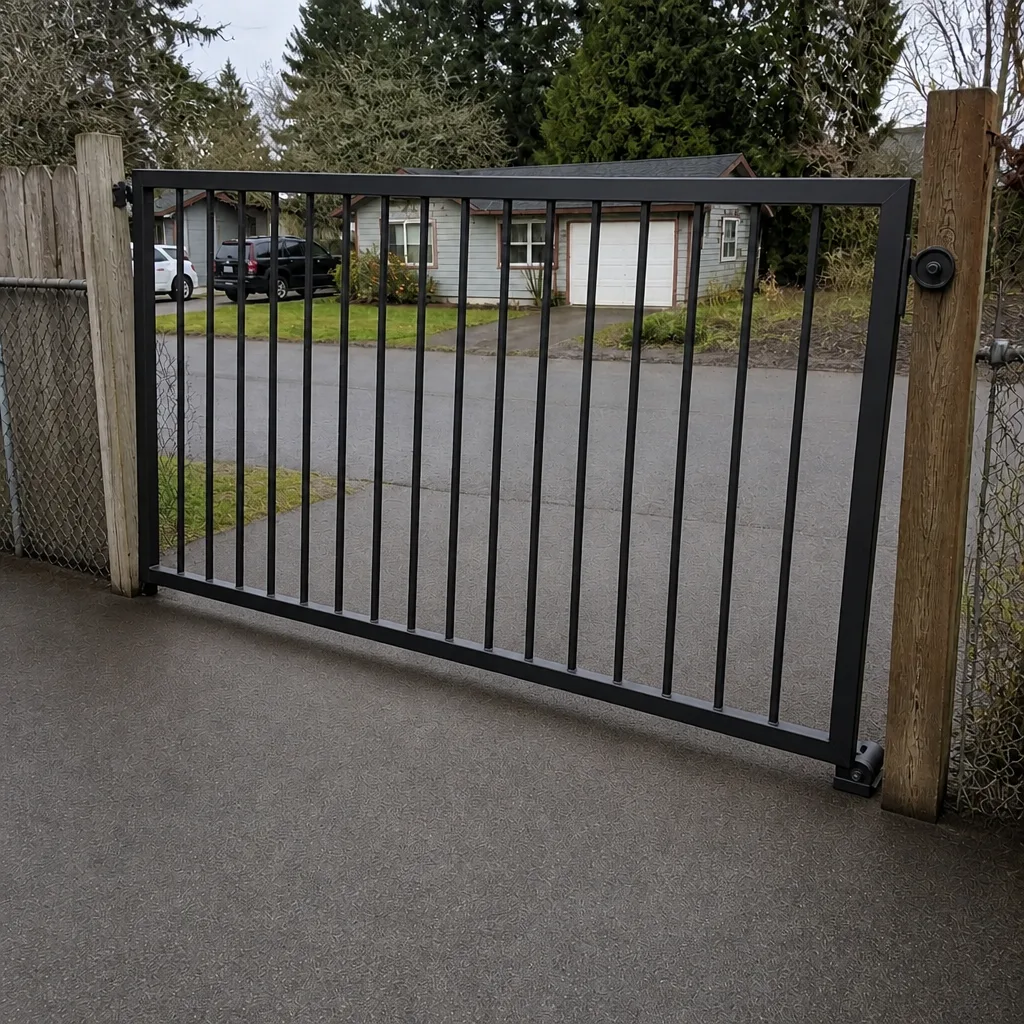
Walk the gate line and look at the leaf or leaves in their closed position. Any gap between two leaves, or sag at the outer edge on a slide gate, tells you the hinges, rollers, or pivot bushing are already worn. Check the gap between gate and post – if the closed position has crept by an inch or more since last month, something on the hardware side is failing. On a swing gate, stand at the hinge end and look along the leaf: a leaf that’s no longer level to the post means the bearing is on the way out.
2. Manual release test
Every automated gate has a manual release – a lever, keyed handle, or chain hoist depending on the operator. Test it once a month by disengaging the operator and pushing the gate through a full open and close cycle by hand. It should move freely. If a swing gate needs force to open, or a slide gate binds on the track, the operator has been working against that resistance and the problem predates the manual release. Re-engage the release fully before you leave. An operator left in manual mode is a security gap.
3. Debris clearance from sensor paths
Gate operators use photoelectric beams, loop detectors in the driveway, and sometimes edge sensors on the leaf itself. Anything blocking the beam – leaves, spider webs, a fallen branch, a parked car that edges too close – reads as a phantom obstruction and forces the operator to reverse. Clear the sensor lens with a soft cloth. Sweep the loop area if pine needles or leaf litter have built up. On a DoorKing commercial operator with an in-ground loop, look for signs of pavement cracking over the loop wire. Here’s how to do the monthly sweep:
- Walk the full gate opening and note any obstruction in the safety light path.
- Wipe beam sender and receiver lenses with a soft cloth.
- Sweep the driveway loop area clear of leaves, needles, and gravel.
- Press the manual release, run one full cycle by hand, re-engage.
- Run one full cycle with the operator and watch for hesitation or reversing.
- Write down anything you noticed – hesitating, dragging, reversing, or noisy.
Total time: under ten minutes for most gates. Ten minutes monthly across a year is what catches most failures before they become emergency calls in Hillsboro.
Seasonal Tasks for Hillsboro’s Wet Winters and Freeze Cycles
Hillsboro runs two distinct gate seasons: the wet months from roughly October through April, and the dry stretch the rest of the year. The wet-season transition and the freeze cycles that come with it are where weather-driven failures happen. Two seasonal tasks belong on the calendar.
Pre-rainy-season seal inspection (late September / early October)
Before the rain settles in for the winter, inspect the seals on the operator housing. Most residential operators – Mighty Mule, Ghost Controls, Elite – use a rubber gasket around the control box lid or the arm housing. That gasket is what keeps water off the control board. Check for cracks, hardening, or gaps. A seal that’s failing in September becomes a wet control board in December, and a wet control board is one of the more expensive repairs we see.
Check the weatherstripping on any gate-adjacent post-mounted access box. And check the seals around keypads or intercom units on the entry post. A keypad that takes on water fails intermittently before it fails completely, which is the diagnostic nightmare scenario – the technician shows up, the keypad works fine, and the fault disappears until the next rain.
Post-freeze hardware check (after the first hard freeze)
Hillsboro sees freeze events most winters. Metal contracts in the cold and cast aluminum or zinc components can develop micro-cracks that show up as failures weeks or months later. After the first hard freeze of the season, walk the gate and look for:
- Hairline cracks in cast hinge blocks, pivot brackets, or operator arm fittings.
- Loose bolts or nuts that were tight before the freeze (cold contraction lets them loosen).
- New play in the hinge or pivot that wasn’t there in October.
- Scraping or binding on the track after the cold snap (metal contracts unevenly).
An Elite operator or a Ghost Controls arm with a cracked arm fitting can snap under load. Catching the crack at the freeze is a cheap fix. Catching it after the arm shears means a repair plus a possible gate replacement.
The Annual Technician Visit: What Requires Tools and Software
The annual layer is where a gate-specialist technician earns the visit. These are the tasks that need a meter, brand-specific software, and knowing exactly how the operator is supposed to behave. For our part, electric gate repair and diagnostics are the core of what we do, and the annual visit is the diagnostic that keeps everything else from cascading. Four tasks belong here.
Limit switch calibration
Limit switches tell the operator where open and closed limits are. They drift with time and temperature. A gate that’s started stopping a few inches short of closed, or slamming at the end of travel, has a limit switch issue. Calibration is a screwdriver and a careful ear – too much adjustment and the gate under-travels, too little and it over-drives and stresses the operator. Commercial operators like DoorKing and FAAC have specific calibration procedures per model. A technician who knows the model does this in minutes; a generalist guesses and often makes it worse.
Control board diagnostics
The control board holds the operator’s brain – it registers the safety inputs, the limit switches, the motor current, and flags faults. Annual diagnostics reads the board’s behavior under load, checks the current draw against spec, and confirms the safety inputs are registering correctly. This is where brand fluency matters most. LiftMaster, FAAC, BFT, Linear, Viking, Ghost Controls, DoorKing, Elite, and Mighty Mule all have different board architecture, and the same “gate won’t close” symptom means a different thing on each. We specialize in all nine; guessing on a specific brand wastes money.
Loop detector sensitivity tuning
Loop detectors are the in-ground wire loop that tells the operator a vehicle is present. They tune to sensitivity, and older or damaged loops drift out of tune. A loop that’s too sensitive trips on any passing car; too insensitive and a motorcycle doesn’t register. Tuning takes a meter and the loop’s documented sensitivity range. It also catches a failing loop before it fails completely, which is the difference between a quick fix and a sawcut driveway repair.
Safety edge and reversal force testing
Safety edges – the rubber strip along the gate leaf – and the operator’s reversal force setting both protect against crushing. Test with a calibrated force gauge to confirm the gate reverses within the operator’s spec when it meets an obstacle. This is a legal and safety requirement for automated gates on any property, residential or commercial. Don’t trust the eye test; a gate that stops for a foot may not stop for a small animal.
Lubrication by Component Type
Lubrication is where well-intentioned owners do the most accidental damage. The standard advice – “spray the moving parts with WD-40” – is wrong on several gate components, and the damage is often permanent.
Why standard WD-40 damages nylon rack gears
The classic WD-40 formula is a solvent and light penetrating oil. It cuts through rust and loosens stuck bolts, which is why it’s in every garage. But nylon rack gears – the plastic toothed strip on many slide gates, especially on FAAC and Elite slide operators – are attacked by that solvent. WD-40 seeps into the nylon, softens it over weeks, and the teeth start to wear faster than they should. On a rack gear that’s already a few years old, that wear accelerates. Then the gear strips at the worst moment.
The correct lubricant for a nylon rack gear is a dry PTFE spray or a silicone-based lubricant that says on the label it’s safe for plastics. Both leave a slick film without solvent attack. If the operator uses a steel rack (some commercial BFT and FAAC slide units do), the spec is a white lithium grease or the manufacturer’s recommended grease. Match the lubricant to the rack material – never the other way around.
Lubrication schedule by component
- Hinge bearings and pivot bushings: white lithium grease or a synthetic hinge grease, once a year.
- Roller wheels on a slide gate: a light machine oil on the axle, twice a year.
- Operator arm joints (swing gate): the manufacturer’s grease spec, annually.
- Rack gear, nylon: dry PTFE or silicone, twice a year.
- Rack gear, steel: white lithium grease, twice a year.
- Lock mechanisms and keyed handles: graphite lubricant, annually.
- Chain on a chain-drive operator: chain-specific wax or lube, not WD-40, annually.
Never grease a gate’s exposed track if the track calls for dry operation. Grease attracts grit, and grit on a slide-gate track wears the wheels faster than the seasons ever will.
Building a Maintenance Log That Pays Off Later
A maintenance log is the highest-value thing an owner can do after the monthly check. It does two things: it makes future diagnostics faster, and it’s the evidence that supports a warranty claim with the gate operator manufacturer.
The log doesn’t need to be fancy. A spiral notebook kept near the keypad, or a phone notes app, works. What matters is what gets recorded. Here’s the minimum a technician would want to see:
- Date of each check. Monthly or seasonal, always date it.
- Anything unusual noticed. Slow closing, reversing intermittently, new noise, a new gap at the hinge.
- Manual release test result. “Free” or “binding” is enough.
- Any parts replaced and their date. Battery, sensor lens, a lock, a hinge.
- Operator brand and model. Ghost Controls, Elite, FAAC – exactly which model, because technicians read this first.
- Photos of anything concerning. A phone photo dated is worth ten minutes of trying to remember.
- Any service visits with a note of what was done. “Technician calibrated limits” or “loop detector sensitivity adjusted.”
When the gate later fails – and all gates eventually need service – the log tells the technician what’s been stable and what’s changed. A gate that shows three years of stable behavior followed by six months of “slow closing” is a different diagnostic than a gate with no history at all. And when a control board or operator arm fails within its warranty window, the log with dates and symptoms is what makes the claim go smoothly. Manufacturers want evidence. A dated log is evidence. A “I think it failed last spring” is not.
Safety First: What You Should Never Adjust Yourself
Some gate repairs are safe for a careful owner. Others genuinely are not. The dividing line is component energy and consequence.
Do not touch live electrical wiring to the operator, the control board, or the loop detector. Automated gate operators run at line voltage in the housing and at low voltage at the controls. Line voltage is lethal. If the operator needs work on the power side, that’s a licensed electrician’s job or a gate technician with the tools and the training. Never open the operator housing with the power on.
Do not adjust limit switches on a heavy gate by trial and error. A misadjusted limit lets a gate over-travel, which can bind a leaf against a post, stall the motor, or (on a swing gate) over-drive the arm until the fitting cracks. The limits aren’t a user setting.
Do not test safety reversal with a hand or body part. Safety reversal exists to protect against crushing. If you’re not sure the safety edges and reversal force are correctly set, keep clear and call a technician. The gate isn’t worth a broken arm.
Do not lift or remove heavy gate panels or operator arms without a second person and proper support. Swing gate leaves on a residential gate routinely weigh more than a person can lift safely. Slide gate panels are heavier still. A dropped panel is an injury waiting to happen.
The safest guideline: your monthly ten-minute check is fine. Anything that involves the operator’s power, the limits, the reversal force, or lifting a component requires a trained technician. Every set of safety edges and every loop detector on a gate in Hillsboro starts from that assumption.
Common Mistakes to Avoid
- Skipping the monthly check and relying on the annual visit. The annual catches drift, not daily wear. A binder hinge or bushing that wears out between visits becomes an emergency call rather than a routine repair.
- Spraying everything with WD-40. It loosens rusted bolts well. It softens the nylon rack gear on many slide gates and strips the teeth over time. Match the lubricant to the material.
- Never testing the manual release. The manual release is your gate’s backup for power outages and emergencies. If it’s been untouched for a year, you only find out it’s seized when you need it most.
- Greasing the track on a slide gate. Grease on an exposed track captures grit, and grit wears the wheels. Tracks should be clean and dry.
- Adjusting limit switches to fix a slow-closing gate. Limits aren’t the cause of most slow-closing problems. Binding hinges, drift in the operator, and lack of lubrication are more common. Incorrect limit adjustment just creates a new problem.
- Ignoring the pre-rainy-season seal inspection. A worn gasket in September becomes a wet control board in December. Gaskets cost a fraction of a control board.
- Running the same brand-agnostic handyman for every brand. A Ghost Controls residential arm and a DoorKing commercial operator need different diagnostic approaches. A generalist with one brand’s manual in hand guesses on the other.
See the difference
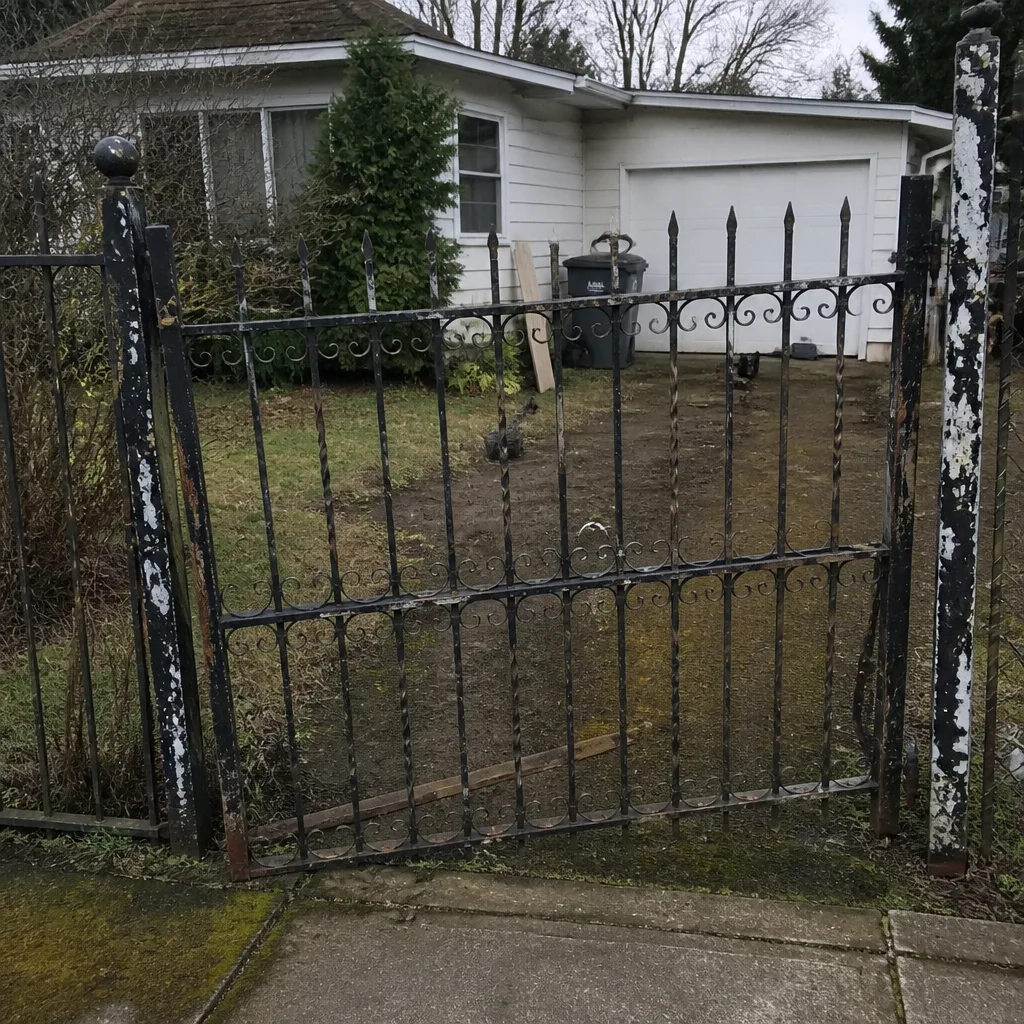 Before
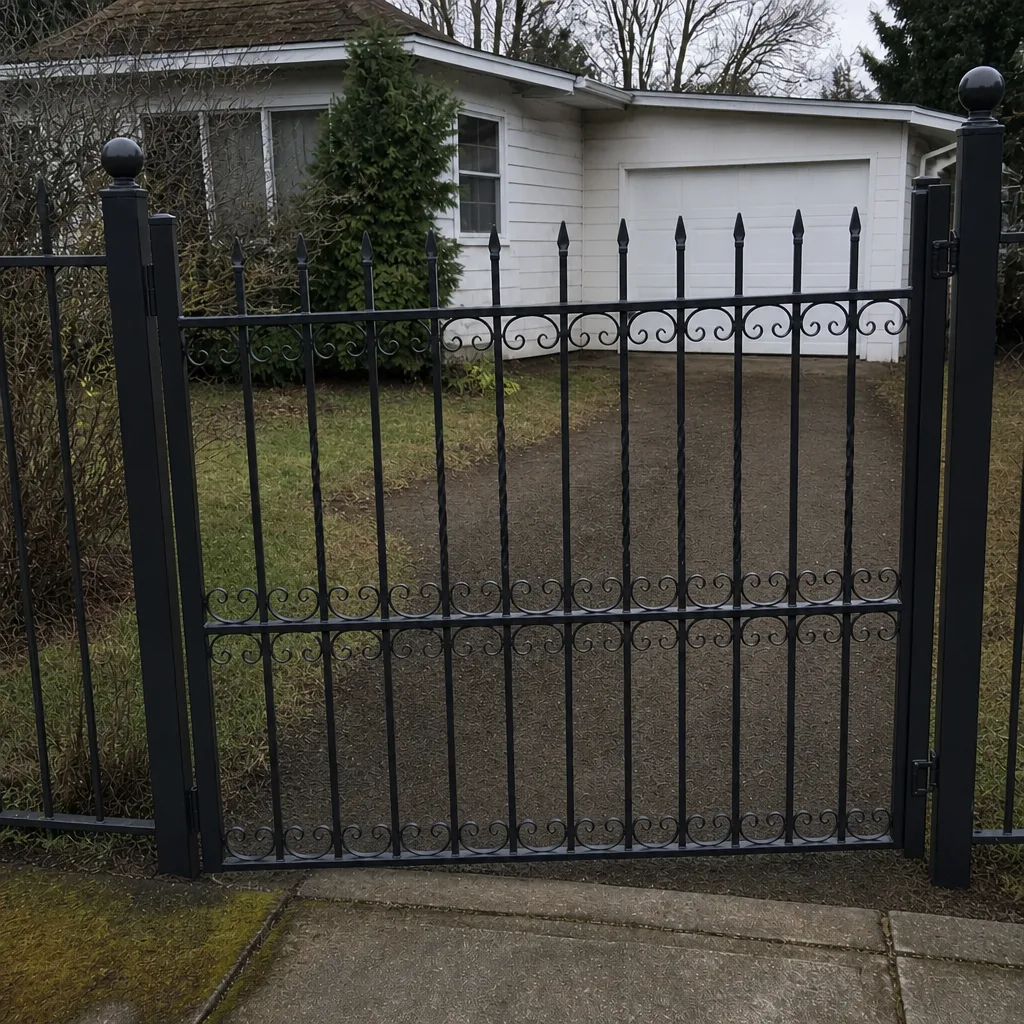 After
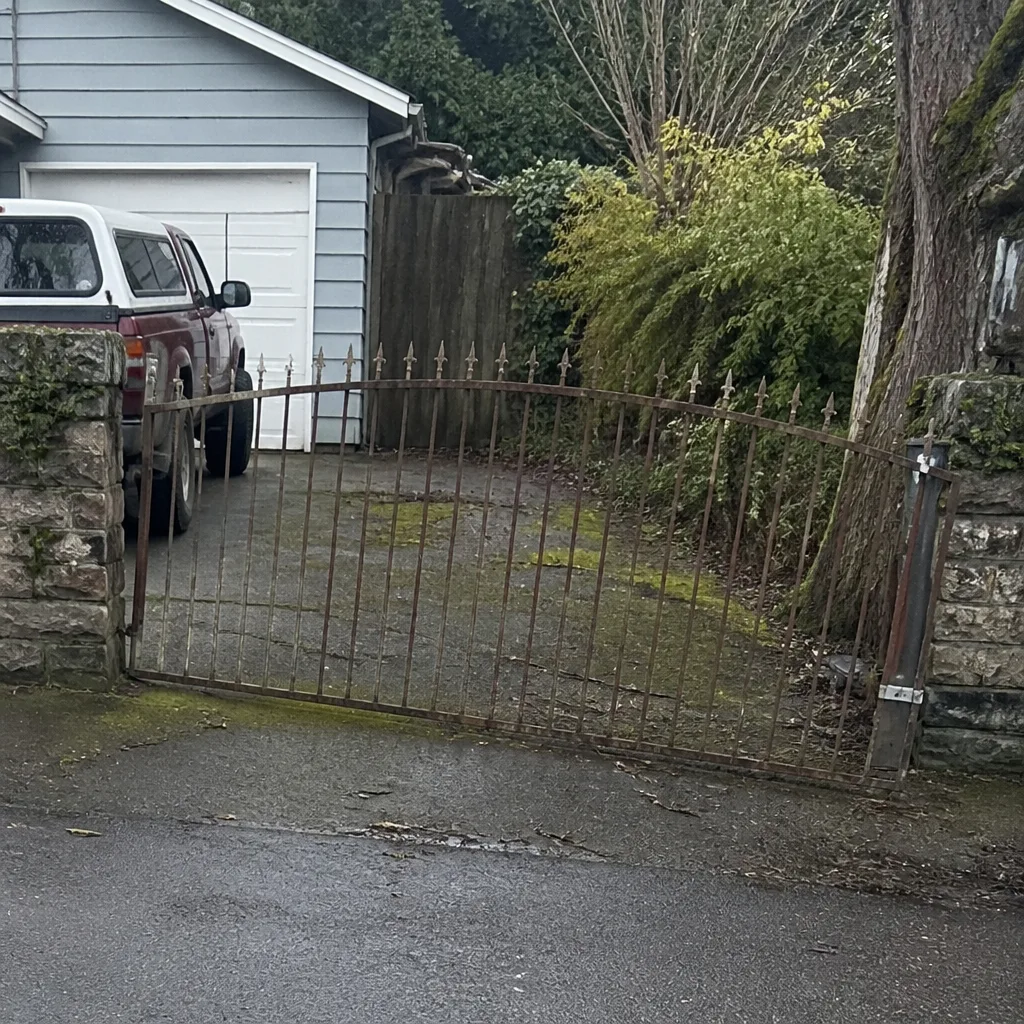 Before
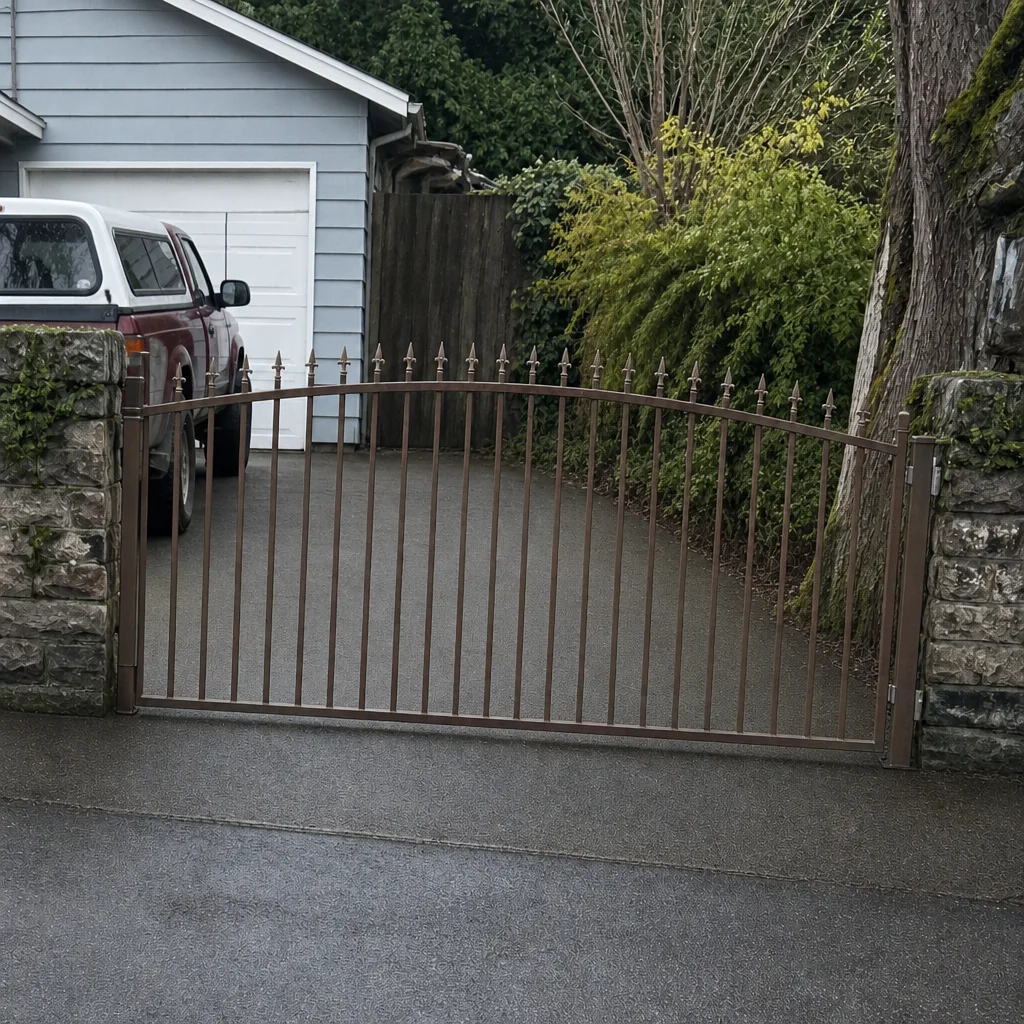 After
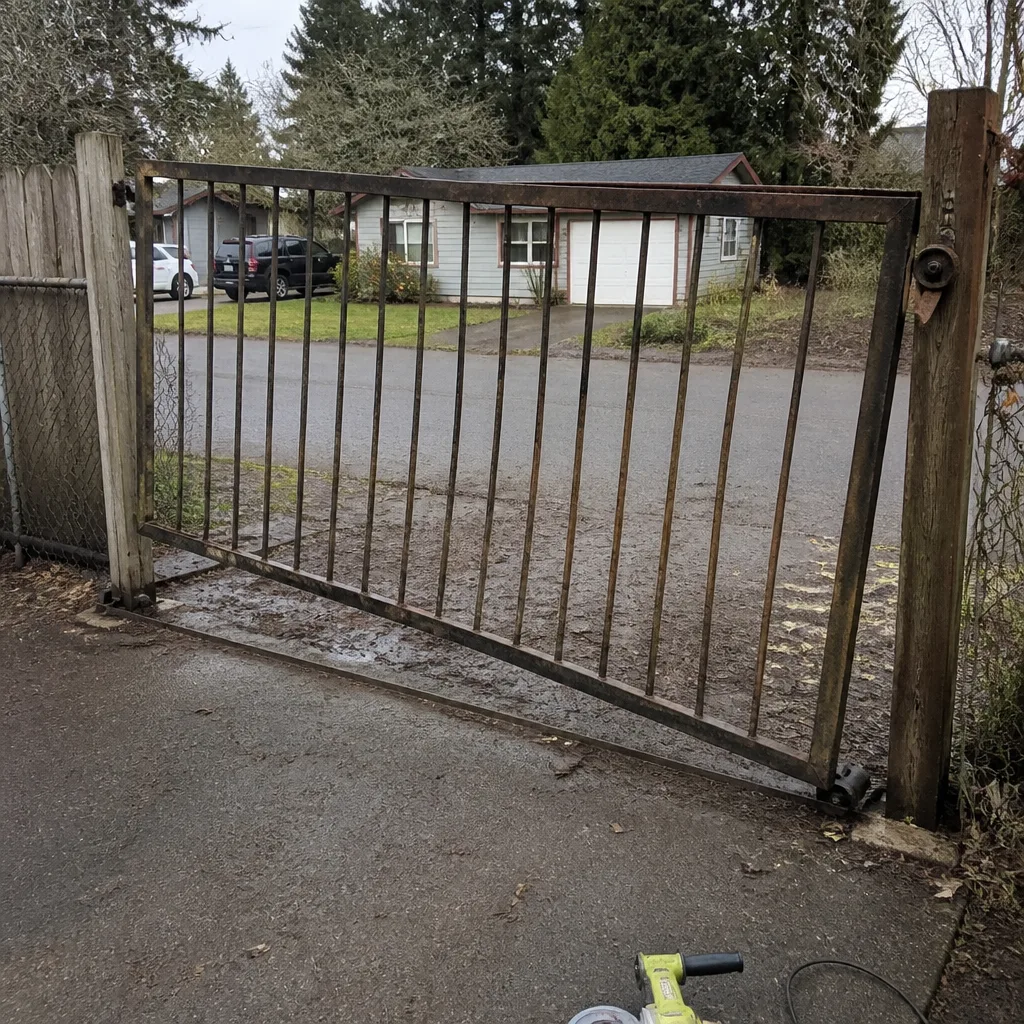 Before
 After
When to Call a Professional
Some gates need a technician, not a maintenance log. Call us when the operator reverses for no reason, when the gate stops short of closed or over-travels, when a hinge is visibly loose or the leaf is sagging, when the manual release binds, when the operator has fault codes, when a safety edge or loop detector isn’t registering, or when the gate has had a hard hit. We also see a lot of gates that came out of a season without a single maintenance check and now stutter or stall – those need diagnostics, not another month of ignoring the problem. Gate Repair Hillsboro offers free estimates in Hillsboro – call (855) 251-3899. We answer 24/7. Fast dispatch from 7am to 7pm, Sunday through Friday.
Frequently Asked Questions
A residential gate should get the monthly owner check, the seasonal pre-rain and post-freeze inspections, and one annual technician visit. Commercial gates on high-traffic entries usually need the technician visit more often because they cycle many times a day. The annual visit is a floor, not a ceiling.
You can lubricate most gate components yourself if you match the lubricant to the material. Hinges, pivot bushings, roller axles, lock mechanisms, and nylon rack gears are all owner-serviceable. Avoid WD-40 on any plastic component, and skip greasing the slide-gate track. For an operator arm joint or a chain-drive system, follow the manufacturer’s spec.
In our experience, two causes dominate: a hinge bearing or pivot bushing that wore out because the monthly check skipped it, and water intrusion into the operator control box after a failed seal. The freeze events most winters contribute to both. Fixing either is much cheaper than waiting until a gate drops or a control board drowns.
Yes. Commercial operators like FAAC, BFT, and DoorKing cycle far more often than a residential gate because a business entrance cycles dozens of times a day. The monthly owner check stays the same. The technician visit typically moves to twice a year, and the loop detector tuning is often more critical on a commercial gate because a miscounted vehicle blocks entry for everyone behind it.
The estimate is free and the price is set per job by the written estimate after we look at the gate. Call (855) 251-3899 for a free estimate. We answer 24/7. Fast dispatch from 7am to 7pm, Sunday through Friday.
Yes. Manufacturers want evidence that the gate was maintained and that symptoms were documented when they first appeared. A dated maintenance log with photos and symptom notes is exactly that evidence. A gate with three years of stable behavior followed by “slow closing” logged for six months is a far easier warranty claim than “it failed last spring.”
The Bottom Line
Gate maintenance is three schedules, not one. The monthly ten-minute check (visual alignment, manual release, sensor path clearance) catches forty percent of failures before they escalate. The seasonal tasks – pre-rainy-season seal inspection and post-freeze hardware check – respond to Hillsboro’s actual weather. The annual technician visit is where limit switches, control boards, loop detectors, and safety reversal testing need the tools and brand software that most owners don’t have. The hinge bearing or pivot bushing is where the checklist usually fails, and where a small monthly check saves a big repair. Keep a simple maintenance log. Match lubricants to component materials. Don’t DIY the operator’s power or limits. When the gate needs a diagnostic, call us.
Ready to put the schedule in place? Call (855) 251-3899 for a free estimate. We answer 24/7. Fast dispatch from 7am to 7pm, Sunday through Friday. Our technicians have up to 8 years of experience, and we handle every brand on your gate. Gate Repair Hillsboro is the gate-specialist team for Hillsboro homeowners and property managers, whether your gate needs a scheduled annual visit or a gate repair today.
Written by the team at Gate Repair Hillsboro.