
Last updated November 14, 2026
 Wrought iron
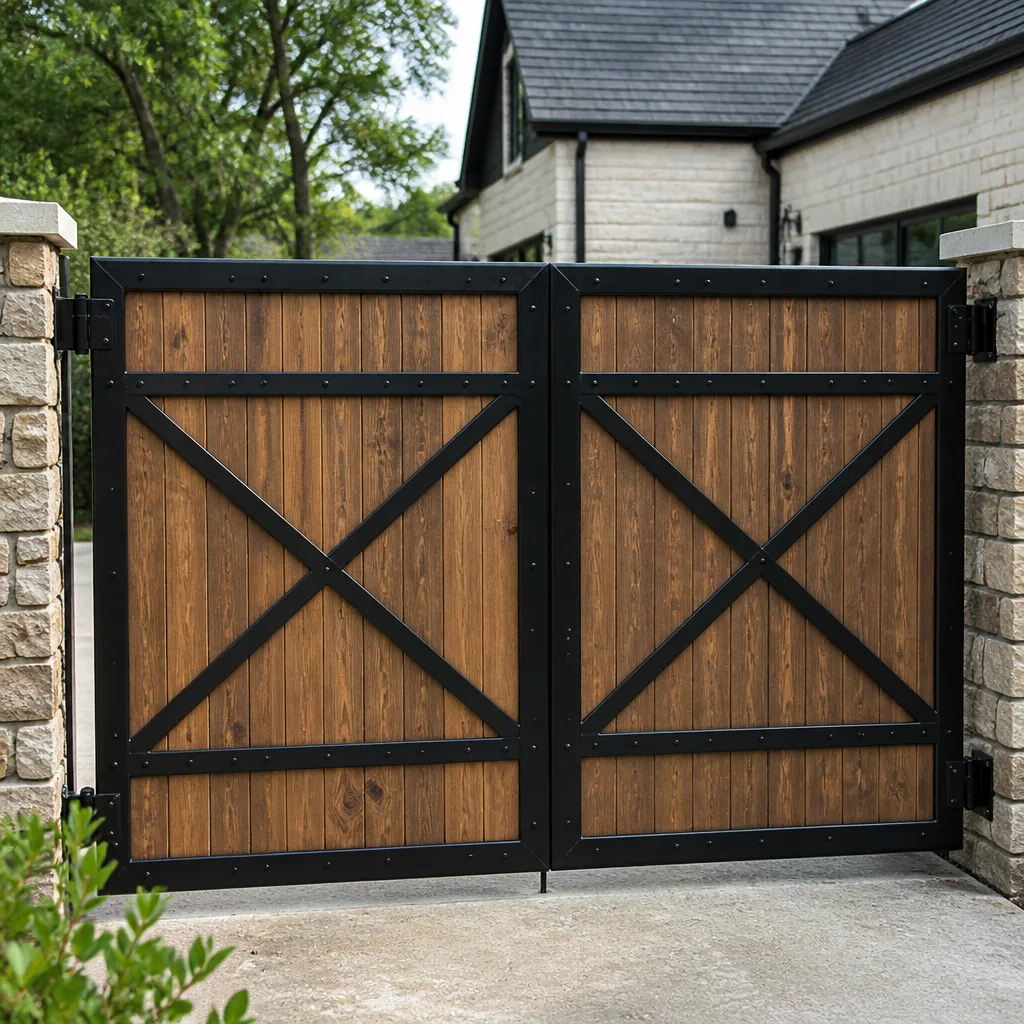 Wood & steel frame
 Farm & ranch
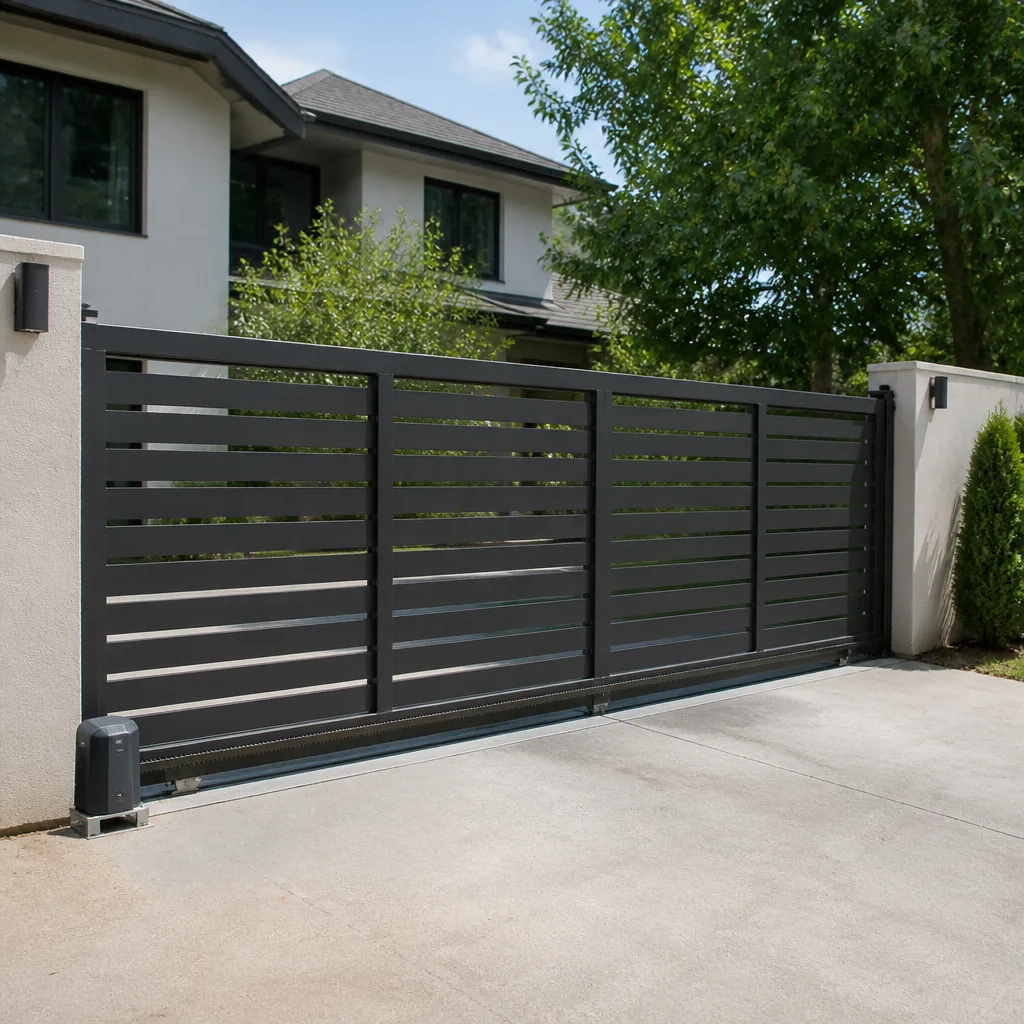 Sliding driveway gates
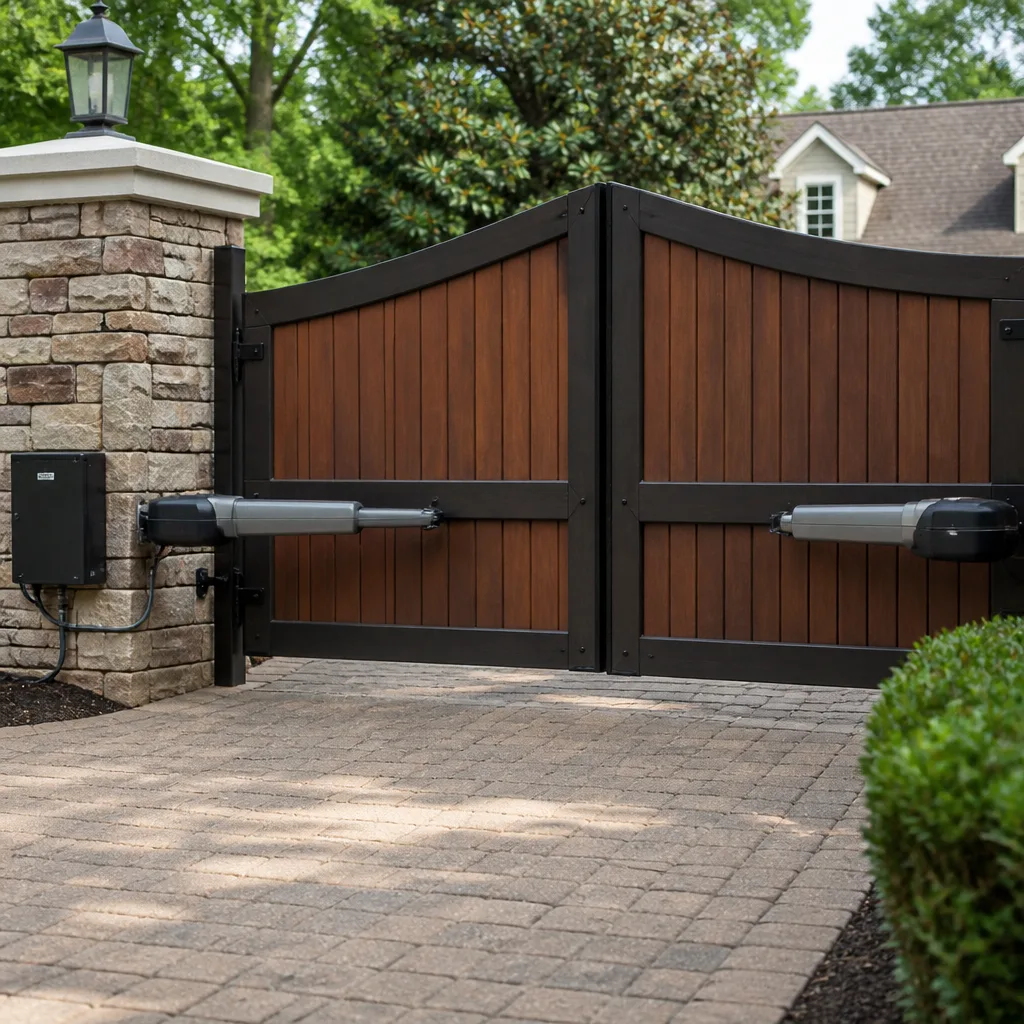 LiftMaster operators
Free on-site gate assessment - hinges, posts, and your LiftMaster or Nice gate operator checked before anything is quoted
The assessment is free and the quote is the invoice.
Get your free estimateGate Repair Troubleshooting in Hillsboro: Common Problems and How to Fix Them
A gate that reverses before it ever reaches the closed position and a gate that won’t move at all look like two different failures. Most of the time they aren’t. We see the same misread obstruction sensor behind both symptoms, wired one way on a LiftMaster operator and another way on a FAAC or DoorKing board, and the fix is identical once you know which circuit is lying to you. That’s the thing about gate troubleshooting: the symptom is rarely the problem. This guide maps symptoms to causes the way a technician does, so you can figure out which of six failure categories you’re actually dealing with, which checks are safe to run yourself, and which ones to leave untouched. Some of it is specific to the wet winters that come through Hillsboro and some of it applies to any gate, any brand, anywhere. All of it saves you guessing.
Quick Answer
Gate problems in Hillsboro almost always fall into one of six categories: power, control board, safety sensor, mechanical hardware, loop detector, or the operator motor. The fastest way to narrow it down is to watch what the gate does in the first three seconds after you trigger it, then check whether the symptom changes when you hold the safety beam blocked. If the gate behaves the same with the sensor blocked as it does without, the sensor isn’t the cause. If it behaves differently, you’ve found your fault without touching a tool.
Styles & brands we work with
- Wrought iron
- Wood & steel frame
- Farm & ranch
- Sliding driveway gates
- LiftMaster operators
Table of Contents
- The Symptom-to-Cause Map We Use on Every Call
- Power Problems: When the Gate Is Dead or Intermittent
- Control Board Faults and the Error Codes You’ll See
- Safety Sensors, Photo Eyes, and False Reversals
- Mechanical Failures: Sag, Drag, and Alignment
- Loop Detectors and Vehicle Detection Faults
- Operator Motor Problems and What They Sound Like
- How Hillsboro’s Wet Winters Change the Failure Pattern
- What to Reset Yourself and What to Leave Alone
The Symptom-to-Cause Map We Use on Every Call
A good technician doesn’t start by opening the control box. They start by watching the gate do its thing. The behavior in the first three seconds of a cycle tells you which of the six categories to look at before you touch anything.
- No sound, no movement. Start with power: breaker, fused disconnect, low-voltage transformer, and battery backup if there is one.
- A click then nothing. That points to the control board or a relay that’s trying to fire but can’t complete the circuit.
- Motor runs, gate doesn’t move. Mechanical: chain, belt, gear, hinge, or a gate that’s physically binding on the post.
- Gate moves partway and reverses. Sensor or loop detector in almost every case, occasionally an obstruction in the travel path.
- Motor hums, stalls, and trips out. Operator motor, capacitor, or a mechanical load that’s too heavy for the operator.
- Gate opens fine but won’t close (or vice versa). Direction-specific fault in the board logic, a faulty limit switch, or a loop detector holding the gate open.
That’s the whole diagnostic skeleton. A gate tech runs this in their head while they’re on the phone with you, because the answer to their first question (“what does it actually do?”) eliminates four out of six categories on the spot. We’ve run this exact sequence on gate repair Hillsboro calls for years, and it’s the reason diagnosis takes minutes rather than the trial-and-error parts swap some contractors charge you for. The rest of this guide takes each category and gets into how to read it precisely.
Power Problems: When the Gate Is Dead or Intermittent
A dead gate is usually a power problem before it’s anything else. The order of checks matters: upstream first, then low voltage, then the operator itself.
- Check the breaker. Automated gates usually sit on a dedicated circuit. If a breaker tripped, find out why before you reset it. A gate that trips a breaker repeatedly has a fault downstream that a reset won’t cure.
- Check the fused disconnect. Many driveway gate operators have a fused disconnect or an inline fuse on the operator. If you can’t find one, look at the operator housing itself.
- Check the low-voltage side. Most residential operators run low voltage from a transformer to the gate. A blown transformer kills the whole system while the breaker stays on.
- Check the battery backup. Systems with backup batteries, including some Mighty Mule and Ghost Controls models, can behave unpredictably when the battery is failing: the gate moves slowly or stalls partway. A dead battery on a backup system often looks like operator failure.
Intermittent power is the harder version of this. If the gate works some days and not others, look at the transformer’s connection to the operator, any junction box in the run, and the operator’s onboard power supply. A loose low-voltage connection at the operator terminal is a classic intermittent failure, and it’s often the reason a gate does nothing when you push the remote but opens fine with the keypad.
If any of this pushes you into a live electrical panel or a 240-volt circuit, stop. That’s a licensed electrician’s work, and it isn’t worth the risk. If the problem is downstream on the low-voltage operator side, that’s where we come in. Call (855) 251-3899 for a free estimate on electric gate repair, and we’ll narrow it down before anything gets touched.
Control Board Faults and the Error Codes You’ll See
The control board is the operator’s brain, and it’s where brand-specific knowledge pays off. A Viking Access board flashes its error codes in a specific LED pattern that means something completely different from the same flash pattern on a Linear or an Elite board. Without knowing the brand, a technician reads the wrong code and swaps the wrong part.
- LiftMaster boards typically communicate faults with a mix of blinking diagnostic LEDs and, on newer models, error codes that flash on the operator display. A board that shows no LEDs at all when power is applied usually has a dead low-voltage supply rather than a dead board.
- DoorKing commercial boards often present errors through a numeric display or a specific sequence of LED flashes, and the same board can run a slide gate or a swing gate with entirely different fault behavior.
- Viking Access boards are the ones techs misdiagnose most often on a first visit. The LED pattern that reads as a sensor fault on another brand reads as a motor overload on Viking, and that changes the entire diagnostic path.
- Elite boards on residential operators tend to be transparent about their faults through a display code, but the code only tells you what the board thinks is wrong, not what’s actually wrong. You still have to trace it.
The board is also where the most expensive misdiagnosis happens. A board gets blamed for a problem that’s actually a bad sensor, a stuck limit switch, or a failing motor drawing too much current. The right move is to verify the fault with a meter before you replace anything, and to test the board against a known-good sensor or limit input when the code points that way. A board is a component, not a guess. If the gate’s behavior changes when you bypass a logic input, the board isn’t the failure.
Safety Sensors, Photo Eyes, and False Reversals
A gate that reverses before it fully closes is almost always reading an obstruction that isn’t there. The safety beam (photo eye) pairs across the driveway. When the beam is broken, the operator is supposed to reverse or stop, and when the receiver can’t see the beam, it behaves as if the path is blocked.
Here’s the test that saves the most time: stand in the beam’s path and break it with your hand during a closing cycle. If the gate reverses normally, the sensor is working and the reversal is being triggered by something else. If the gate reverses at the same spot whether you’re in the beam or not, the sensor is falsely triggering or misaligned.
What causes a false reversal on a beam that’s actually in line:
- Dirt, spider webs, or pollen on the lens. In Hillsboro, spring pollen and winter moisture keep these active more months of the year than most people expect.
- Sun angle. Low winter sun directly into the receiver can cause a false obstruction reading on some sensors.
- A misaligned bracket. A small shift from a mower bump or settling post moves the beam out of range.
- A dead or intermittent photo eye on one side. If one side has no power, the operator reads it as blocked.
- Interference from parallel wiring. Some systems route low voltage next to line voltage, and a failing sensor can misread when the operator runs.
Some sensors have a diagnostic LED that indicates beam status, and that’s the first thing to look at. A steady LED means the beam is made; a flickering or dark LED means it isn’t. On commercial gate systems like DoorKing, safety edge and photo-eye inputs can be wired differently depending on the install, which is where having a technician with brand experience matters. If your gate reverses and you can’t find the sensor fault, call (855) 251-3899 for a free estimate.
Mechanical Failures: Sag, Drag, and Alignment
Mechanical failures announce themselves. The gate is heavy, it drags, it scrapes, or the motor runs and the gate doesn’t move. These are also the failures that most often get missed in a sensor-focused diagnosis, because a binding gate can trigger a safety reversal on some operators as the motor detects resistance.
- Sagging gate. Hinges wear, posts settle, and a swing gate drops until it drags on the ground or binds on the post. A gate that sags will eventually stall the operator.
- Slide gate off the track. Rollers wear or the track shifts, and the gate catches mid-travel. This is the classic “runs partway and reverses” that gets misdiagnosed as a sensor problem.
- Chain or belt failure. Stretched, slipped, or broken. On slide gates, a chain that’s too loose will jump a sprocket; too tight and it stresses the operator gearbox.
- Hinge wear. Swing gates with worn hinges will bind at the extremes of travel even when the gate swings freely in the middle.
The mechanical check is simple and safe: disconnect the operator (most have a manual release), then move the gate by hand. A gate that moves freely when the operator is disconnected is an operator or control problem. A gate that binds when moved by hand is a mechanical problem, and no amount of board or sensor checking will fix it. The operator is being asked to push a gate that isn’t moving right.
Be careful around a slide gate that has come off its track. A heavy gate panel can fall or tip when it’s off the rail, and that’s a real injury risk. Don’t try to lift one back onto the track by yourself. If the gate is hanging, wedged, or unstable, keep clear and call. Our technicians have up to 8 years of experience dealing with these, and they’ll tell you on the phone what’s safe to do while you wait.
Loop Detectors and Vehicle Detection Faults
Loop detectors are the buried wires that sense a vehicle at the gate. When a loop is working, the gate knows to open when you pull up. When it’s not, the gate either won’t open, opens and won’t close, or opens as you drive away. Loop detector faults are the least intuitive for a homeowner to diagnose, and the most often misattributed to the control board.
How to tell it’s a loop problem:
- The gate opens on the keypad or remote but not when you drive up. Loop or loop detector problem.
- The gate opens but holds open and won’t close until you drive away. The loop detector thinks a vehicle is still there, which usually means a false detection or a fault in the detector.
- The gate closes and then opens again as you drive through. The closing-loop isn’t picking up the vehicle, or the loop sensitivity needs adjustment.
- Nothing works but the gate moves fine in manual. Could be the loop detector or a fused detector input on the board.
Loop detector problems aren’t safe to dig into yourself, literally. The loop wire is embedded in the pavement, and if you start pulling at it or cutting concrete to find the fault, you’ll usually make a small problem into a large one. The detection module is where a tech starts, and if the loop itself is damaged, a saw-cut and new loop is the repair. If your gate won’t open or close on a vehicle detection fault, call (855) 251-3899 for a free estimate.
Operator Motor Problems and What They Sound Like
The motor is the last thing to blame and the first thing people blame. Motor failures are real, but they have a very specific set of symptoms, and “the gate doesn’t work” is rarely one of them.
- Humming then tripping out. The motor is being asked to move a load it can’t handle, or a start capacitor has failed. Capacitor failure is common and cheap to test; motor failure is less common.
- Slow movement. A weakening motor, a failing battery on backup systems, or a mechanical drag. If the gate is slow but otherwise fine, rule out the mechanical drag before you blame the motor.
- Grinding or squealing. Gearbox or bearing wear. This gets worse with use and should be dealt with before the gearbox fails completely.
- Motor runs but the gate doesn’t move. Chain, belt, or gear. Not the motor.
- Motor dead. Check the board, the run capacitor, and the motor brushes on older operators before you replace it.
Motor replacement is the one repair where brand matters most for the customer. An operator matched to the gate’s weight and duty cycle is the difference between a repair that lasts and one that returns. If the gate runs dozens of cycles a day on a commercial property, a residential operator will wear out fast. That’s why we ask how the gate is used before recommending a replacement, and why a commercial-grade operator from DoorKing or BFT or FAAC makes sense in some applications and a residential operator from Mighty Mule makes sense in others.
How Hillsboro’s Wet Winters Change the Failure Pattern
Hillsboro’s wet winters don’t create new kinds of gate failures, they accelerate the ones that are already starting. From late fall through early spring, we see the same handful of problems cluster.
- Corroded limit switches. Moisture gets into the switch housing, contacts corrode, and the limit switch starts missing position. The symptom is a gate that stops short, overshoots, or fails to reverse at the end of travel. If your gate’s limit switches are exposed and the annual weather has been wet, this is where to look first.
- Swollen wooden posts. A wooden gate post that swells with moisture shifts the gate’s alignment slightly. A swing gate that drags or binds more in winter than in summer is often a post that’s moved, not a hinge that’s failed.
- Water in the operator housing. Older or poorly sealed operators collect moisture, and the control board starts behaving erratically when it’s damp. Intermittent gate behavior that only happens in wet weather is a strong sign of moisture inside the operator.
- Frozen or clogged track on slide gates. Debris, standing water, and ice in the track make a slide gate drag, and the operator interprets the resistance as an obstruction.
An annual check of these four points before the wet season, or a repair call the moment the wet-season behavior shows up, saves an operator motor from being asked to do extra work. The good news about a Hillsboro winter is that it doesn’t bring the failures no gate is built for. It just exposes the ones that are already there. If wet-weather intermittent behavior is your problem, call (855) 251-3899 for a free estimate.
What to Reset Yourself and What to Leave Alone
Some faults are genuinely user-resettable and some are not. Knowing the difference keeps you from making a repair worse through repeated resets, which is a real failure mode where a fault that would have cost a small repair becomes a control board or a motor.
Safe to attempt yourself
- The breaker. Once, after you’ve checked nothing else is wrong. If it trips again, call.
- The remote or keypad battery. A dead battery in a remote is the most common “won’t open” problem there is.
- Clearing the beam. Clean the photo-eye lens and check for anything in the beam’s path.
- The manual release. Releasing the operator to move the gate by hand is safe on most systems and is a useful diagnostic.
- A hard reset where the operator has one. Some boards have a reset procedure in the manual. Follow the manual exactly, once.
Not safe or not worth it yourself
- Repeated breaker resets. If the breaker trips twice, stop. You’re not fixing a fault, you’re covering it up, and you risk the operator.
- Working inside a live control board. Line voltage at the board is a real shock hazard. Leave it to a technician.
- Adjusting loop sensitivity or rewiring a loop detector. The loop detector doesn’t pose the same shock risk as a board, but a misadjusted loop causes false closings on vehicles, which is worse than the fault.
- Lifting a gate that’s off the track. Heavy panels can fall, and this is the one mechanical repair that’s genuinely dangerous.
- Anything involving a live electrical panel or a circuit you’re not sure about. Licensed electrician work.
The rule we give homeowners is straightforward: if a reset works, great, and if it doesn’t work once, don’t keep trying. Repeated resets on a control board can cause the board to lock out or can push a stuck motor into a thermal fault. Document what you tried and what the gate did, then call gate repair and have a technician check it with a meter.
Common Mistakes to Avoid
- Replacing the control board before testing the sensor. A false obstruction reading looks exactly like a board fault, and the board is a much more expensive part. Test the sensor input first.
- Assuming brand doesn’t matter. The same LED flash code means different things on a Viking Access board and a Linear board. If a technician doesn’t ask what brand your operator is, that’s worth noticing.
- Resetting the breaker more than twice. A breaker that trips repeatedly has a fault behind it, whether that’s a motor drawing too much current or a wiring issue. The reset just hides it.
- Ignoring a slow, dragging gate in the wet season. A gate that drags in winter and moves freely in summer is telling you the post or the track has shifted. Fixing it now is a gate repair; waiting for the operator to fail is a gate repair plus an operator.
- Adjusting loop detectors to “fix” a gate that opens and won’t close. Often the loop is doing its job and the problem is a second vehicle plate or a fault in the detector. Misadjusting it causes false closings on vehicles, which is a serious safety issue.
- Trying to lift a slide gate back onto its track. This is the mechanical failure that causes real injury. A heavy panel off the track can fall.
- Buying a replacement operator based on the brand alone. The operator has to match the gate’s weight, its slide or swing type, and how many cycles a day it runs. A residential operator on a commercial gate wears out fast.
See the difference
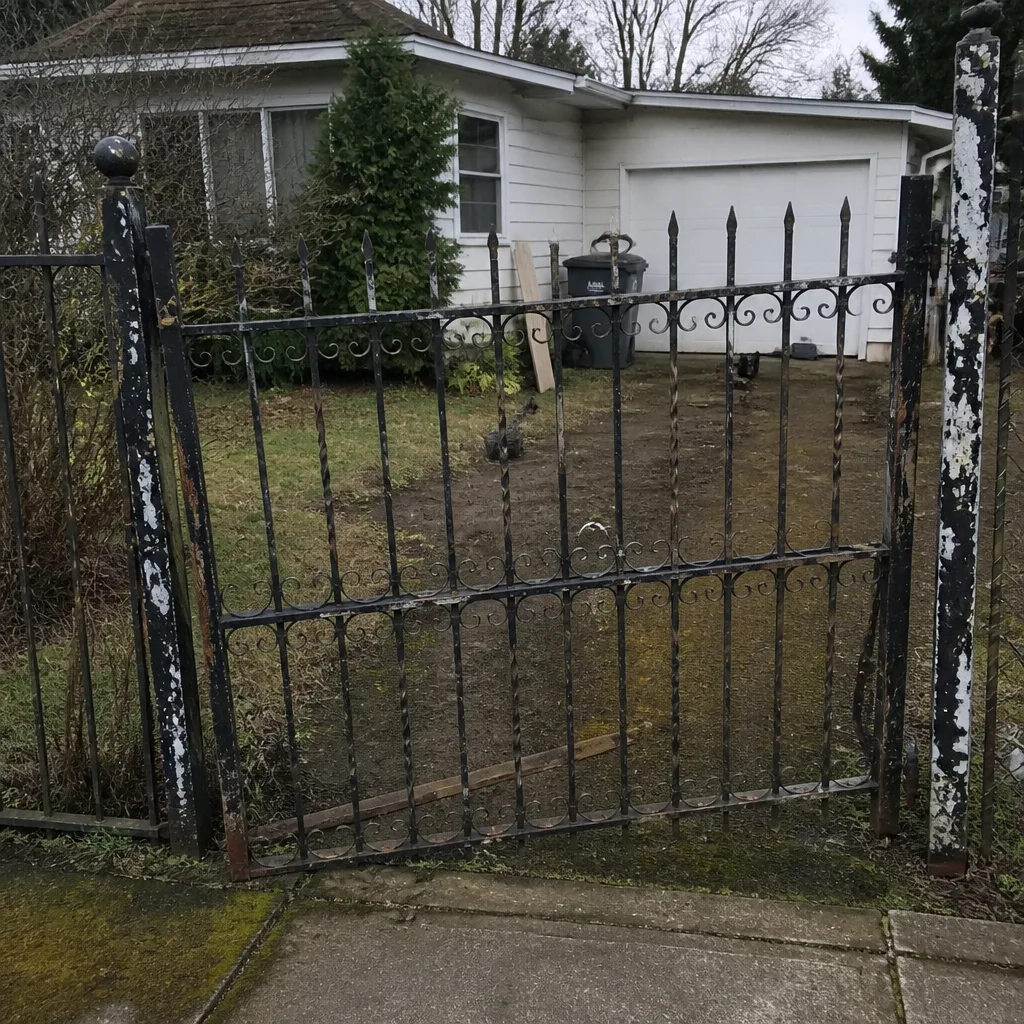 Before
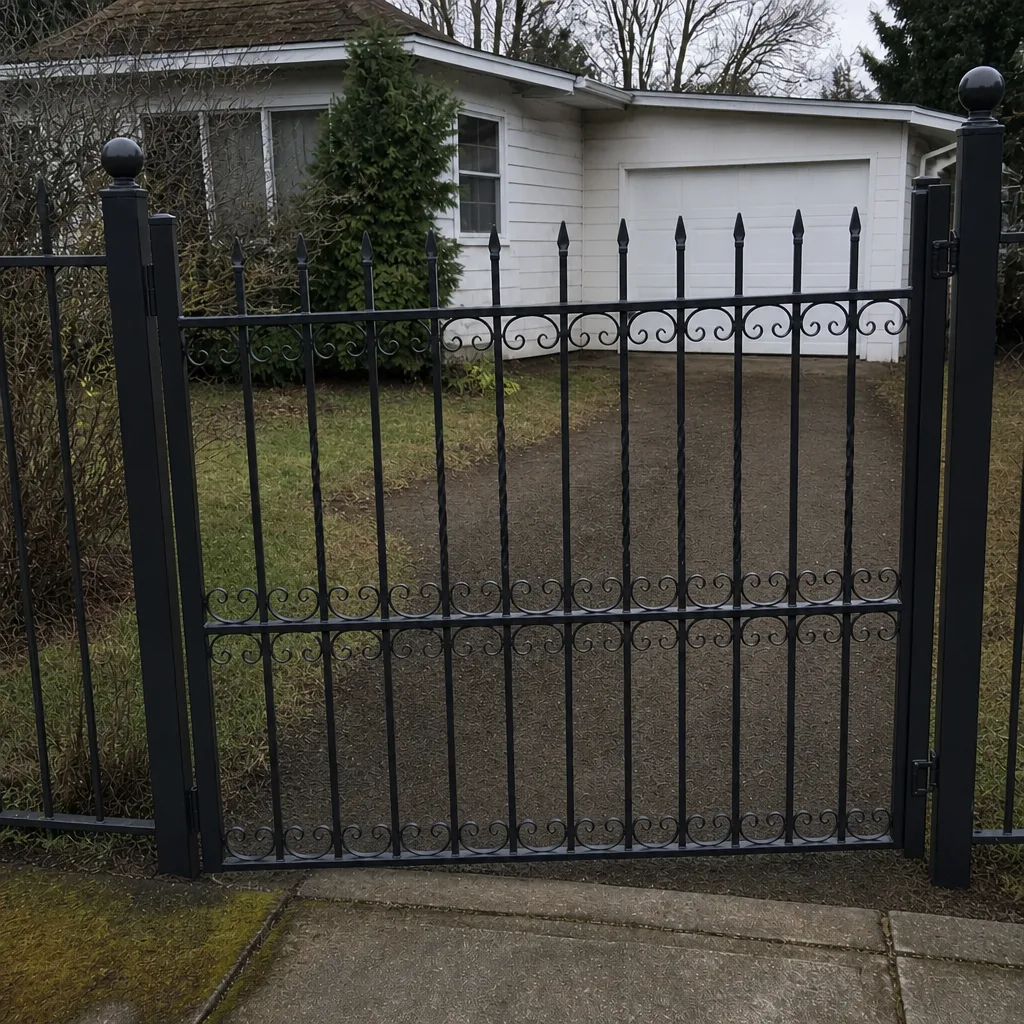 After
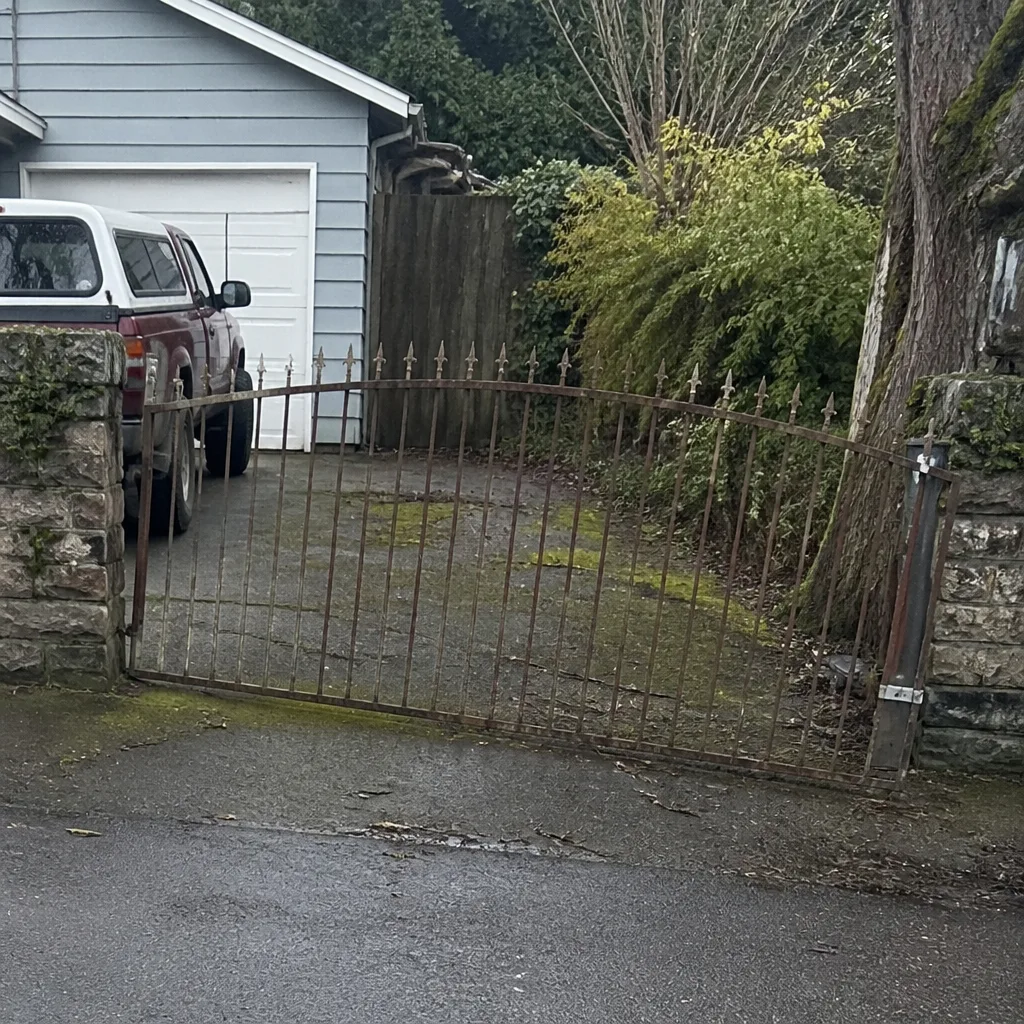 Before
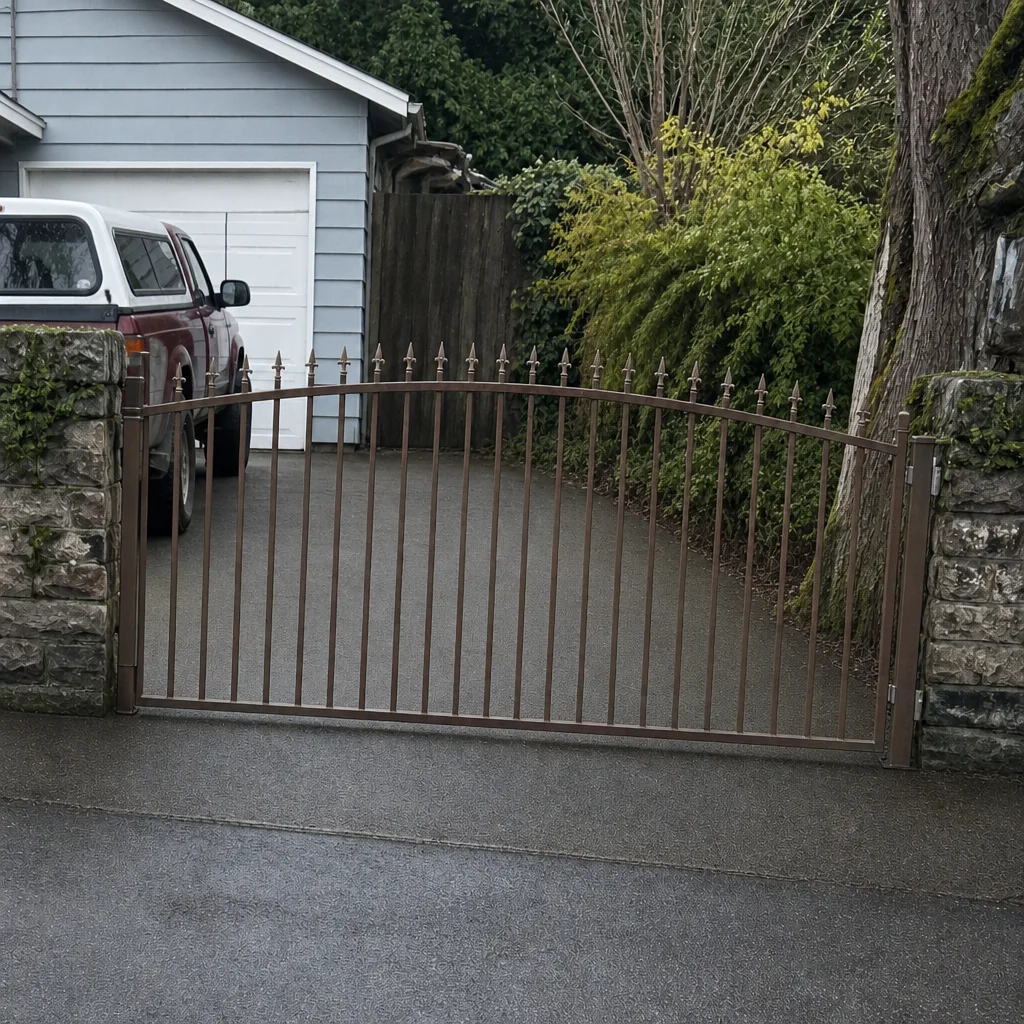 After
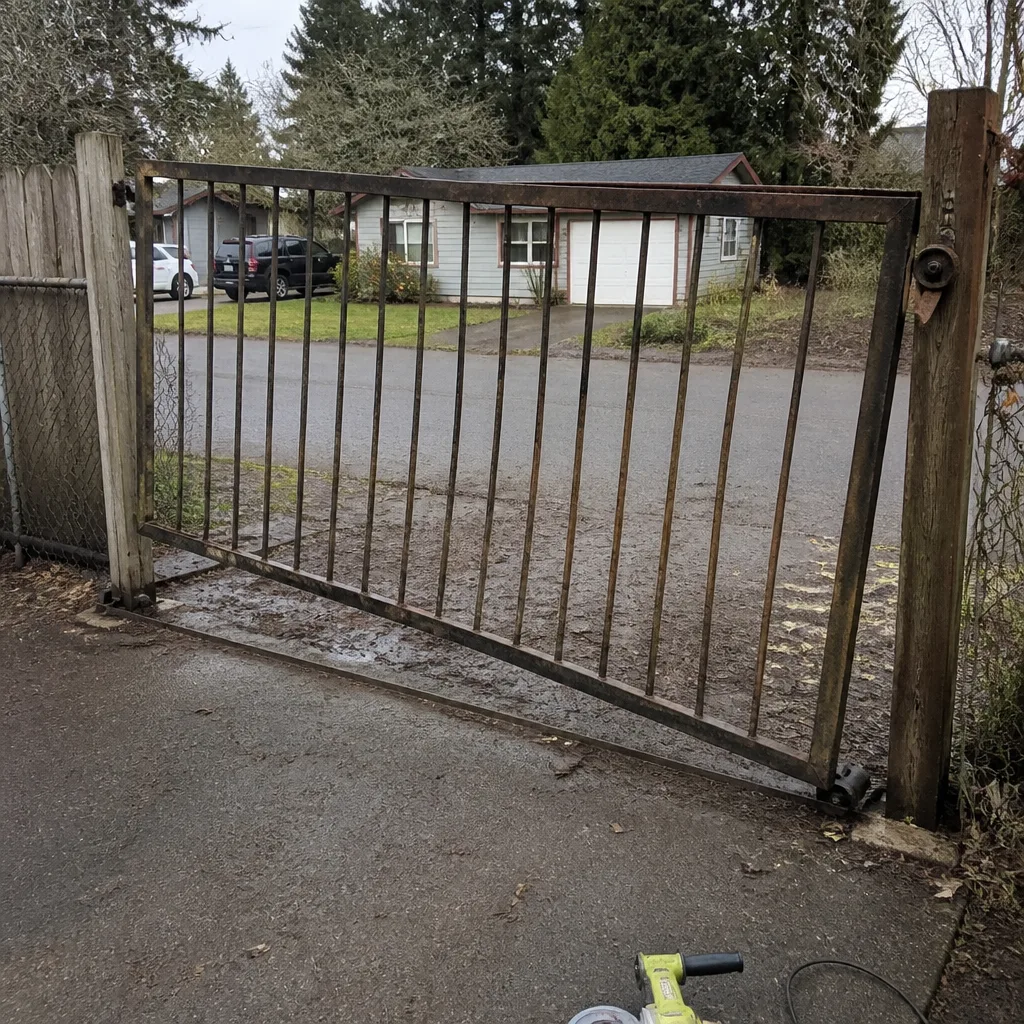 Before
 After
When to Call a Professional
If the gate is dead and the breaker is fine, call. If the gate reverses with nothing in the way and the beam is clean and aligned, call. If the gate binds when you move it by hand with the operator released, that’s mechanical and it needs a technician to look at the hinges, the track, or the posts. If the gate opens but won’t close, if the loop detector is behaving strangely, if the control board shows an unfamiliar error code, or if any part of the repair puts you near a live electrical panel, it’s time to get someone with a meter and brand experience on site. A repeated reset is the wrong move in every one of those cases.
We specialize in automated and electric gate systems, and gates are all we do. Whether your system is a DoorKing, an Elite, a Ghost Controls, or a Mighty Mule, we’ve diagnosed and repaired the same day, and we can quote the work before it starts. Gate Repair Hillsboro offers free estimates in Hillsboro. Call (855) 251-3899. We answer 24/7. Fast dispatch from 7am to 7pm, Sunday through Friday.
Frequently Asked Questions
A gate reversing before full close is almost always reading a false obstruction, usually from a misaligned or dirty photo-eye, a low winter sun angle into the receiver, or a loop detector holding a vehicle detection. The fastest test is to break the safety beam by hand during a closing cycle: if the gate behaves the same with the beam broken as it does without, the beam isn’t the cause and the fault is in the loop or the operator’s close logic. If your gate still reverses after cleaning and checking the beam, call (855) 251-3899 for a free estimate.
If the gate responds to a command with a click or an LED change but doesn’t move, the board is alive and the fault is likely in what it’s driving. If there’s no response at all, the board’s power supply is suspect. The motor is the least likely failure and the easiest to test: a technician checks the start capacitor, the brushes, and the current draw with a meter before replacing anything. If you’re not sure which, call (855) 251-3899 and we’ll walk through the symptom with you.
If the operator’s manual describes a reset procedure and you can follow it once, yes. What you shouldn’t do is reset repeatedly on a fault that keeps coming back. Repeated resets can cause a control board to lock out or push a stuck motor into a thermal fault, turning a small repair into a larger one. If a single reset doesn’t clear it, call (855) 251-3899 for a free estimate.
A gate that drags in wet weather and frees up in dry weather is usually telling you a wooden post has swelled or a track has shifted, and the operator has been pushing against extra resistance. That’s also the failure mode that eventually takes out the operator, because it’s been asked to work harder than it was sized for. A wet-season call here in Hillsboro usually catches it before the motor is the next thing to fail. Call (855) 251-3899 to have it checked.
We work on nine major automated gate brands: LiftMaster, FAAC, BFT, Linear, Viking, Ghost Controls, DoorKing, Elite, and Mighty Mule. That covers everything from entry-level residential operators like Mighty Mule and Ghost Controls to commercial-grade systems from FAAC, BFT, and DoorKing. Brand-specific fluency matters in gate repair, because the same symptom gets flagged differently on each board. Call (855) 251-3899 for a free estimate on your specific brand.
Cleaning a photo-eye, replacing a remote battery, and releasing the operator to move the gate by hand are all safe and diagnostic. Anything inside a live control board, a live electrical panel, a repeated breaker reset, a loop detector adjustment, or lifting a gate panel back onto its track is not safe to do yourself. If you’re at the edge of where the safe work stops, call (855) 251-3899 for a free estimate.
The Bottom Line
Most gate failures that look mysterious come down to one of six root causes: power, control board, safety sensor, mechanical, loop detector, or motor. Watch what the gate does in the first three seconds, run the beam test, and you’ll eliminate most of those categories before you pick up a tool. The rest of the work is brand-specific detail that rewards having a technician who actually knows your operator. If the gate binds, the breaker keeps tripping, the board shows a code you don’t recognize, or the beam test doesn’t nail it, don’t keep resetting. A technician with a meter answers all of it in minutes. At Hillsboro, our technicians have up to 8 years of experience and can diagnose and repair the same day. Gates are all we do.
Call (855) 251-3899 for a free estimate on your gate repair or electric gate repair. We answer 24/7. Fast dispatch from 7am to 7pm, Sunday through Friday. The price is set per job by the written estimate, and nothing gets started until you’ve agreed to it.
Written by the team at Gate Repair Hillsboro.