
Last updated November 14, 2026
 Wrought iron
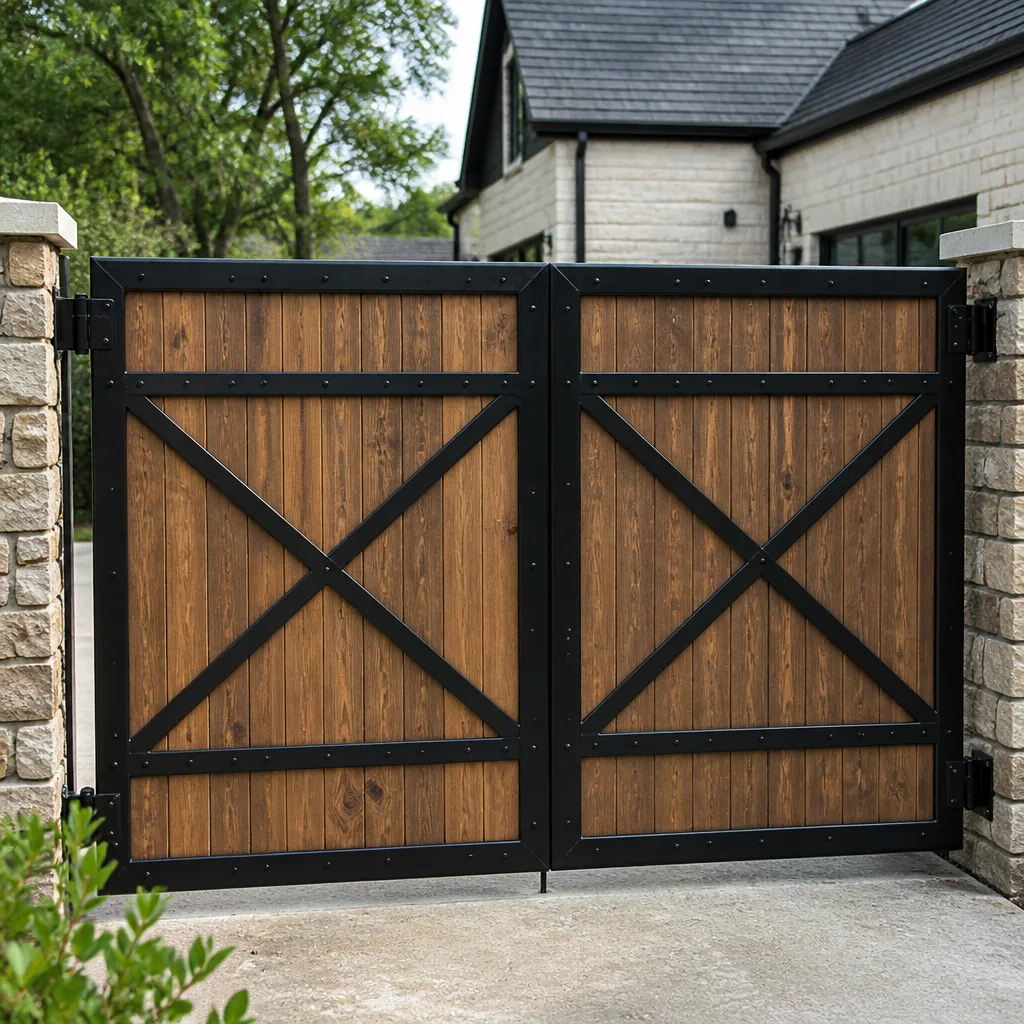 Wood & steel frame
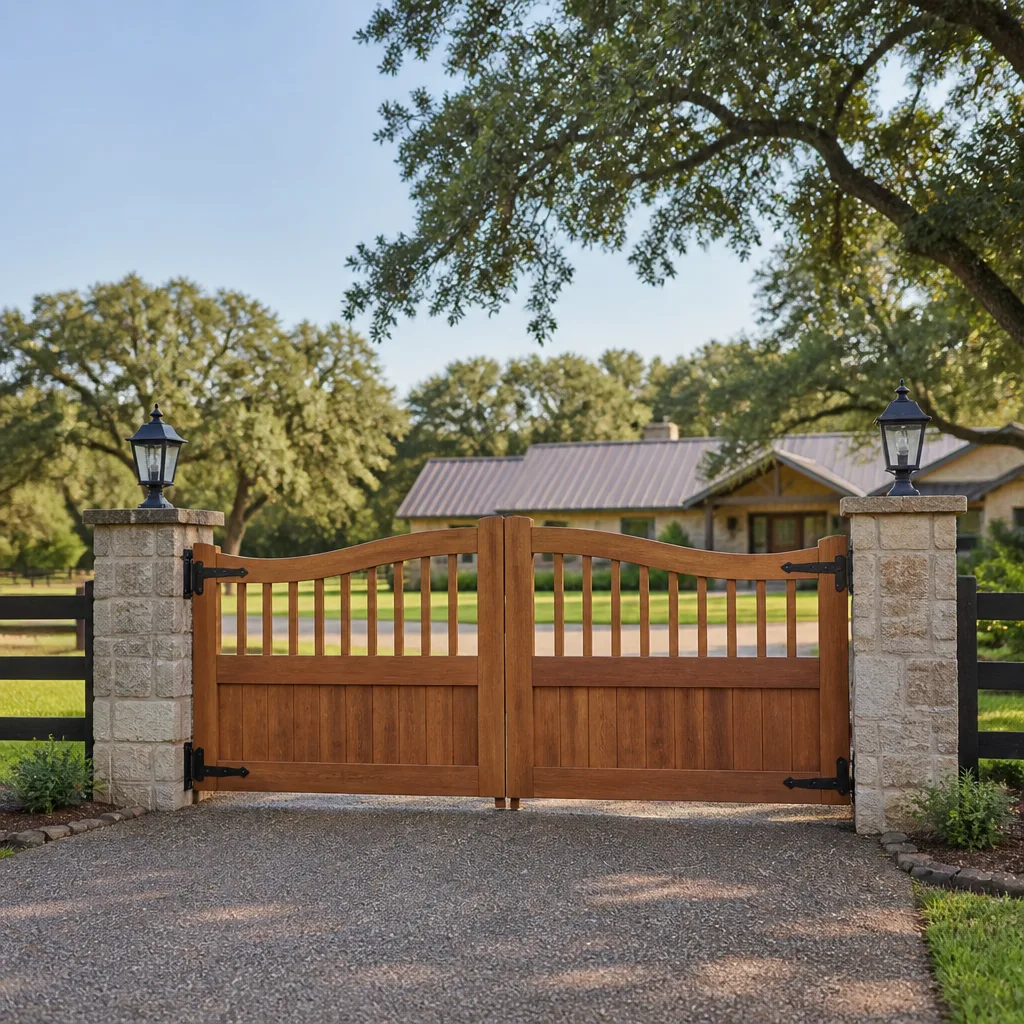 Farm & ranch
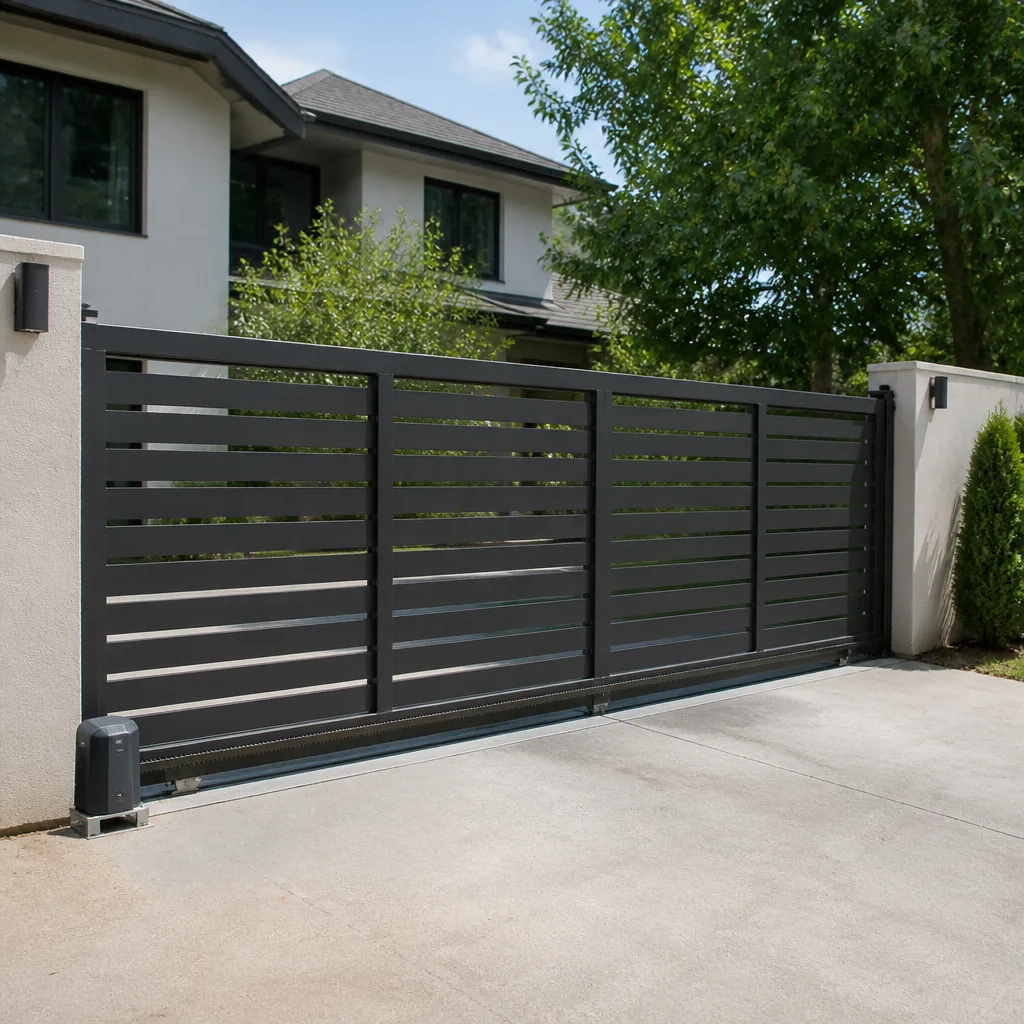 Sliding driveway gates
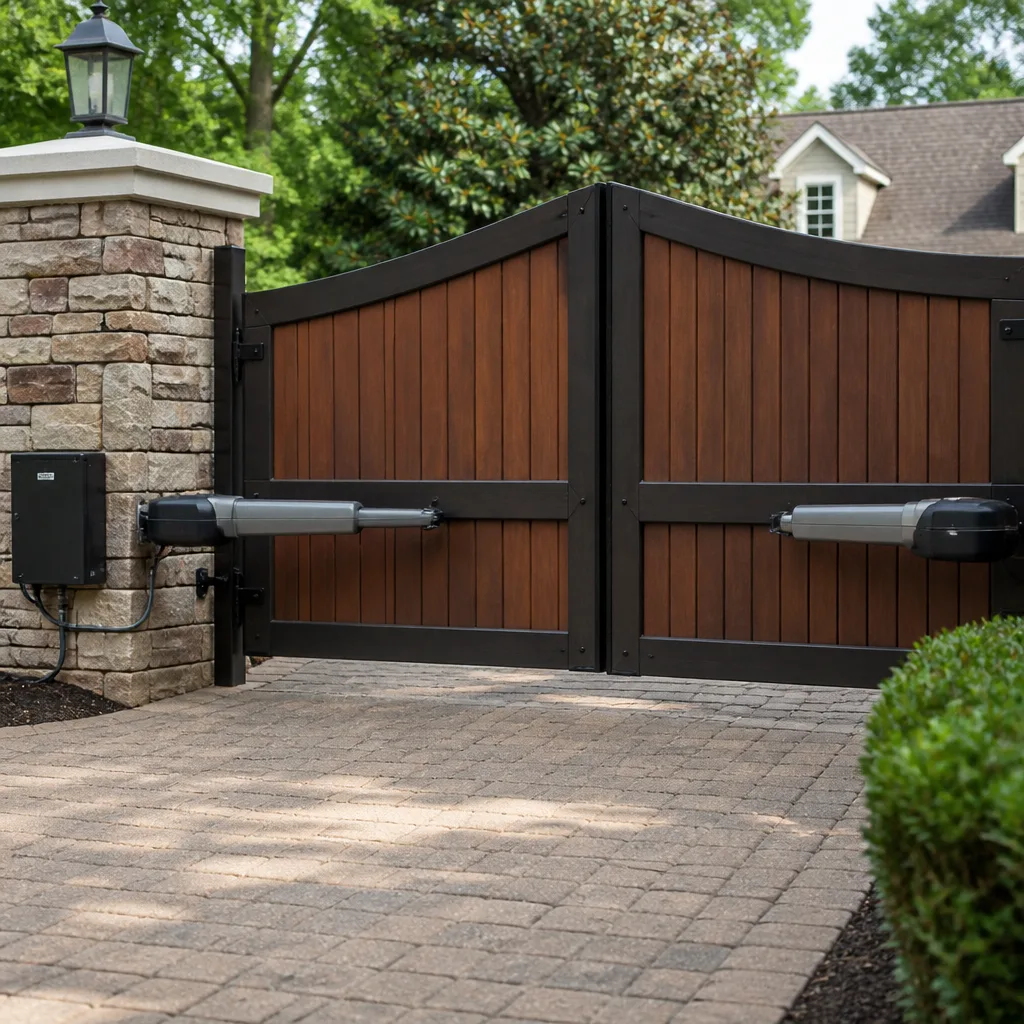 LiftMaster operators
Free on-site gate assessment - hinges, posts, and your LiftMaster or Nice gate operator checked before anything is quoted
The assessment is free and the quote is the invoice.
Get your free estimateGate Repair Emergency Preparedness Guide for Hillsboro Homes
Most gate advice tells you to call a technician and wait. That’s the wrong first move. A gate that fails open at 2 AM leaves your driveway, your equipment and in some cases your building exposed for however long it takes anyone to respond. The phone call is one step in a sequence, not the whole sequence. If you know which way your gate failed, where the manual release sits on your operator, and what to write down before the technician arrives, you turn a night of guesswork into a short, precise repair. This guide gives Hillsboro homeowners and property managers that sequence, for both failure directions, before the truck pulls in.
Quick Answer
A gate emergency in Hillsboro comes down to two scenarios with two different responses. A gate stuck closed is a security and access problem: secure the property another way first, then use the manual release only if you can do it safely, then call. A gate stuck open is a security and liability problem: block the opening, stop the traffic, and call with your operator brand and error code ready. In both cases, never force a powered gate by hand. Call (855) 251-3899. We answer 24/7, fast dispatch from 7am to 7pm.
Styles & brands we work with
- Wrought iron
- Wood & steel frame
- Farm & ranch
- Sliding driveway gates
- LiftMaster operators
Table of Contents
- Gate Failed Closed: The Access-Crisis Sequence
- Gate Failed Open: The Security-and-Liability Sequence
- Finding the Manual Release on Common Operators
- What to Document During an Emergency
- Pre-Failure Preparation: Three Things to Set Up Now
- When a Gate Emergency Becomes a Liability Issue
- Common Mistakes to Avoid
- Frequently Asked Questions
Gate Failed Closed: The Access-Crisis Sequence
A gate that won’t open is the failure most people picture, and it’s the easier of the two to live with for an hour. Your property is still secure. What you’ve lost is access, and access problems have a way of escalating when people start improvising.
Work through this in order:
- Confirm the failure direction. Is the gate fully closed and latched, or stopped partway? A gate that halted mid-travel is a different problem from one that closes and refuses to open. Note it.
- Check the obvious power and control inputs. Look at the operator itself for a tripped breaker, a blown fuse indicator or a dead keypad. Hillsboro’s winter windstorms knock out power and trip breakers, and a surprising share of “failed” gates are simply de-energized operators. If the operator has no lights at all, that’s your answer.
- Try the second control. If your remote does nothing, try the keypad, then the interior push button. If any of them opens the gate, the operator is fine and the problem sits in the remote, receiver or entry device. That single test saves real diagnostic time.
- Check the safety edges and photo-eyes. A blocked or misaligned safety beam tells the operator the path isn’t clear. Clear leaves, debris and spider webs from the lenses, then try again.
- Use the manual release only if you can do it safely and only if the gate isn’t on a slope. A released gate on a grade will move. See the release section below.
- Call with your notes. Brand, model if visible, error code, what you already tried. That call gets booked and dispatched faster than “my gate isn’t working.”
We hear this failure constantly across Hillsboro, and the pattern is consistent: the gate is fine, the operator’s logic board or a safety input is what quit. Diagnosing it properly takes a technician who knows the board, not a parts swap.
Power it down at the breaker before you touch anything inside the operator housing. Control boards hold voltage, and a shock from a live board is a genuine hazard. Leave the wiring to a trained technician.
Gate Failed Open: The Security-and-Liability Sequence
A gate that stays open is the failure people underestimate. It’s the one that leaves your property, your stored equipment and anyone who walks onto the driveway exposed, and in some cases it’s the one that creates legal exposure if a vehicle or a person gets hurt passing through.
Treat a failed-open gate as a physical security event first, a repair second:
- Block the opening. A vehicle parked across the gap, a temporary barrier, or two people and a chain. Don’t rely on the gate to stop anyone, because it won’t.
- Stop the cycle if the gate is hunting. A gate that opens, stalls and reverses repeatedly will burn out the operator motor and stress the control board. Cut power at the breaker to stop the cycling. The gate will sit where it is, and that’s fine.
- Keep people clear of the travel path. A misbehaving automated gate can move without warning. No kids, no pets, no cars parked where the gate swings or slides.
- Look for the trigger. A gate that fails open every time usually has a safety input reading as blocked. That’s a photo-eye, a loop detector or a safety edge. A gate that fails open intermittently is often a limit switch, a control board or a power problem. Note which one you’re seeing.
- Document and call. Brand, model, error code, cycle behavior. Then call (855) 251-3899. We answer 24/7, and dispatch runs 7am to 7pm Sunday through Friday.
Don’t disable the operator to “make it safe” unless you fully understand the system. An operator that’s been powered down and partially disassembled is harder to diagnose and sometimes harder to make safe again. Block the gate, note the symptoms, and let a specialist work it.
Commercial operators from FAAC and BFT behave differently from residential units in this failure mode, and knowing which system you have changes the first question a technician asks. When homeowners and property managers call electric gate repair with that detail ready, the diagnosis moves faster.
Finding the Manual Release on Common Operators
Every powered gate operator has a manual release. It’s the mechanical override that lets you move the gate by hand when the motor won’t. Most people find out where it is at the worst possible moment. Here’s where it lives on the residential brands we see most across Hillsboro driveways.
The exact mechanism varies by model, so the right move is to find yours now and practice the motion when there’s no pressure. Try it with the power on and the gate in a safe position first, so the motion is familiar.
- LiftMaster swing operators. The release is usually a keyed lever or a pull handle on the operator housing, sometimes a manual release key inserted into a slot. Turn the key or pull the lever, then move the gate by hand. LiftMaster’s residential line is one of the most common on Hillsboro properties, and the release location is usually marked on the housing label.
- FAAC swing and sliding operators. FAAC uses a release key and a locking mechanism at the operator, often with a distinct key rotate-and-pull motion. The release point is typically on the motor housing near the gate arm or at the base of the operator.
- BFT sliding operators. BFT uses a manual release with a lever or key that disengages the pinion from the rack. On sliding gates this is often a lever at the side of the operator that you engage and hold while you slide the gate.
- Linear swing and slide operators. Linear releases are typically a pull lever or a keyed mechanism on the operator body. Some models have a manual release override that you engage with the key before the gate will move.
- Ghost Controls and Mighty Mule residential units. These DIY-friendly residential systems usually have a simple pull-pin or lever release at the operator or the gate arm. The release is designed to be accessible from the driveway side.
One critical rule: release the gate, don’t force it. If the manual release won’t engage or the gate still won’t move, stop. A stuck release or a jammed gate mechanism means something else is wrong, and forcing it can bend the gate or strip the operator. Leave it and call.
On a sloping driveway, releasing the gate lets it swing or slide under its own weight. Keep clear of the path and never put a body part between the gate and its stop. Our technicians have up to 8 years of experience with these systems, and a good share of that is knowing when not to force a release.
What to Document During an Emergency
The single most useful thing you can do during a gate emergency is also the least obvious: take notes and photos. A technician who arrives with the symptom, the error code and the timeline can usually diagnose in minutes instead of half an hour. That’s time and money.
Collect these before the technician arrives:
- Operator brand and model. A photo of the label on the operator housing. That’s the single most valuable detail.
- Error code. If the operator’s display shows a code or a flashing LED pattern, photograph it. For operators without a display, note how many flashes and the pause between them. Flash counts are diagnostic.
- What triggered the failure. Power outage, a storm, a vehicle crossing the loop, someone pushing the gate, or nothing obvious. Write it down in one line.
- The failure direction and behavior. Fully open, fully closed, stuck mid-travel, cycling repeatedly. Whether it fails the same way every time or only sometimes.
- What you already tried. Remote, keypad, push button, power cycle. Which ones changed anything and which ones didn’t.
- Photos of the gate position and the surrounding area. Wide shots showing where the gate sits, close shots of the operator, the safety edges, the track or hinges.
So much gate diagnosis is inference. The symptom pattern and the error code do most of the work, which is why brand-specific fluency matters. A technician who works on gate repair all day recognizes a LiftMaster limit-switch pattern or a FAAC loop-detector fault from the description alone.
Digital notes are fine, but write the essentials somewhere physical too. If the power is out, your phone may not last the night.
Pre-Failure Preparation: Three Things to Set Up Now
Gate emergencies are mostly predictable in shape and unpredictable in timing. You can’t stop the operator from failing, but you can make sure the failure is a short inconvenience rather than a long one. Three setups cover it.
1. Backup power
Hillsboro’s winter storm season brings outages, and an operator without backup power is a gate that fails the moment the grid does. Many residential operators support a battery backup kit, and some ship with one. If yours does, confirm the battery is installed and holding a charge. A backup battery that’s three years old and never checked is a placeholder. For homeowners adding a new system, a battery backup or a solar-compatible operator is one of the few upgrades that pays back on the first outage.
2. Manual release access
Know where your release is, keep the key where you can find it in the dark, and put a small light near the operator if you don’t have one. Confirm the release actually works by engaging it once, in daylight, with the gate in a safe position. A release that’s seized from lack of use is common. A release you’ve tested is the one that works at 2 AM.
3. Emergency contact protocol
Save the number. Keep it somewhere a household member or property staff can find without asking. Know what to say: brand, symptom, failure direction. And know what questions you’ll want answered: is a technician available, and is the estimate free.
Call (855) 251-3899. We answer 24/7, and a call outside dispatch hours is booked into the next opening, Sunday through Friday, 7am to 7pm. Same-day service is available when you call within dispatch hours. The written estimate is free, and the price is set per job, so there’s no reason to wait for a breakdown before you have the number.
When a Gate Emergency Becomes a Liability Issue
A failed-open gate is a security problem first. It becomes a liability problem when someone else’s property or safety is involved, and the gap between those two can be surprisingly short.
Think through the scenario. Your gate is stuck open. A neighbor backs out of their driveway and clips it, or a delivery driver swings through the opening assuming the path is clear. In a case like that, the questions get specific: was the homeowner aware the gate was malfunctioning, how long had it been failing, and what was done to make the opening safe in the meantime. A gate that was “stuck open for a week” while nobody acted is a very different story from one blocked with a vehicle within the hour.
Oregon law on premises liability turns on reasonable care. A homeowner who knows a gate is malfunctioning and leaves it open without warning or barrier is not exercising that care. A homeowner who blocks the opening, warns visitors and gets the repair scheduled is doing exactly what’s expected.
This is one practical reason to act fast on a failed-open gate, separate from the repair itself. It’s also a reason to keep the gate maintained rather than run it until it quits. Automated gates fail most often from wear on hinges, tracks, limit switches and safety inputs, and a system that’s been checked doesn’t fail open unexpectedly. Whether your system is a LiftMaster, a FAAC, a BFT or a Linear, the maintenance is the same principle: catch the wear before it becomes a failure. We handle both residential driveway gates and commercial access-control systems, and both benefit from the same approach.
If your gate has failed and the exposure is real, don’t wait for a convenient time. Call, block the opening, and get the repair on the schedule.
See the difference
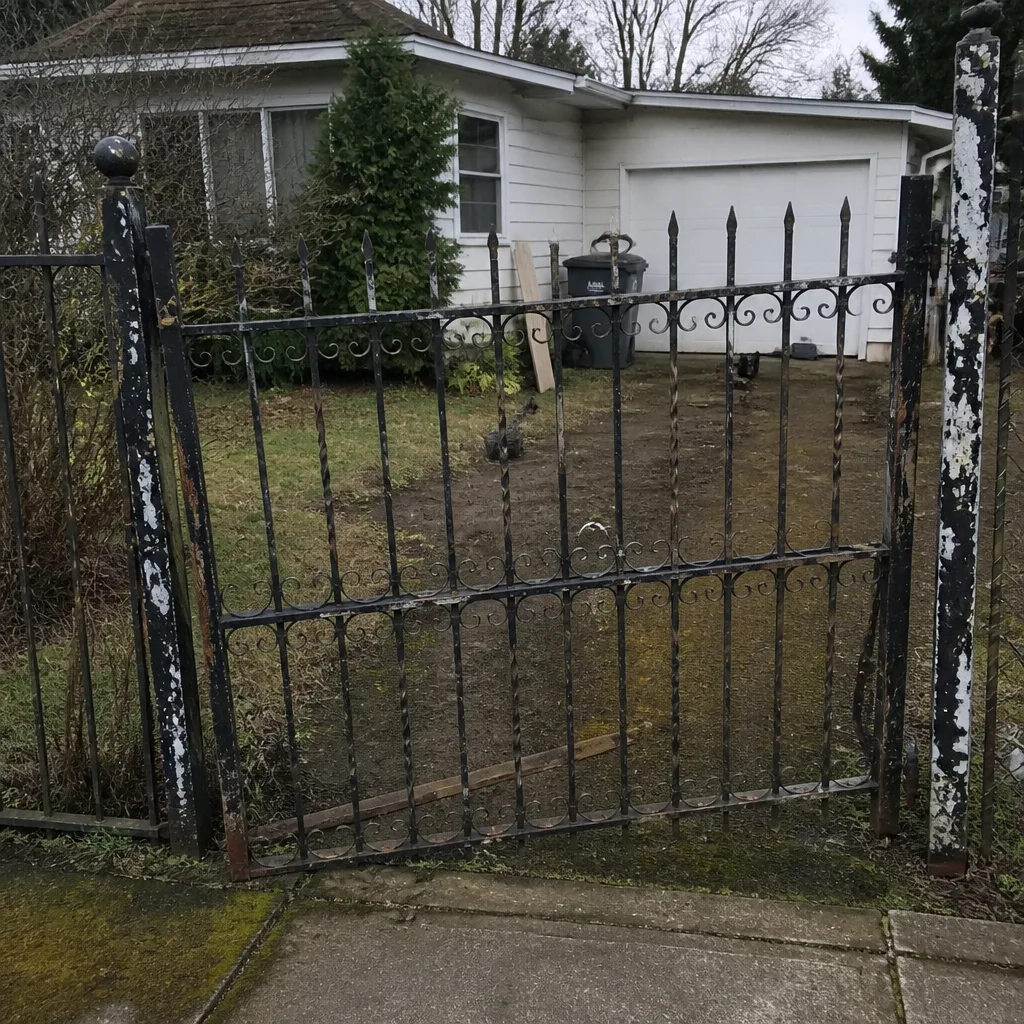 Before
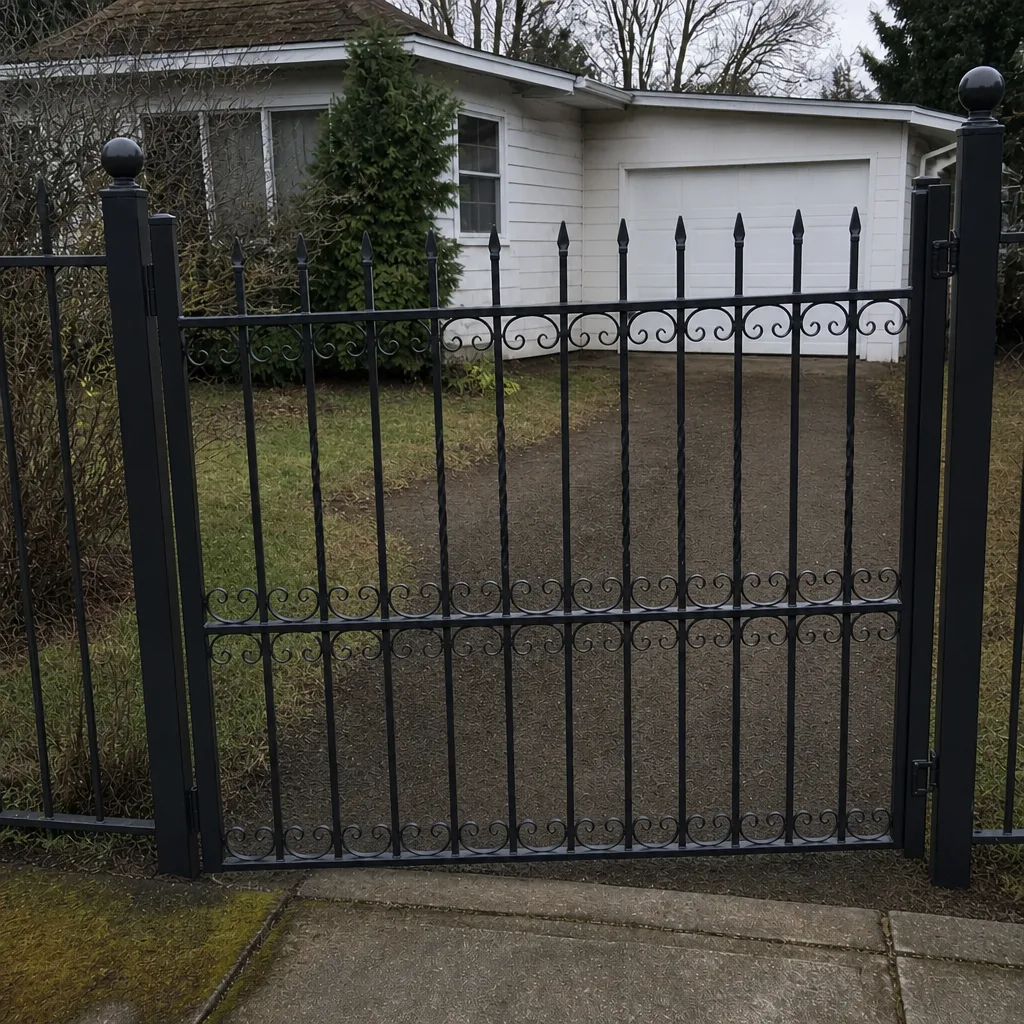 After
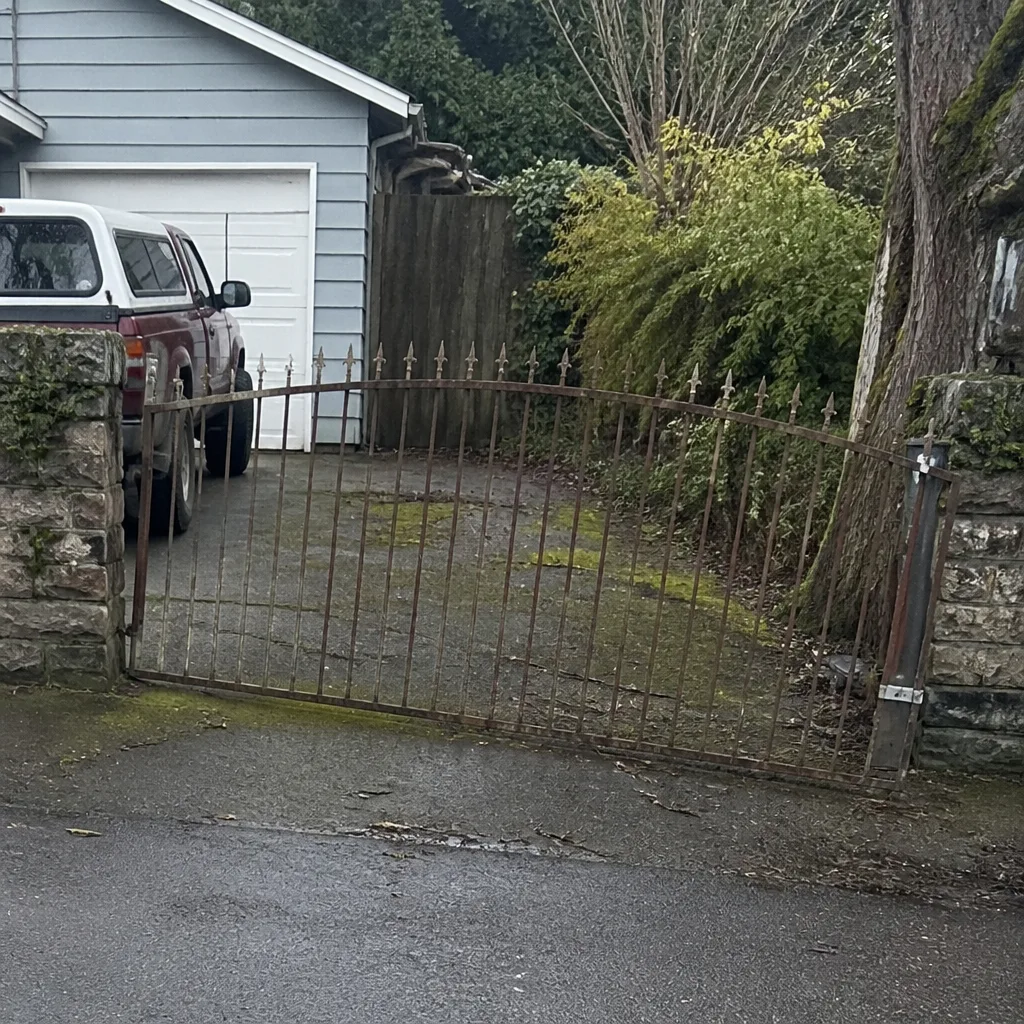 Before
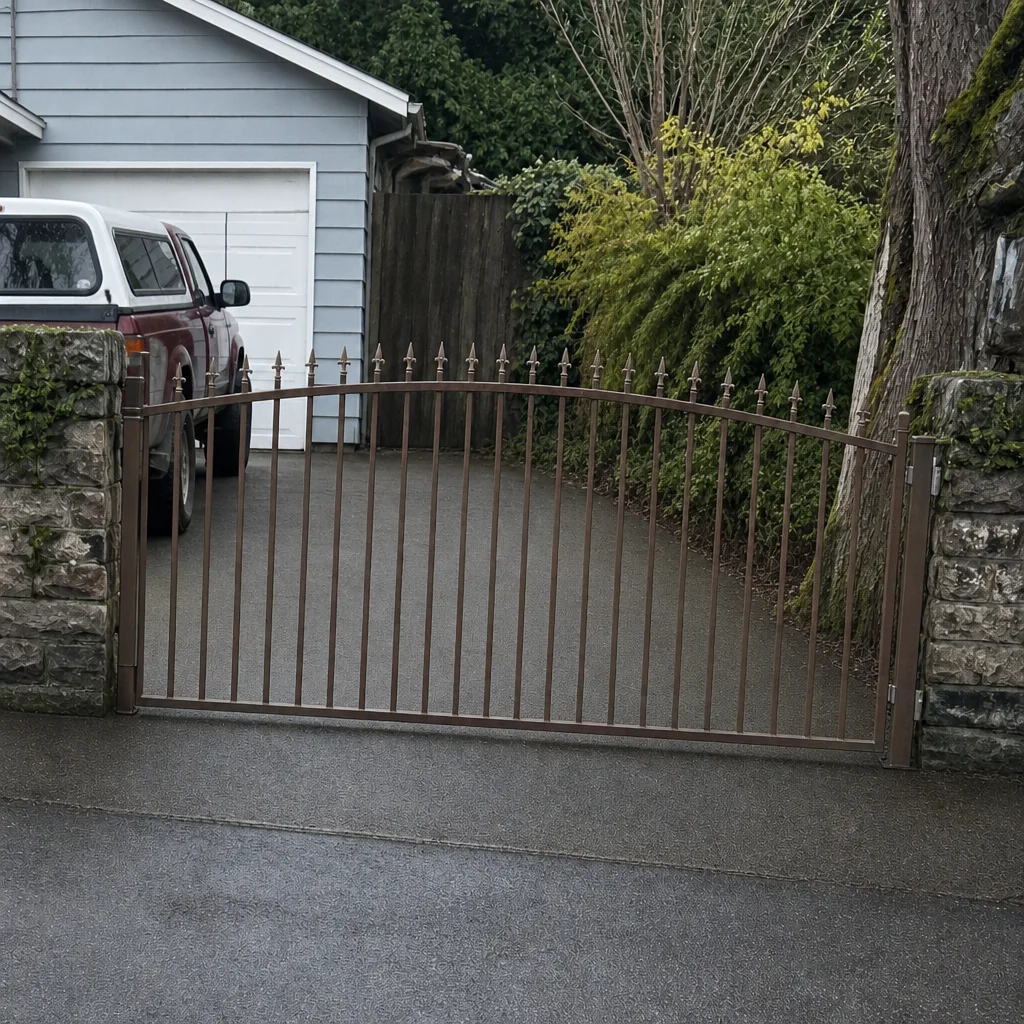 After
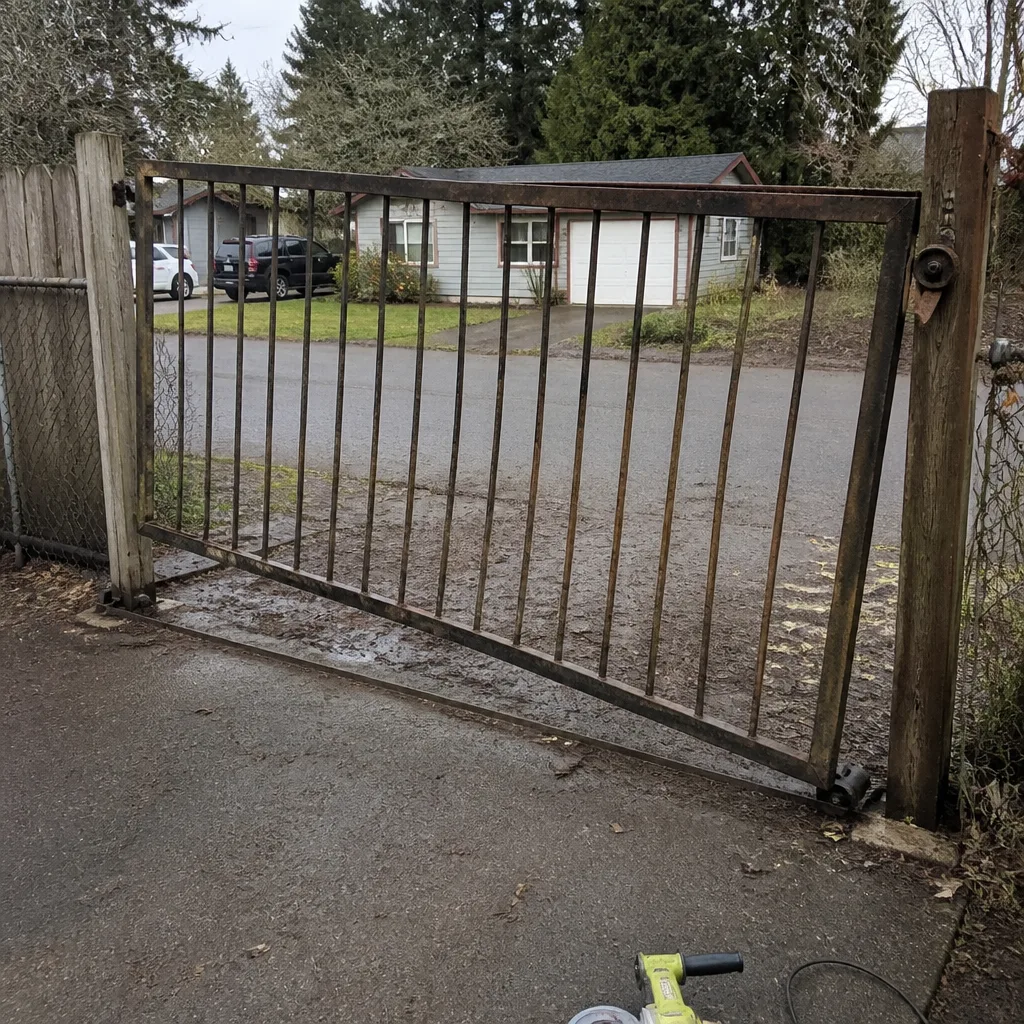 Before
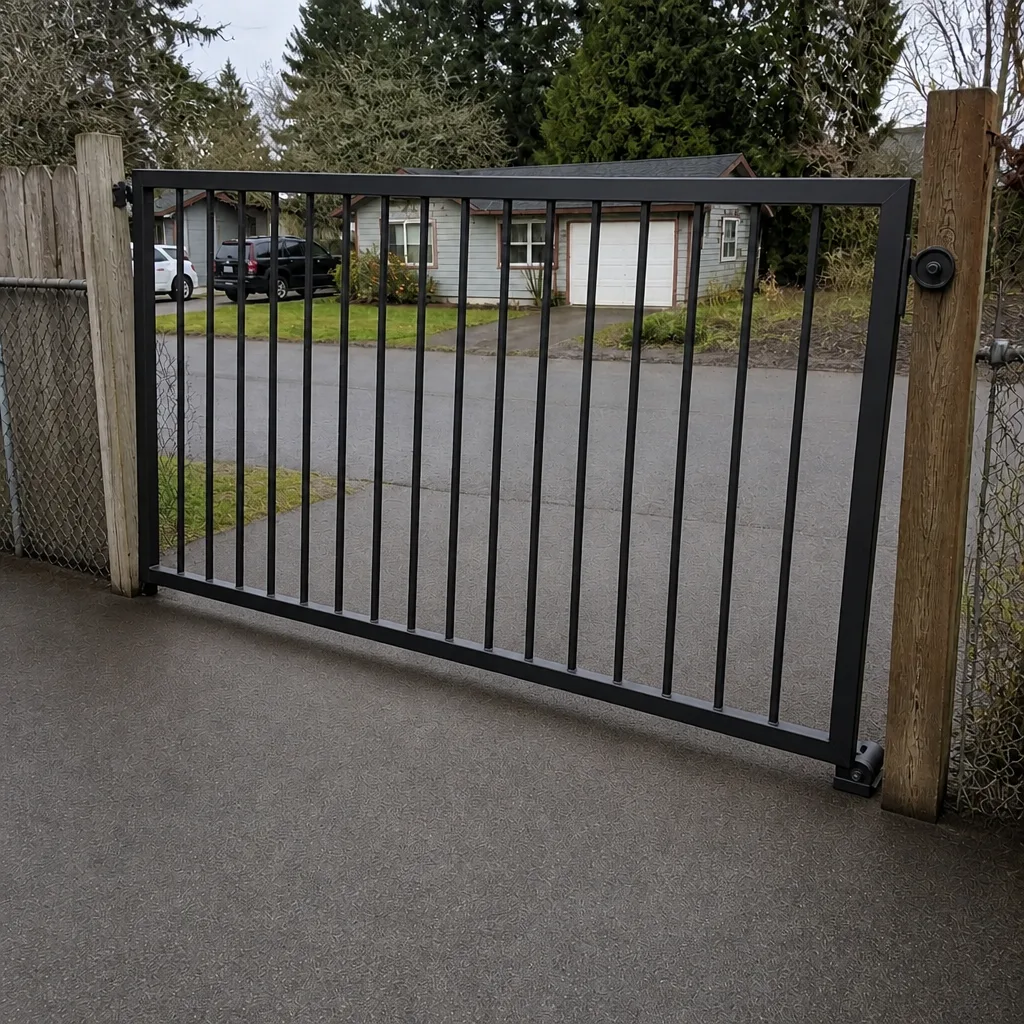 After
Common Mistakes to Avoid
- Forcing a powered gate by hand. A gate that won’t move against the motor will usually damage the operator or bend the gate itself. The manual release exists for exactly this reason. Engage it or leave it.
- Disabling the operator when the gate fails open. Pulling the power and walking away leaves the gate where it sits. If you need the operator off, block the opening first and note the position. In a lot of Hillsboro storms, the real fix is restoring power after a breaker trip.
- Skipping the safety-edge check. Most “failed” gates that won’t open or won’t close have a blocked photo-eye or a safety edge reading as triggered. Clearing the lenses and retrying takes seconds and rules out a big share of false alarms.
- Assuming a general handyman or fence company can handle an operator fault. A fence contractor can hang a gate. Diagnosing a control board, a loop detector or a safety reversal on a powered system is a different job. A generalist will swap parts by trial and error, and you’ll pay for it.
- Waiting on a failed-open gate because it’s “just inconvenient.” The security gap is live while the gate sits open. A vehicle, a pet or a person gets through in that window, and the consequence runs well past the repair bill.
- Never testing the manual release. The one time you need it is the one time it’s seized. Test it in daylight, in a safe position, before you need it.
- Ignoring a recurring error code. An intermittent code is the operator telling you something’s starting to fail. Documenting it early turns a scheduled diagnosis into a much smaller job than a roadside emergency in the rain.
When to Call a Professional
Some gate issues are a user error or a simple block in the safety edge. Most aren’t. Call a professional when your gate fails the same way twice, when the operator logs an error code you can’t clear, when the manual release won’t engage, or when a gate fails open and you can’t get it blocked quickly. Call if the gate looks out of square, if the track or hinge is bent, if the operator cycles on its own, or if any wiring or power at the operator looks damaged or exposed. Automation and access-control work is measured and scheduled rather than same-day, so the estimate and the install plan are the first step, not the last.
Gate Repair Hillsboro offers free estimates in Hillsboro. Call (855) 251-3899. We answer 24/7, with fast dispatch from 7am to 7pm.
Frequently Asked Questions
A gate stuck open is the more urgent problem because it’s a live security and liability exposure; a gate stuck closed is an access problem with your property still secure. Block the opening immediately and call. Then use the manual release only if you can do it safely.
Yes, but the brand and model speed it up considerably. We work on LiftMaster, FAAC, BFT, Linear, Viking, Ghost Controls, DoorKing, Elite and Mighty Mule, so a photo of the operator label and any error code lets us match your system to the right diagnostic path. Call (855) 251-3899 with those details and the estimate is free.
Same-day service is available when you call within our dispatch window. We answer the phone 24/7, and dispatch runs 7am to 7pm Sunday through Friday, so a call outside those hours is booked into the next opening. Call (855) 251-3899 and we’ll tell you the next available slot.
Block the opening with a vehicle or barrier, keep people and pets clear of the travel path, and cut power to stop the operator if it’s cycling repeatedly. Note the failure direction, brand and any error code, then call. The price is quoted before any work starts, so you’ll know the figure before the repair begins.
We do. We service entry-level residential operators like Mighty Mule and Ghost Controls, and commercial-grade systems like FAAC, BFT and DoorKing, so property managers with larger access-control setups get the same brand-specific diagnostic approach. Gates are all we do, so the diagnosis is usually faster than calling a general contractor.
The price is set per job by the written estimate, and the estimate itself is free. Call (855) 251-3899 for a quote specific to your gate and operator, and we’ll walk you through the price before any work starts.
The Bottom Line
A gate emergency in Hillsboro is two scenarios, not one. A gate stuck closed is an access problem: secure or wait, check power and safety edges, then release safely if you can. A gate stuck open is a security and liability problem: block the opening, stop the cycling, document the symptoms, and call. Neither scenario needs guesswork. Knowing where your manual release sits, having the operator brand and error code ready, and setting up backup power before you need it turns a long night into a short repair. Whether you’re preparing for the next storm or dealing with a gate failure now, the first move is the same. Call (855) 251-3899 for a free estimate. We answer 24/7, with fast dispatch from 7am to 7pm, Sunday through Friday. Visit Gate Repair Hillsboro to see how we approach your system.
Written by the team at Gate Repair Hillsboro.