
Last updated November 14, 2026
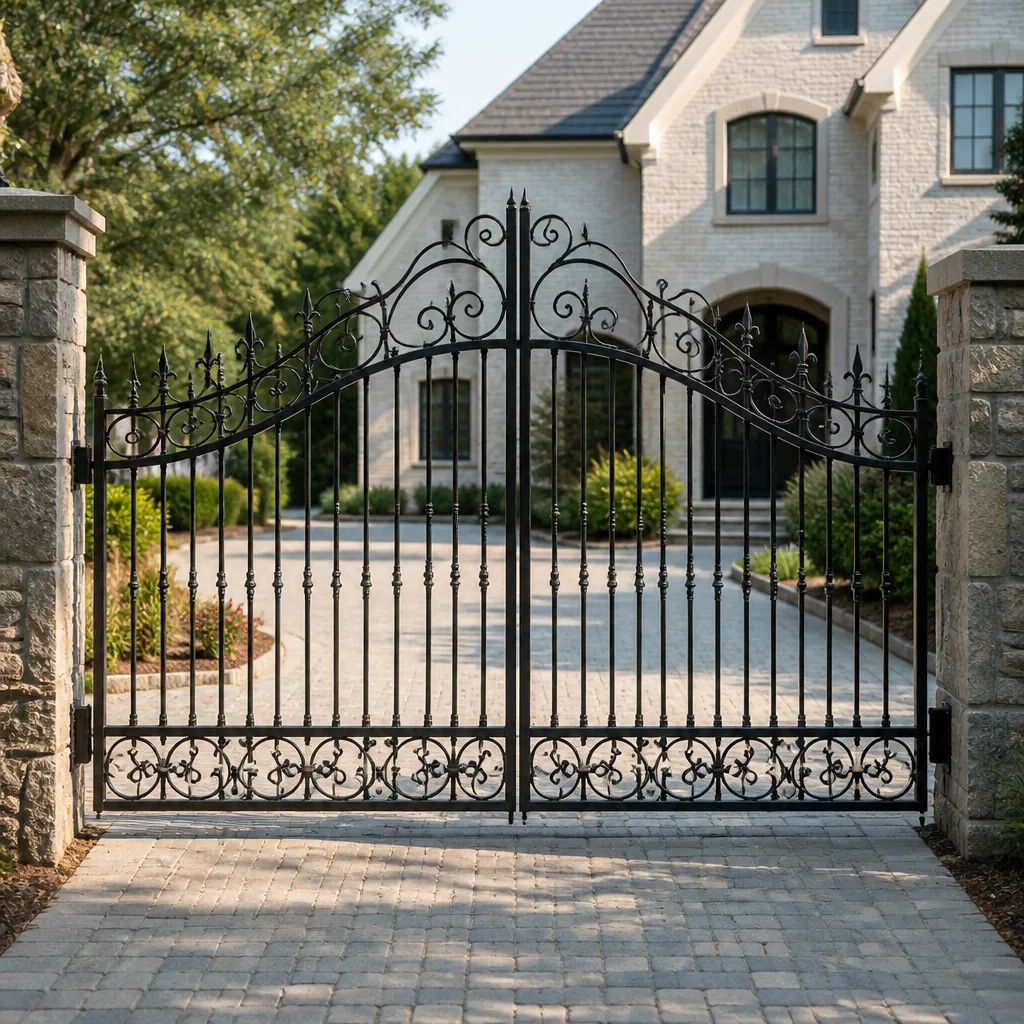 Wrought iron
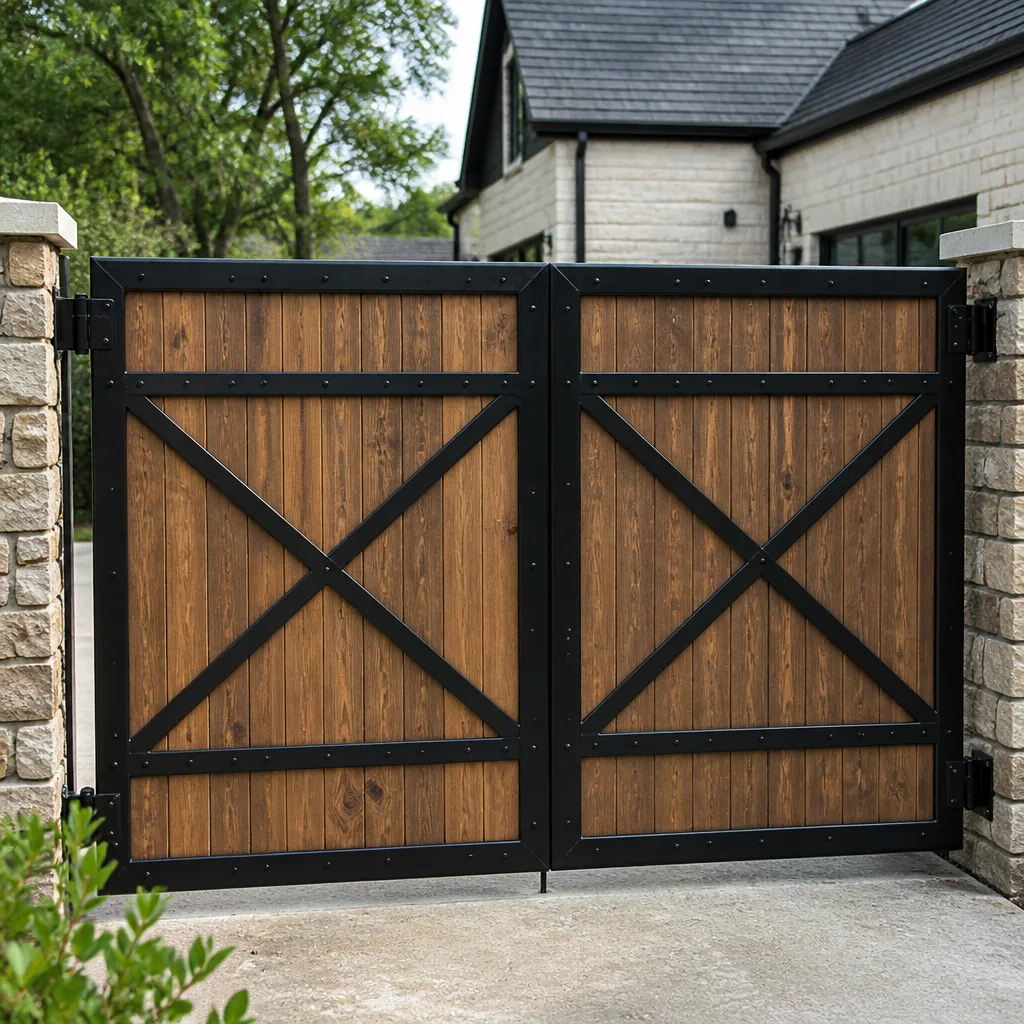 Wood & steel frame
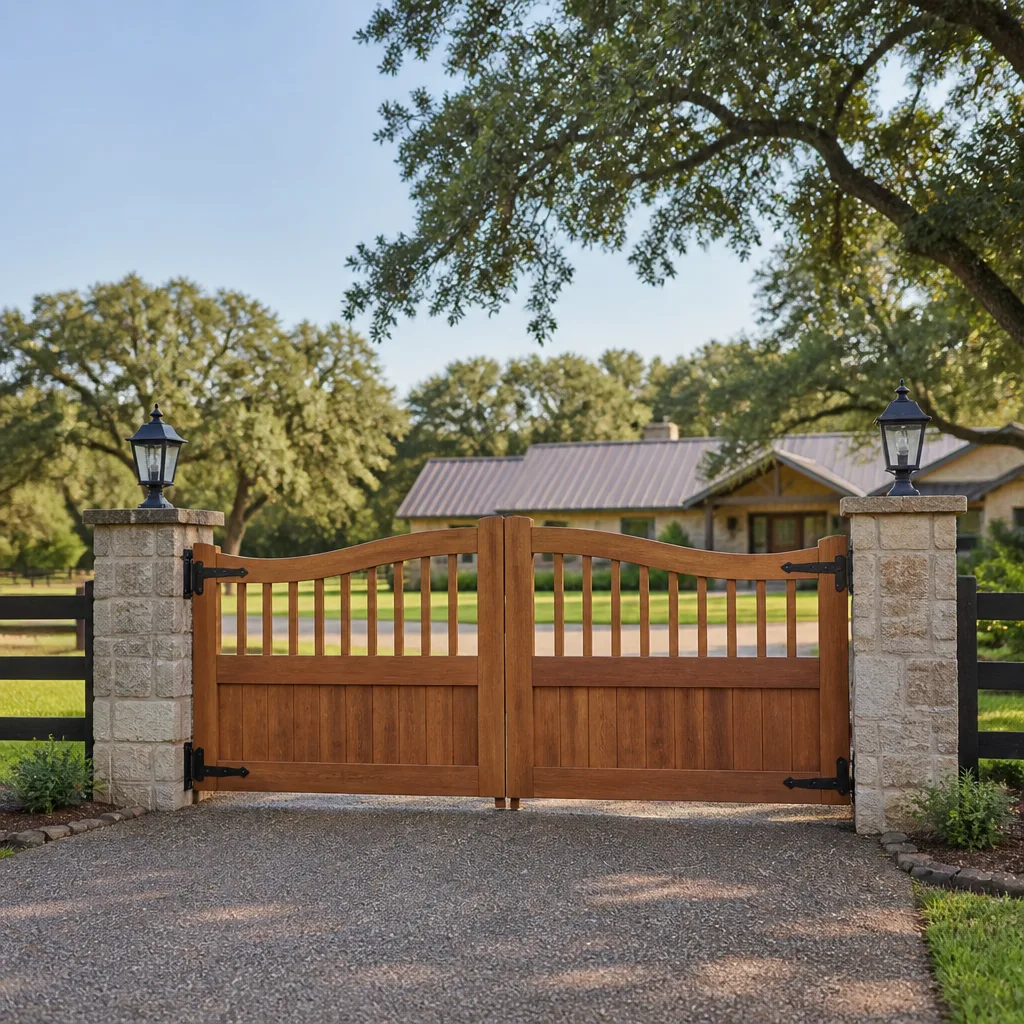 Farm & ranch
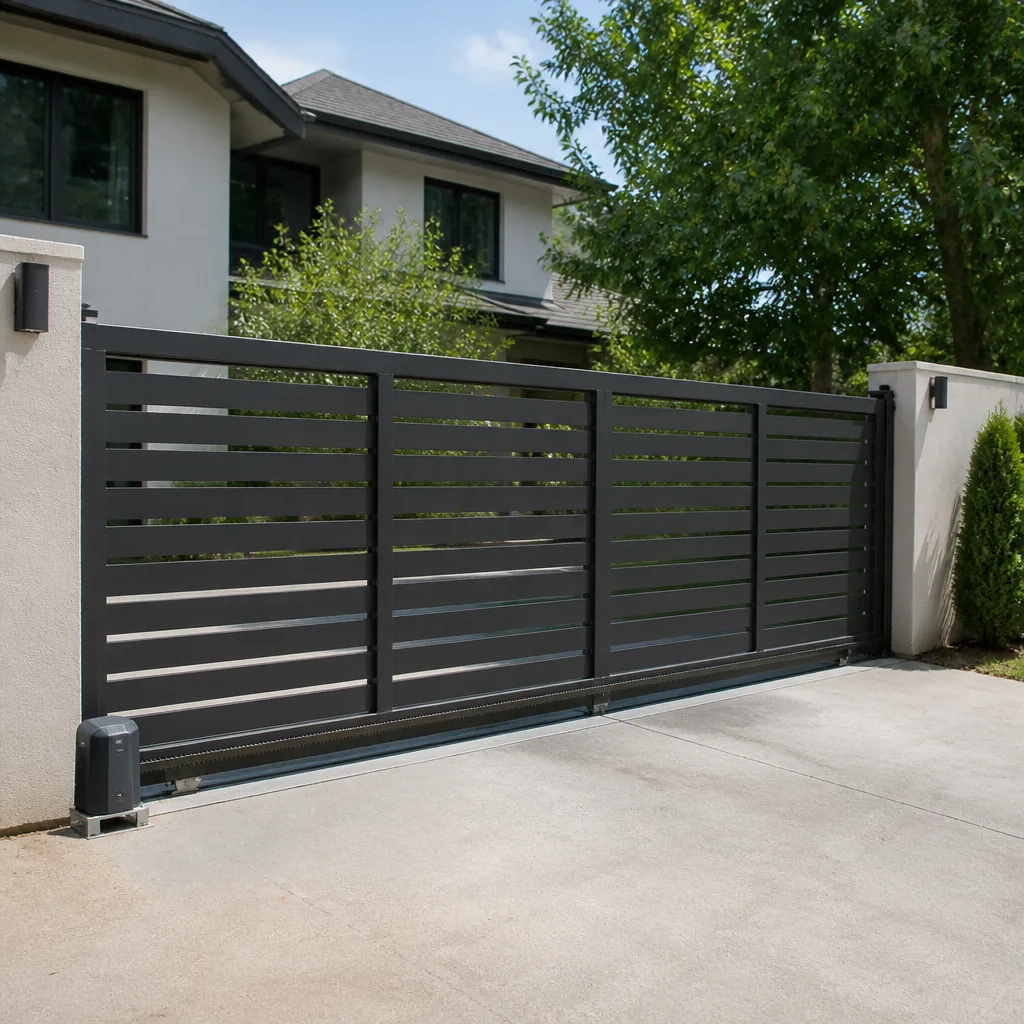 Sliding driveway gates
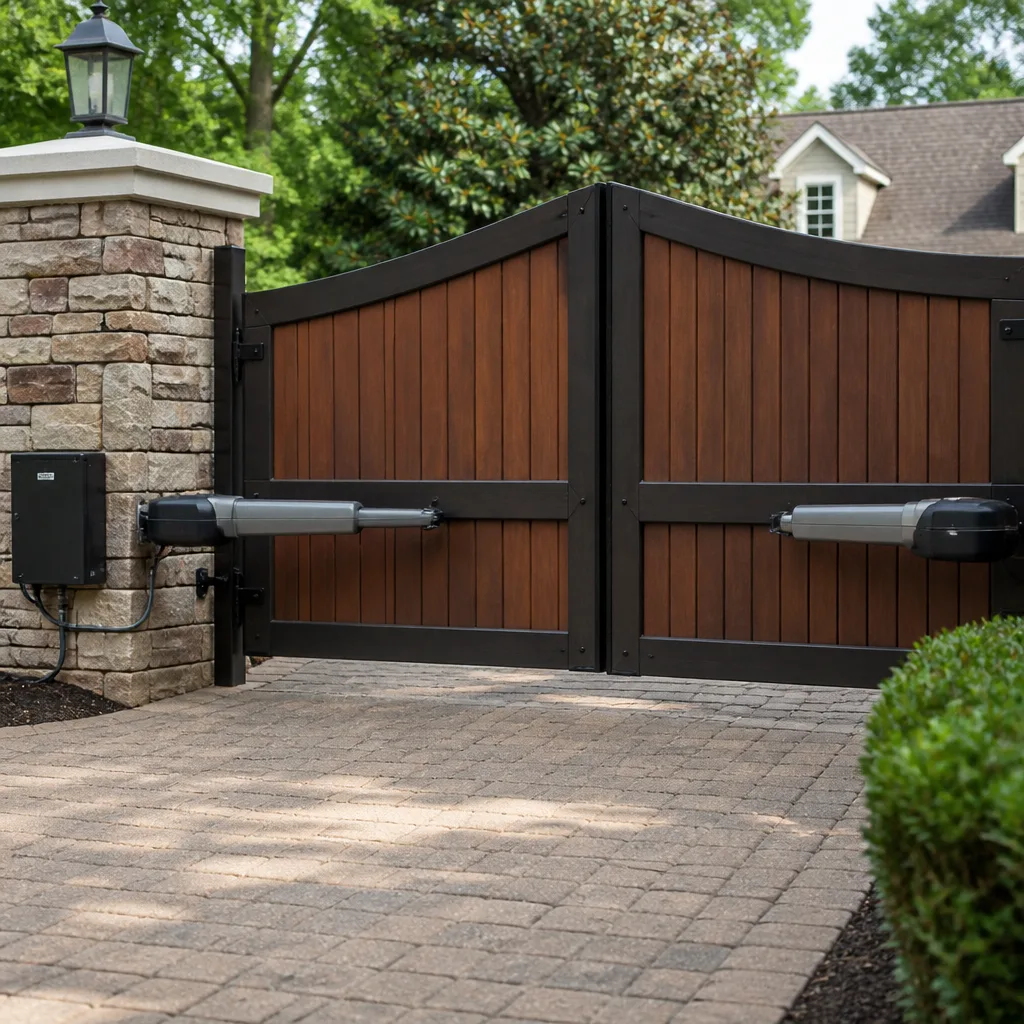 LiftMaster operators
Free on-site gate assessment - hinges, posts, and your LiftMaster or Nice gate operator checked before anything is quoted
The assessment is free and the quote is the invoice.
Get your free estimateThe Complete Guide to Gate Repair in Hillsboro
A gate that reverses unexpectedly isn’t a sensor problem. It could be a sagging hinge throwing the leaf out of the operator’s calibrated travel arc, and the fix that solves it forever is completely different from the fix that quiets it for a season. Most gate failures we diagnose in Hillsboro trace back to three root causes that generic repair guides never address: soil movement under the posts, force-limit drift in the operator, and safety devices knocked out of alignment. Chasing the symptom instead of the cause is why so many homeowners end up calling a second contractor six months later. This guide maps every common failure mode to its actual mechanical or electrical source, so you can understand what’s happening before anyone touches your gate.
Quick Answer
Gate repair in Hillsboro usually means diagnosing one of three things: a mechanical fault in the gate leaf or posts, an electrical fault in the operator and its controls, or a safety device that has drifted out of alignment. The right fix depends on which of those it is, and a proper diagnosis reads the operator’s error codes and checks the gate’s physical travel before any parts are swapped. Most repair visits resolve the issue the same day once the root cause is identified.
Styles & brands we work with
- Wrought iron
- Wood & steel frame
- Farm & ranch
- Sliding driveway gates
- LiftMaster operators
Table of Contents
- Why Hillsboro Gates Fail: The Three Root Causes
- How Wet Winters and Clay Soils Affect Your Gate
- Fails Open vs. Fails Closed: Why Urgency Differs
- Reading Force-Limit Error Codes as Symptoms
- Brand-Specific Failure Patterns
- HOA Constraints in Hillsboro Gated Communities
- The Diagnostic Process: What a Real Inspection Covers
- Repair or Replace?
Why Hillsboro Gates Fail: The Three Root Causes
Almost every gate problem we see in Hillsboro comes down to one of three root causes. Identifying which one you’re dealing with is the difference between a lasting repair and a repeat service call.
1. Mechanical drift. Hinges wear, posts heave, welds crack, and the gate leaf slowly moves out of the geometry the operator was set up for. The operator isn’t broken. It’s working against a gate that has changed shape. This is the most common cause of phantom reversals, uneven travel, and grinding noises.
2. Electrical and control faults. Control boards fail, loop detectors lose sensitivity, photo-eye beams get knocked out of line, and limit switches drift. These are faults in the brain of the system, not the body. An operator can be mechanically perfect and still refuse to run because a safety input is open.
3. Environmental movement. In Hillsboro, this mostly means soil. Posts set in clay-heavy ground shift as the water table rises and falls through the wet season. A post that has moved a fraction of an inch at the base translates to inches of misalignment at the top of a gate leaf.
The mistake most people make is assuming a symptom points to a single cause. A gate that stops halfway could be a binding hinge, a failing limit switch, or a force-limit setting tripped by cold weather stiffening the operator. The only reliable way to know is to test each system in sequence. That’s what separates a diagnosis from a guess. Our gate repair Hillsboro service starts with that sequence every time.
How Wet Winters and Clay Soils Affect Your Gate
Hillsboro’s wet winters and clay-heavy soils are the hidden driver behind most “operator failures” we’re called out to. Clay holds water. When the rainy season saturates the ground, that clay swells. When summer dries it out, it shrinks. Posts set in that soil move with it, and a gate that was perfectly aligned in July can be dragging its operator arm by February.
What this looks like on the surface:
- A gate that suddenly scrapes the ground or binds at one end of its swing
- Operators that strain or trip their force limit in wet weather but work fine in dry spells
- Gates that drift out of square over successive seasons
- Hinges that seem to “come loose” even after tightening
- Photo-eyes that fall out of alignment because the post they’re mounted to has tilted
The fix that lasts is rarely at the operator. It’s correcting the post and re-establishing the gate’s proper geometry, then recalibrating the operator to that corrected position. If a technician only resets the operator without addressing the post, the same fault returns the next time the ground moves. That’s why we check post plumb and footing integrity before we touch a control board.
If your gate sits on a slope or near a drainage path, that movement happens faster. Older neighborhoods in Hillsboro with mature landscaping and settled ground tend to see it more than newer builds, but no gate is immune after a few wet seasons.
Fails Open vs. Fails Closed: Why Urgency Differs
A gate that fails open and a gate that fails closed are two very different problems, and they demand different response times. Fails open means the gate settles into the open position when something goes wrong. Fails closed means it locks shut, or refuses to open. The first is a security issue. The second is an access issue. Both are faults, but the urgency and the fix are not the same.
Fails open. The gate stands open, the property is exposed, and anyone can walk or drive through. This is the higher priority because it’s a security gap, not just an inconvenience. It often points to a safety-device fault (the operator thinks something is in the way and holds open) or a control board that has lost its close command. If your gate fails open, it needs attention quickly.
Fails closed. The gate won’t open, or it opens partway and reverses. This is an access problem. It could be a dead battery in the operator, a tripped breaker, a failed limit switch, or a manual release that hasn’t been reset. It’s frustrating, but it isn’t a security breach. The urgency depends on whether anyone is trapped on the wrong side or whether the gate is a driveway gate or a commercial access point.
Knowing which failure mode you have helps you describe the problem accurately when you call, and it helps a technician arrive prepared. Say “the gate is stuck open” or “the gate won’t open” rather than “the gate is broken.” That one detail changes the diagnostic path. For systems where the operator itself is suspect, our electric gate repair team handles control boards, operators, and safety devices.
Reading Force-Limit Error Codes as Symptoms
A force-limit error code tells you the operator detected resistance it couldn’t overcome. It does not tell you why. Treating the code as the diagnosis is the single biggest cause of repeat gate repairs.
Here’s how to think about it. The operator is programmed with a force threshold. If the gate meets resistance above that threshold, the operator stops or reverses and throws the code. The resistance could come from:
- A binding hinge or worn roller
- A gate leaf that has dropped and is dragging
- Debris in the track of a sliding gate
- Cold weather thickening the operator’s grease
- A post that has moved and pinched the gate’s travel
- An actual obstruction in the gate’s path
- A failing motor or gearbox that can no longer produce rated force
The code is the same in every one of those cases. The fix is different in every one of them. A technician who resets the force limit without finding the cause has just raised the threshold, which is a safety problem: the gate will now push harder before it reverses, and that’s the opposite of what a safety system should do.
The right approach is to clear the fault, then run the gate manually and watch the travel. Where does it bind? Where does it hesitate? Does the leaf move freely by hand? This physical test tells you more than any error code. The code tells you something is wrong. The gate tells you what. Our technicians have up to 8 years of experience reading both.
Brand-Specific Failure Patterns
Different operators fail in different ways, and the diagnostic steps differ accordingly. This is why brand fluency matters. A technician who knows the platform doesn’t have to guess.
LiftMaster RSW systems and other LiftMaster residential operators tend to report faults through their safety-reversal logic first. When the gate reverses unexpectedly, the first thing to check on a LiftMaster is the photo-eye alignment and the force-limit calibration, because the system is designed to prioritize reversal over travel. A sagging hinge on a LiftMaster often presents as a reversal fault rather than a mechanical complaint.
FAAC 400 operators, common on commercial and heavier residential gates, behave differently under load. They’re built for sustained force, so a mechanical problem shows up as motor strain and heat rather than an immediate reversal. A FAAC that trips on force limit under load is usually telling you the gate geometry has changed, not that the operator is weak.
BFT and Linear systems have their own control-board logic and their own error reporting. Linear operators are common on residential driveways and tend to show limit-switch drift as the gate ages. BFT commercial operators often surface loop-detector and safety-edge faults before mechanical ones.
Viking and Ghost Controls systems, popular on residential gates, tend to present battery and control-board issues before mechanical ones. A Viking that won’t open is often a power or board problem, not a gate problem.
The point isn’t to memorize a chart. It’s that the same symptom on a LiftMaster and a FAAC leads a trained technician down different diagnostic paths. We work with nine major brands, from entry-level residential operators to commercial-grade systems, and the brand tells us where to look first.
HOA Constraints in Hillsboro Gated Communities
If your gate belongs to a gated community or an HOA, repairs come with constraints that a standalone homeowner never faces. The most common is that the HOA controls which parts can be swapped and which must be replaced with a matching model. A board that wants visual uniformity across all gates in the community may not approve a different operator brand, even if a substitute would work fine and cost less.
What this means in practice:
- Replacement parts may need to match the existing brand and model to keep the community consistent
- Architectural review may be required before any visible change to the gate or its hardware
- Shared gates may have maintenance responsibility divided between the HOA and individual homeowners
- Access-control systems (keypads, loop detectors, remotes) often need coordination with the HOA’s property manager
- Repair scheduling may need to account for community access hours
We’ve worked with property managers and HOA boards across Hillsboro on exactly these situations. The repair itself is usually straightforward. The coordination is what takes time. If you’re a property manager, it helps to have the gate’s brand and model, the HOA’s parts requirements, and any access constraints on hand before we arrive. That way the diagnosis and the approval process can run in parallel instead of one waiting on the other.
The Diagnostic Process: What a Real Inspection Covers
A proper gate repair diagnosis is a sequence, not a guess. Here’s what a thorough inspection covers, in order:
- Walk the gate by hand. With the operator disengaged, move the gate through its full travel. Any binding, scraping, or resistance points to a mechanical fault before any electrical testing begins.
- Check post plumb and footing. Measure the posts for tilt and check for soil movement at the base. In Hillsboro’s clay soils, this is where most “operator” faults originate.
- Inspect hinges, rollers, and track. Look for wear, play, and debris. A worn hinge changes the gate’s geometry and throws off the operator’s calibration.
- Test the operator’s manual release. Confirm the gate can be operated manually and that the release re-engages correctly.
- Read the control board. Pull the error codes and check the board’s diagnostic lights. Note every code, not just the last one.
- Test every safety device. Photo-eyes, safety edges, and loop detectors all need to be tested individually. A single failing device can shut down the whole system.
- Run the gate under power and observe. Watch the full cycle. Listen for strain, watch for hesitation, and note where the gate reverses.
- Recalibrate and re-test. After the fix, run the gate through multiple cycles to confirm the fault is gone and the safety systems are working.
This is the process we follow on every call in Hillsboro. It takes longer than swapping a part and hoping, but it’s the only way to fix the cause instead of the symptom. If you’re not sure whether your gate needs this level of attention, a free estimate will tell you.
Repair or Replace?
Most gate problems are repairable, and repair is usually the right call. But there are situations where replacement makes more sense than another round of repairs.
Repair is typically the right choice when:
- The gate structure is sound and only the operator or a component has failed
- The fault is mechanical (hinge, roller, post) and the gate can be re-squared
- The operator is a current model with available parts
- The safety devices can be brought back into alignment
Replacement is worth considering when:
- The gate frame is corroded or structurally compromised beyond economical repair
- The operator is obsolete and parts are no longer available
- Repeated repairs on the same component suggest a deeper design or installation problem
- You’re changing the gate’s use (for example, moving from residential to commercial access control)
The honest answer is that a good diagnosis tells you which category you’re in. A gate that has been “repaired” three times for the same symptom usually has a root cause nobody found. We’d rather find it than sell you a replacement you don’t need. That’s the difference between a gate specialist and a generalist. Gates are all we do, and that focus is why we can tell you clearly when a repair will hold and when it won’t. If you’re in Hillsboro and weighing repair against replacement, a free estimate gives you the answer.
Common Mistakes to Avoid
- Resetting the force limit to stop a tripping gate. Raising the force limit masks the symptom and creates a safety hazard. Find the resistance instead, or the gate will push harder than it should before it reverses.
- Assuming a reversal is a sensor problem. In Hillsboro’s wet climate, a sagging hinge or a heaving post is more often the cause. The sensor is doing its job by detecting the resistance.
- Ignoring post movement. A post that has tilted a fraction of an inch at the base moves the gate inches at the top. Fix the gate before you fix the post and the problem returns with the next wet season.
- Swapping parts without testing. Trial-and-error parts replacement wastes money and time. A control board is not the problem just because the gate won’t open.
- Disengaging the operator and leaving it. A gate left in manual mode is a security gap. If you’ve released the operator, get it re-engaged properly.
- Choosing a repair bid on price alone. The lowest bid often skips the diagnostic step and treats the symptom. The second call costs more than the difference.
- Forgetting the HOA. In Hillsboro gated communities, a repair that violates the HOA’s parts or appearance rules can require a redo. Check the requirements before work starts.
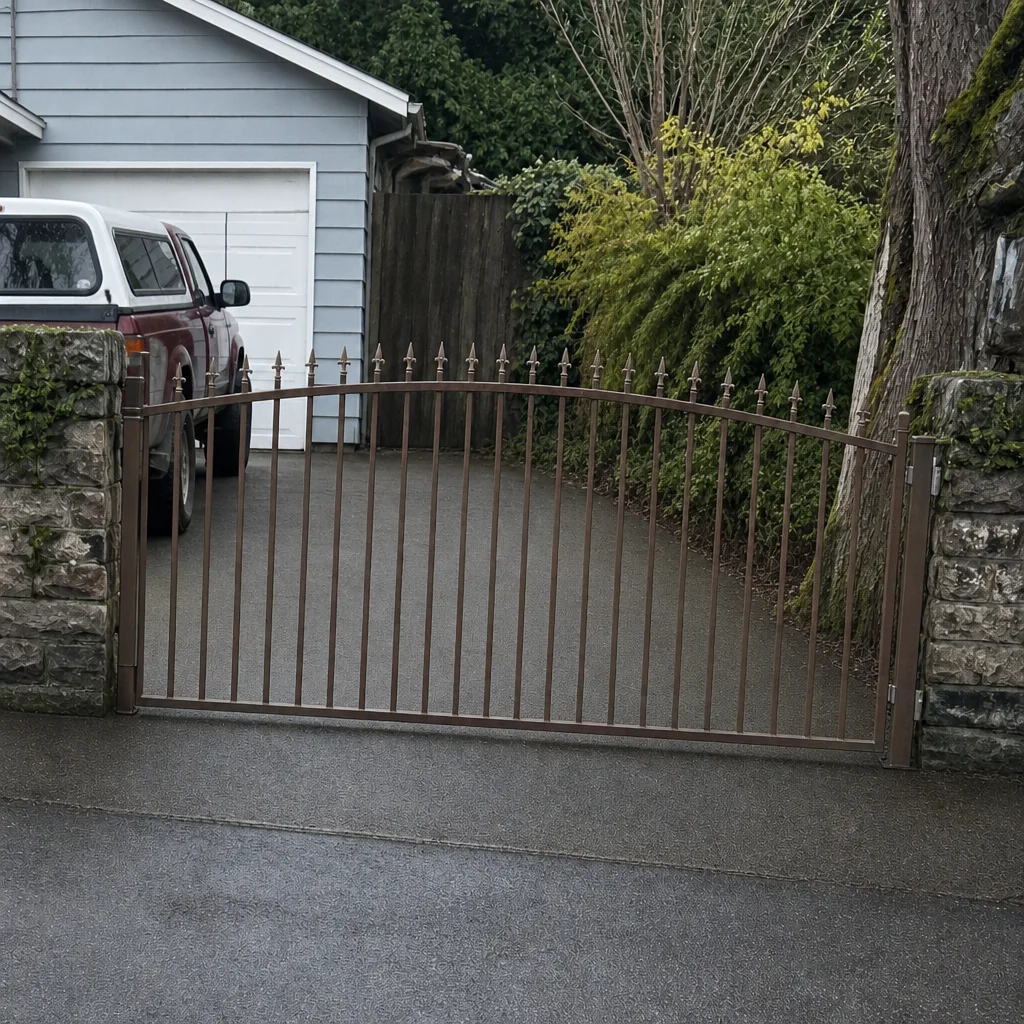
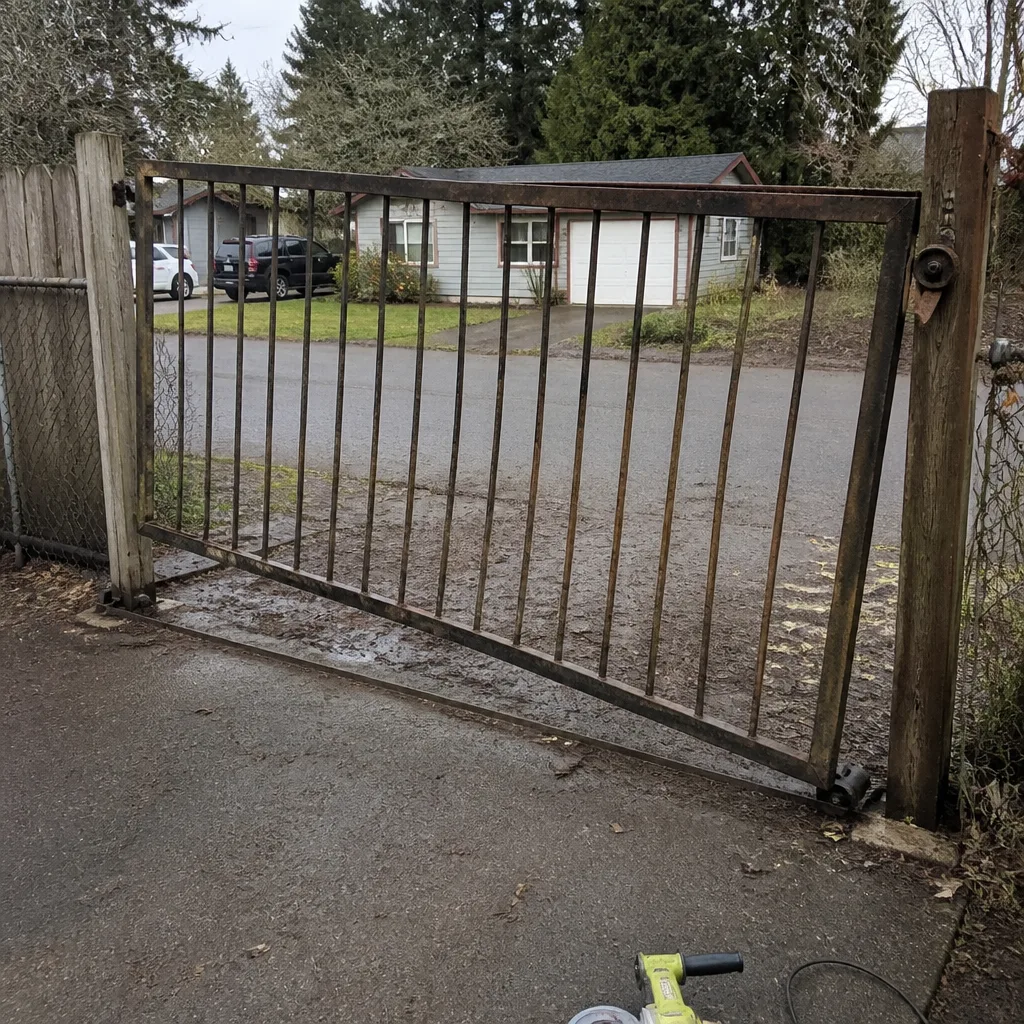
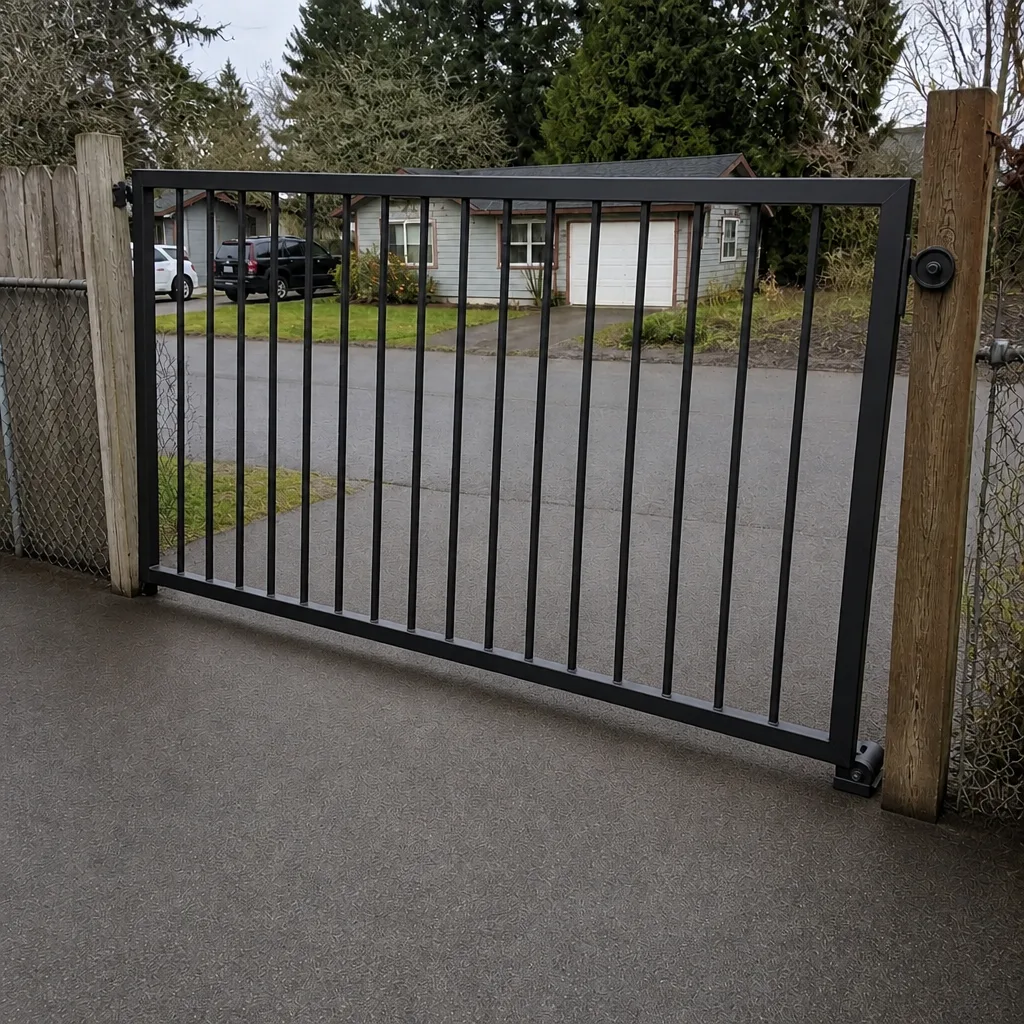
See the difference
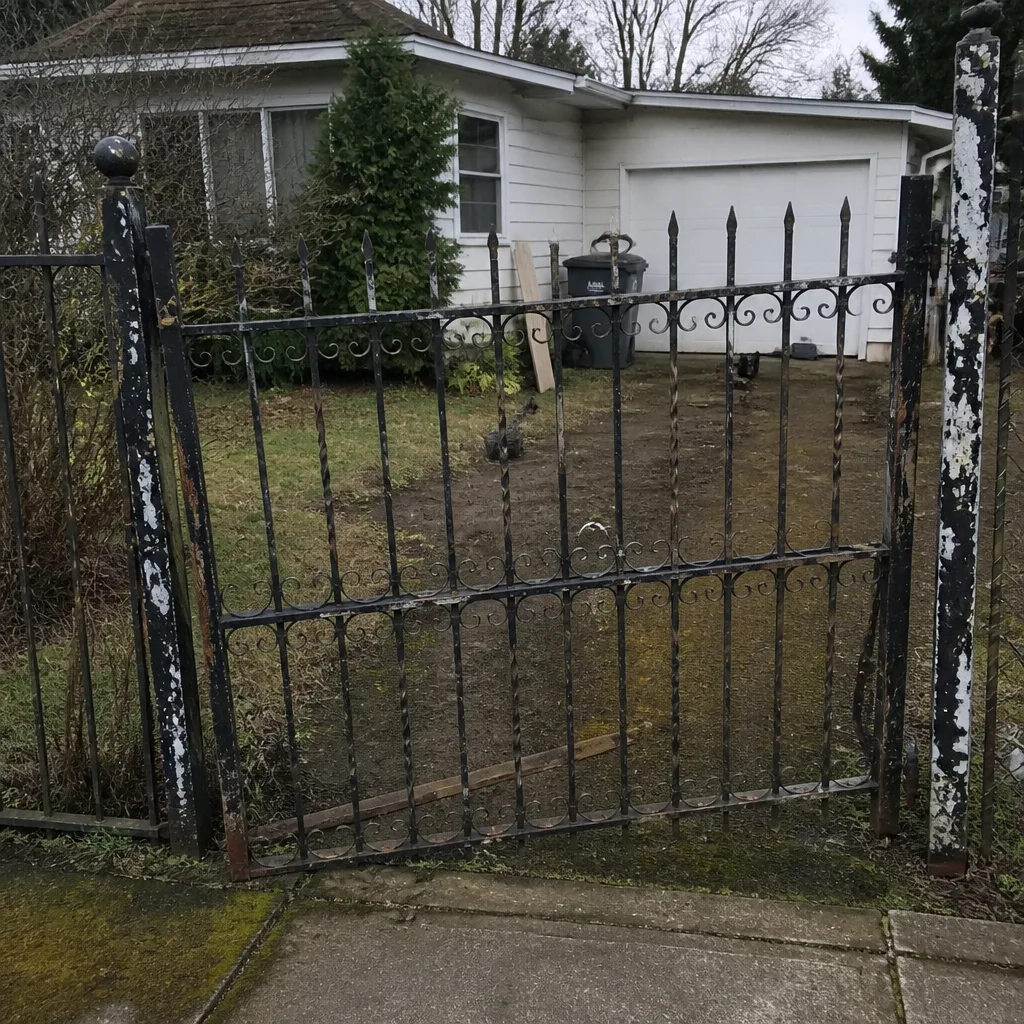 Before
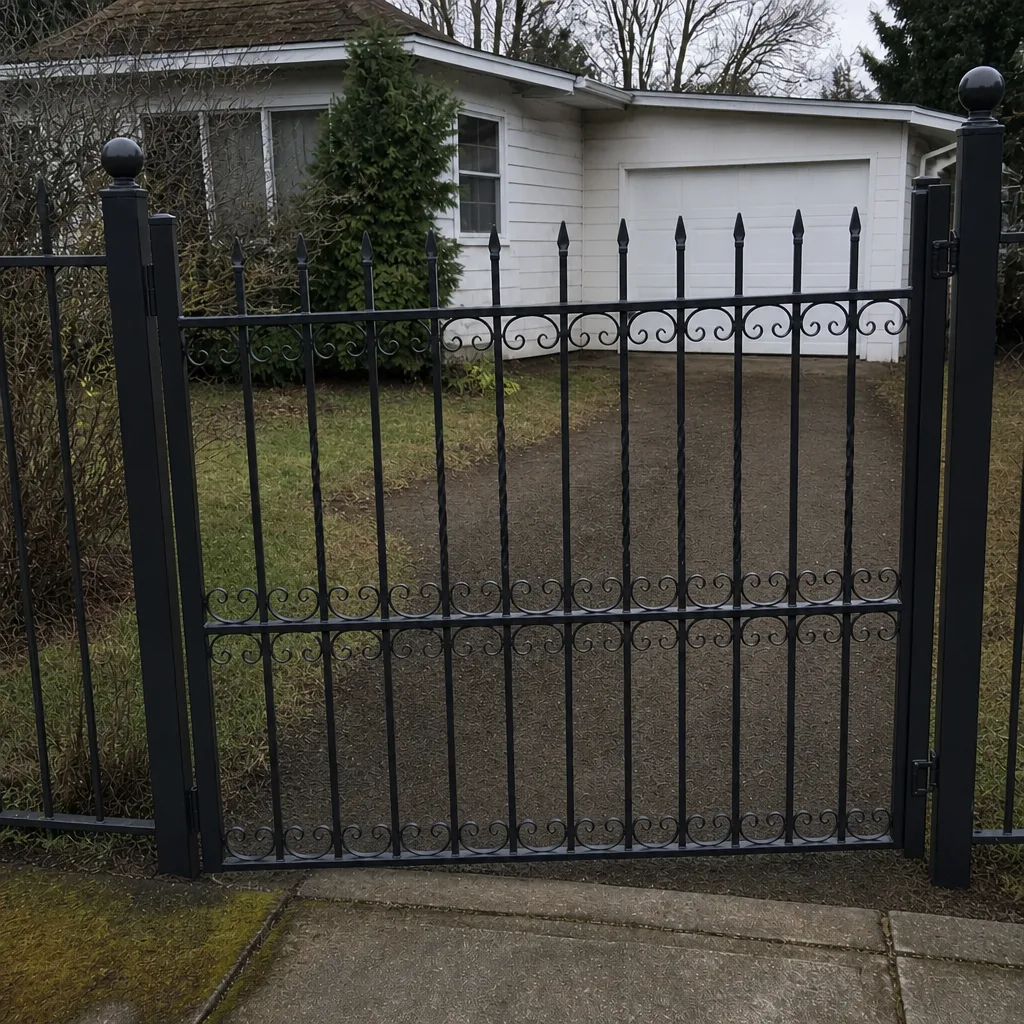 After
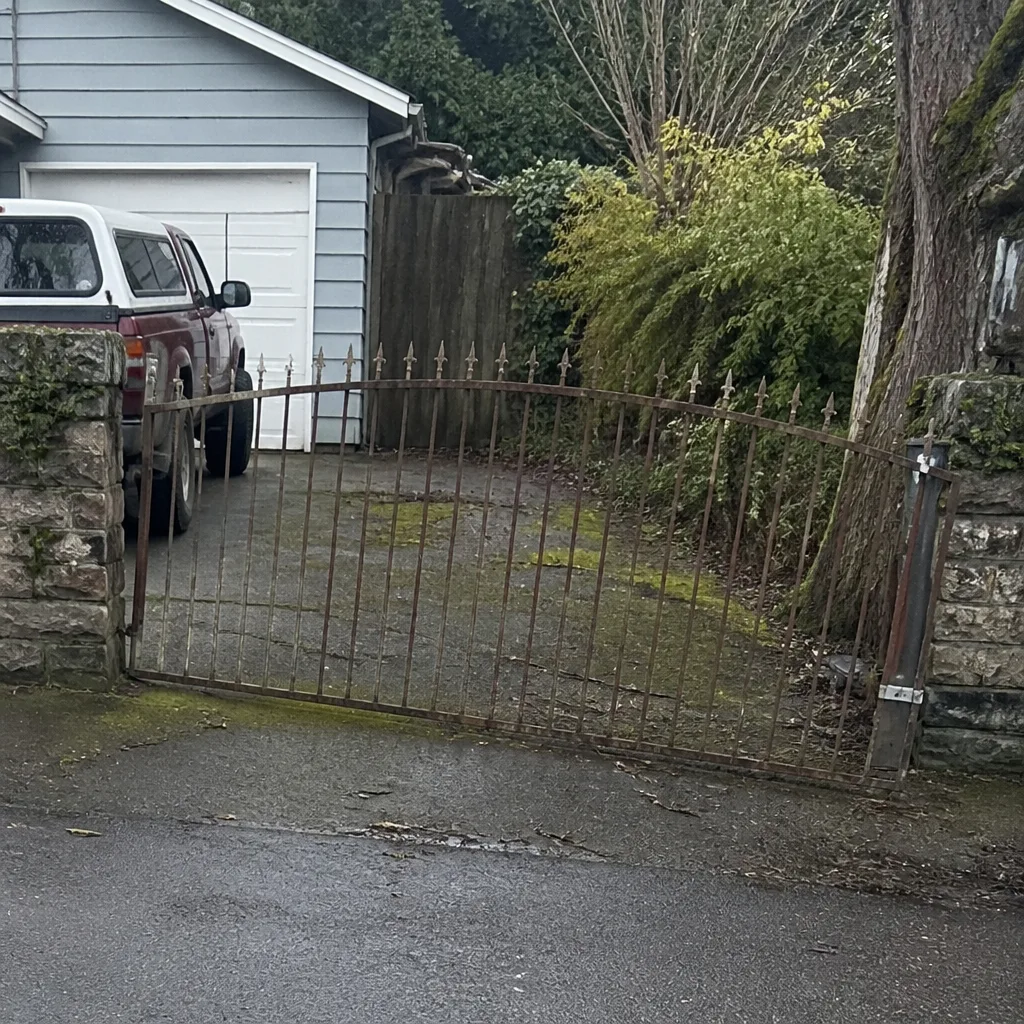 Before
 After
 Before
 After
When to Call a Professional
Some gate problems are worth a professional diagnosis. If your gate reverses unexpectedly, stops partway, fails to open or close, or throws an error code you can’t clear, the cause is likely mechanical or electrical and needs proper testing. If your gate fails open and leaves the property exposed, that’s a priority. If you’ve reset the operator more than once and the fault keeps returning, the root cause hasn’t been found. And if your gate belongs to an HOA or a commercial property, the coordination alone is worth having a specialist handle it. Gate operators carry high force and high voltage; a gate that reverses on a person or a vehicle can cause serious injury, and the safety systems that prevent that need to be tested properly, not adjusted by guesswork. Gate Repair Hillsboro offers free estimates in Hillsboro – call (855) 251-3899. We answer 24/7. Fast dispatch from 7am to 7pm, Sunday through Friday.
Frequently Asked Questions
The price is set per job by a written estimate after we diagnose the fault, so it depends on whether the problem is mechanical, electrical, or a safety device. There’s no single flat rate because a hinge adjustment and a control-board replacement are very different jobs. The estimate is free and the price is agreed before any work starts, so there are no surprises on the invoice. Call (855) 251-3899 for an exact quote – estimates are free.
In many cases, yes. We answer 24/7, and fast dispatch runs from 7am to 7pm, Sunday through Friday. A call outside dispatch hours is booked into the next opening, Sunday through Friday, 7am to 7pm. Same-day service is common for repair calls once we’ve confirmed the fault. Call (855) 251-3899 to check availability.
A gate that reverses without an obvious obstruction is usually detecting resistance it shouldn’t. In Hillsboro, that’s often a sagging hinge or a post that has moved in clay soil, throwing the gate leaf out of the operator’s calibrated travel arc. It can also be a photo-eye out of alignment or a force-limit setting that’s too tight. The fix depends on which, so a proper diagnosis matters. Call (855) 251-3899 for an exact quote – estimates are free.
A gate that fails open settles in the open position, which is a security gap because the property is exposed. A gate that fails closed locks shut or won’t open, which is an access problem but not a security breach. Fails open is usually the higher priority. Both need diagnosis, but they lead a technician down different paths. Call (855) 251-3899 for an exact quote – estimates are free.
We work with nine major gate brands, including LiftMaster, FAAC, BFT, Linear, Viking, Ghost Controls, DoorKing, Elite, and Mighty Mule. That covers entry-level residential systems and commercial-grade operators. Brand-specific knowledge means faster, accurate diagnosis instead of trial-and-error parts swapping. Call (855) 251-3899 for an exact quote – estimates are free.
Yes. We work with property managers and HOA boards on gated-community repairs and commercial access-control systems. HOA repairs often involve parts-matching requirements and architectural review, so it helps to have the gate’s brand and model and the HOA’s requirements ready before we arrive. Call (855) 251-3899 for an exact quote – estimates are free.
The Bottom Line
Most gate failures in Hillsboro trace back to three root causes: mechanical drift, electrical and control faults, and soil movement from wet winters and clay-heavy ground. Chasing the symptom instead of the cause is why so many repairs don’t last. Read the error code as a symptom, not a diagnosis. Check the gate’s physical travel before you touch the control board. And know whether your gate failed open or closed, because the urgency differs. Our technicians have up to 8 years of experience diagnosing exactly these failures across nine major brands. Gates are all we do, and that’s why we can tell you what will actually fix it.
Call (855) 251-3899 for a free estimate. We answer 24/7. Fast dispatch from 7am to 7pm, Sunday through Friday.
Written by the team at Gate Repair Hillsboro.