
Last updated November 14, 2026
 Wrought iron
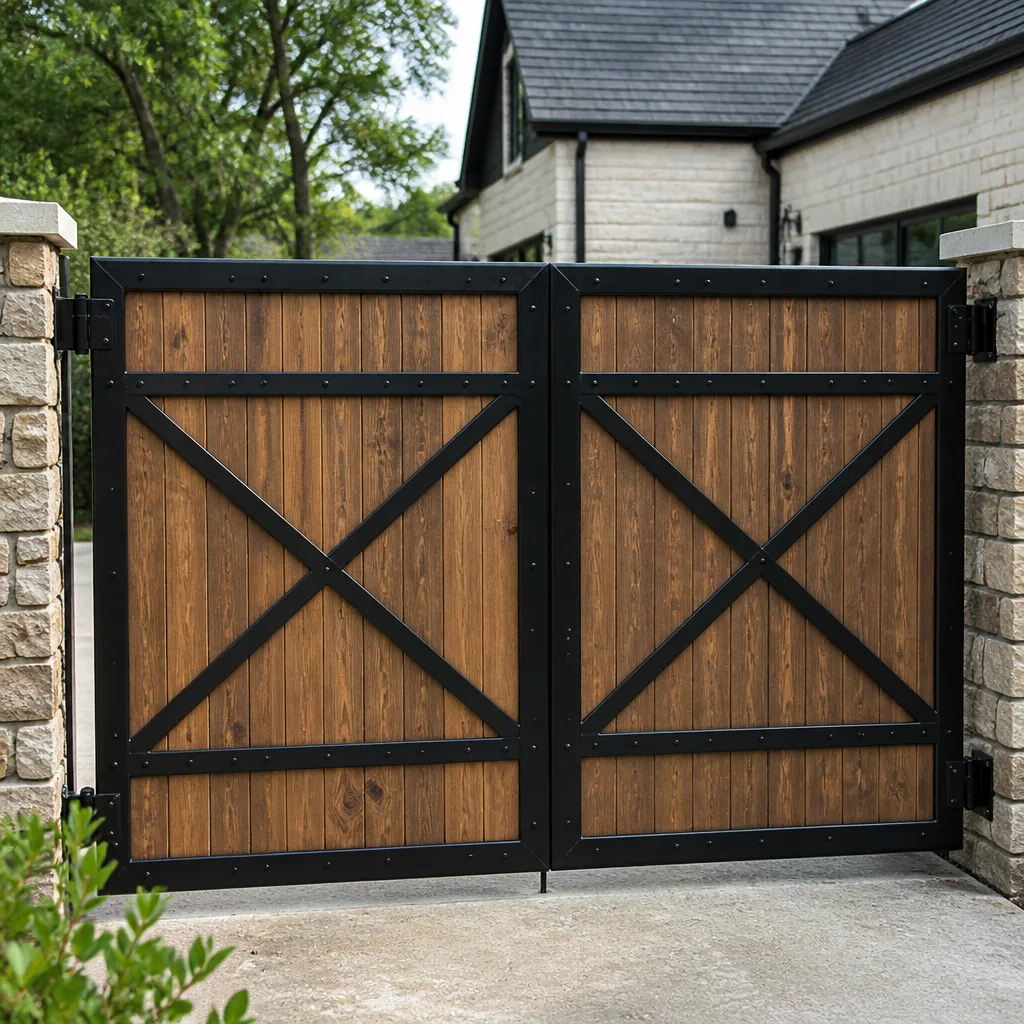 Wood & steel frame
 Farm & ranch
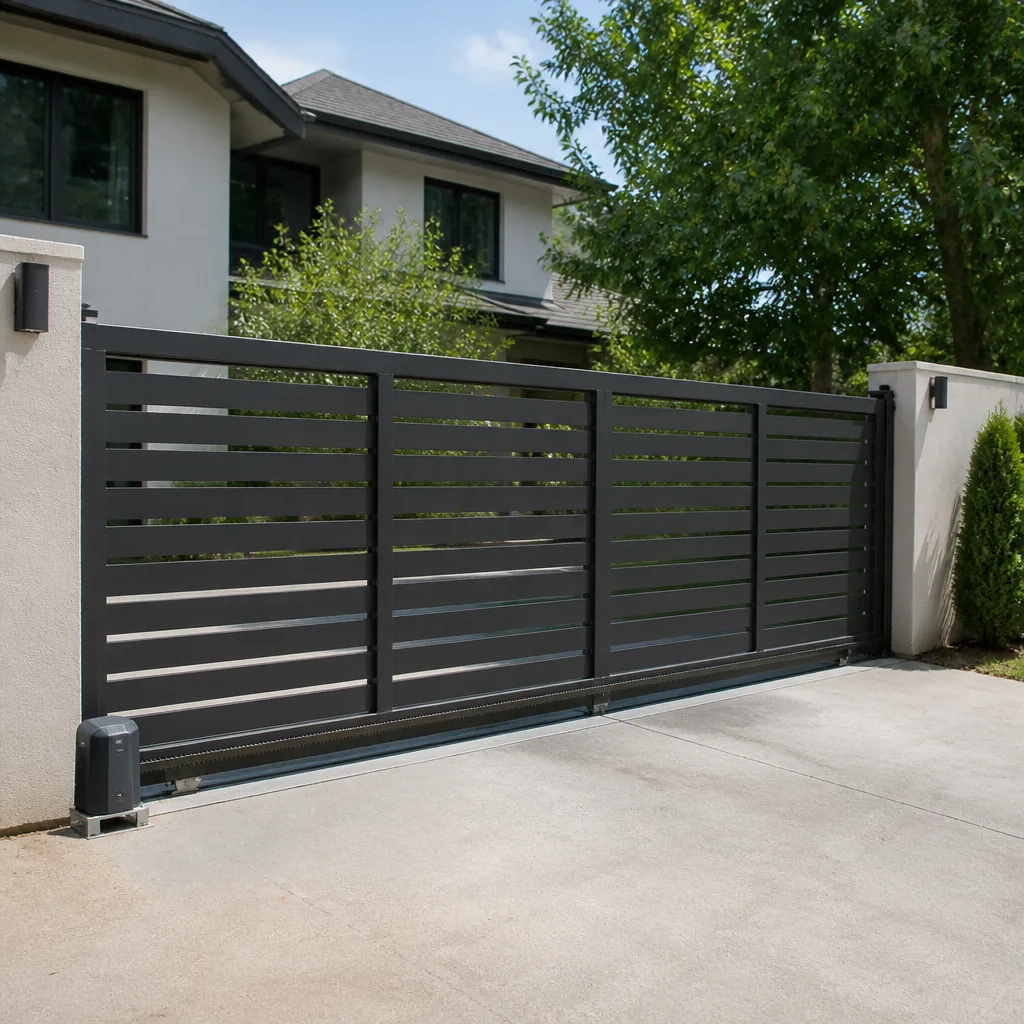 Sliding driveway gates
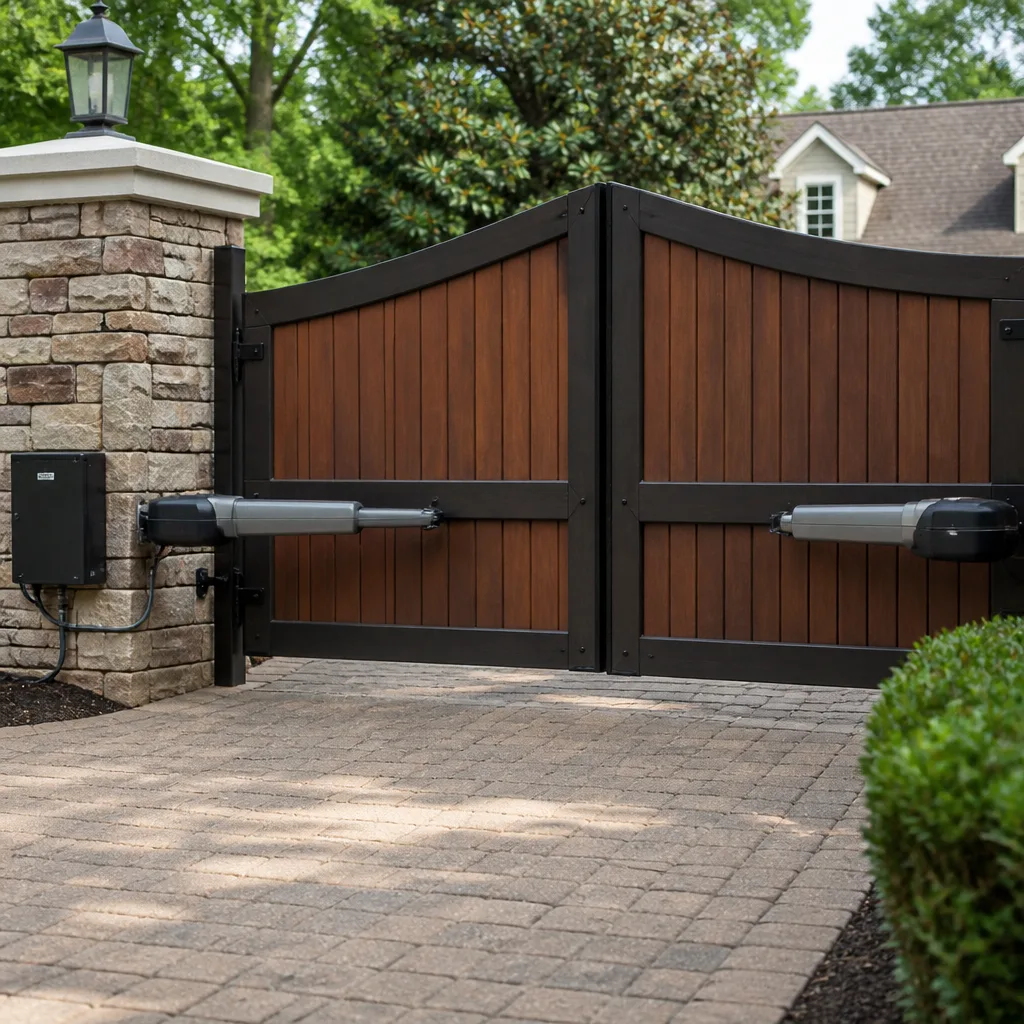 LiftMaster operators
Free on-site gate assessment - hinges, posts, and your LiftMaster or Nice gate operator checked before anything is quoted
The assessment is free and the quote is the invoice.
Get your free estimateDIY vs Professional Gate Repair: The Hillsboro Homeowner’s Decision Guide
Replacing the battery in a gate remote is DIY. Replacing the receiver board that remote talks to is not, and the reason has nothing to do with how handy you are. It has to do with what happens when an Oregon homeowner opens up a 120V connection without a permit: you’ve just created an uninsured liability sitting at the end of your driveway. Most guides split this decision into “easy” jobs and “hard” jobs. That’s the wrong line. The right line is where the fault lives in the system. This guide walks through which gate tasks are genuinely safe for you to handle in Hillsboro, which ones carry legal and safety consequences, and how to do the partial DIY that makes a technician’s visit faster and cheaper.
Quick Answer
Mechanical work on a manual gate and low-risk owner tasks like clearing debris from the track, lubricating hinges, and replacing remote batteries are safe for most Hillsboro homeowners to handle themselves. Anything involving the operator, the 120V power feed, control boards, safety sensors, loop detectors, or a gate that runs on its own belongs with a professional, both because Oregon electrical rules apply and because modern operators are password-locked at the diagnostic level. When in doubt, the deciding question is simple: does the fix require opening the operator housing or touching a wire? If yes, stop and call.
Styles & brands we work with
- Wrought iron
- Wood & steel frame
- Farm & ranch
- Sliding driveway gates
- LiftMaster operators
Table of Contents
- Where Does the Fault Actually Live?
- Which Gate Repairs Are Safe to DIY in Hillsboro?
- What Is Professional-Only, and Why?
- The Hidden Cost of DIY on Modern Gate Operators
- When a Simple Repair Hides a Deeper Fault
- How to Do a Productive Partial DIY
- Why Brand Matters in the DIY Decision
- Permits, Weather, and the Hillsboro Context
Where Does the Fault Actually Live?
Every automated gate is really two distinct systems bolted to the same frame: a mechanical assembly (frame, hinges, rollers, track, latch, panel) and an electrical assembly (operator, control board, transformer, sensors, receiver, wiring). Diagnosing the problem starts with identifying which system is failing. The mechanical side is forgiving. The electrical side is not.
A gate that refuses to open could have a dead operator, a tripped breaker, a misaligned safety sensor, a broken hinge pin, or a crushed track. Those faults live in completely different places and have completely different consequences if you get it wrong. A stuck hinge might mean a twenty-minute lubrication job. A dead operator might mean a licensed electrician needs to look at the feed line before anyone touches the housing.
Before deciding anything, walk through this short checklist to locate the fault:
- Try the manual release. Every automated gate has one. If the gate swings or slides freely with the operator disengaged, the mechanical side is healthy and the fault is electrical.
- Watch the gate operate. Does it move and stop halfway? Speed up? Reverse on its own? Random behavior almost always points to a sensor or control-board issue, not a mechanical one.
- Listen. A motor that hums and doesn’t move is different from one that clicks once and stays silent. Note the exact sound. It’s the single most useful piece of diagnostic information you can give a technician.
- Check the breaker. A tripped breaker means the circuit feeding the operator cut out. That’s an electrical issue, not a gate issue, and it should go to an electrician.
- Look at the sensors. Small dirt or a spider web between a photo-eye pair will stop the gate cold. Cleaning them is safe. Realigning them without a manual helps once, then fails again within a week.
That last point is worth dwelling on. In our experience across Hillsboro, most “sensor failures” are actually alignment drift, a symptom of a gate that has settled or a post that has shifted. Fixing the sensor without fixing the cause just delays the next call.
Which Gate Repairs Are Safe to DIY in Hillsboro?
These are the tasks a careful homeowner can handle without technical training, without permits, and without putting anyone at risk. Each one is safe because it involves nothing but physical access to non-energized parts and no changes to the electrical or control system.
- Clearing debris from the track or swing path. Sticks, gravel, and vegetation will make a healthy gate look broken. Sweep the run and test the gate before assuming anything.
- Lubricating hinges and rollers. A few drops of the lubricant your operator manual calls for, applied to the pivot points, solves most noise complaints. Don’t overdo it: excess grease attracts grit in the Willamette Valley air.
- Tightening visible bolts and lag screws on hinges and posts. If a hinge has worked loose, snugging it back down with a wrench is straightforward. If the wood behind the lag has rotted, stop and call: that’s a structural problem, not a tightening problem.
- Replacing the battery in a hand-held remote or keypad. This is the single most common “dead gate” complaint, and it’s almost always the remote, not the gate.
- Cleaning photo-eye lenses with a soft cloth. Dirt, dust, and pollen from the surrounding landscape cause sensor faults that resolve with a wipe.
- Reprogramming a remote using the operator’s own learn button if your model exposes one on the cover. If the manual tells you it doesn’t, stop.
- Trimming vegetation away from sensors and the gate’s travel path. Anything that grows into the swing arc becomes a false trigger. Pruning is safe and useful.
- Testing the manual release regularly. A release that has seized from disuse is a safety problem. Work it quarterly so it opens easily when you actually need it.
Notice what all these have in common: nothing is energized, nothing requires a permit, and none of them touch the operator, receiver, control board, or wiring. They are also the tasks that genuinely solve a large share of gate complaints. A lot of gates “fixed” by professionals were simply gates nobody had lubricated or cleared in a year.
What Is Professional-Only, and Why?
This is where the decision guide gets serious. The following tasks are professional-only, not because they’re hard to reach, but because the consequences of getting them wrong include shock, fire, criminal liability under Oregon electrical rules, and voided warranties.
1. Anything involving the 120V feed to the operator. Oregon’s electrical code (based on the National Electrical Code adopted by the state) requires electrical work at 120V and above to be performed by a licensed electrical contractor and generally under a permit. An automated gate operator is hardwired to household current. If a homeowner opens that connection, adds a junction box, splices a new run, or installs a transformer without a permit and a licensed electrician, they’ve created an unpermitted alteration. If the gate later fails, or worse, if someone is hurt, the insurance claim can be denied over the unpermitted work. No part of that math makes DIY worth it.
2. Control boards and receiver boards. These are low-voltage, so shock risk is minimal, but the failure modes are subtle. A miswired receiver can fry the operator’s main board, ending with a bill that far exceeds what a diagnostic visit would have cost. Boards are matched to specific operators and change between model years.
3. Safety sensor alignment. Realigning a photo-eye pair with a screwdriver will work briefly. Realigning the mounting hardware, checking the operator’s reversal sensitivity, and adjusting the obstruction detection need diagnostic tools and a working knowledge of the specific operator’s monitoring circuit.
4. Loop detectors and vehicle sensors. These are buried in the driveway or cut into concrete. Diagnosing a failed loop involves a specific tester, not just wiggling the wire.
5. Operator replacement or automation retrofit. Retrofit jobs change the electrical load, the reversal settings, and the safety edge requirements. Every part of that job steps across the permit line.
Our team has watched unpermitted gate wiring turn a modest repair into a much bigger one more than once. When you add the electrical work to the gate work on the same visit, the licensed requirements get handled cleanly. Splitting DIY electrical from professional operator work is the most expensive path available.
The Hidden Cost of DIY on Modern Gate Operators
Here’s what the manual doesn’t tell you: modern gate operators from LiftMaster, FAAC, BFT, and the rest ship with diagnostic modes that require a technician-level password to enter. That password isn’t in your homeowner’s manual. It’s distributed to installers and service partners specifically so that field technicians can read fault codes, cycle counts, motor current, and sensor status. Without it, you have a remote and a fuse, and you’re guessing.
Why does that matter? Because the operator’s diagnostic mode tells you the difference between three different faults that all look identical from the outside:
- A gate that stops halfway every time could be a sensor misread, a current limit set too low, or a physical obstruction the operator detects but you don’t.
- A gate that reverses unpredictably could be an obstruction sensitivity setting, a failing gearbox, or a warped post putting the gate out of true.
- A gate that runs but won’t close could be a safety edge that has lost contact, a loop detector that thinks a car is present, or a photo-eye misread on one side only.
Homeowners who DIY a modern operator often burn through two or three parts before landing on the right one. That’s the hidden cost: not the price of a service call, but the price of the parts replaced by guesswork and the time spent pulling and reinstalling the same housing three times. We see it most on LiftMaster systems, where the operator manual gives just enough information to look diagnostic but not enough to complete the fault tree.
If your gate has a display code, write it down. If it doesn’t, log the symptoms precisely (see below). Either way, the diagnostic password is a boundary that a professional crosses and a homeowner cannot. That’s the whole argument for professional diagnosis in one sentence.
When a Simple Repair Hides a Deeper Fault
Some of the most common “easy” gate repairs are easy to perform and don’t solve the problem, because the reason the gate failed points somewhere else. This is the DIY trap that doesn’t get talked about: the repair works, but the gate fails again in two weeks and you’ve now spent money and time on a symptom.
Re-hanging a gate that has dropped. A gate that drags on the ground usually has a post problem, not a hinge problem. In Hillsboro, winter soil movement and long wet seasons combine to shift posts out of plumb. Re-hanging the gate will lift it and buy a few weeks. It won’t fix the post. If the gate hasn’t had post work done in a while, a professional should check the footing before anyone touches the hinges.
Replacing wheel rollers on a sliding gate. New wheels fix the wobble. They don’t fix a bent track, and they don’t fix what bent the track. If the gate is running on a track that has held for a while, a wheel replacement should include a check of the track’s straightness and the ground beneath it.
Realigning a photo-eye pair. This is the most repeated DIY repair we see. Realigning without checking the post the sensor is mounted on means the sensor will drift out again the next time the ground moves or the post gets bumped.
Resetting a tripped breaker. A breaker that trips once is nothing. A breaker that trips repeatedly is detecting a real electrical fault in the operator, the wiring, or the circuit. Resetting it and moving on is how small problems turn into operator replacements.
In our experience, the honest first question a homeowner should ask when a fix seems suspiciously easy is: did the problem come from the part I’m replacing, or somewhere behind it? If you can’t answer that confidently, the “easy” repair is the wrong move.
How to Do a Productive Partial DIY
The best DIY decision most Hillsboro homeowners can make is not doing the repair yourself. It’s doing everything around the repair so the professional visit goes faster and stays focused. This is the section most guides skip, and it’s where the real money is saved.
Here’s the routine we’d suggest if a homeowner calls us about a gate issue:
- Write down the symptoms before you call. What the gate does, when it started, whether it happens on open or close, and whether it’s consistent or random. Two minutes of notes saves the technician fifteen minutes of questions.
- Record a short video of the gate misbehaving. A twenty-second phone clip of the gate failing is worth more than a paragraph of description. Don’t skip this.
- Clear the swing or slide path. Remove vehicles, debris, toys, and vegetation so the technician can move freely and test the full cycle.
- Locate the operator manual and any service receipts. Model number, install year, and prior repairs all matter. If the original installer left a diagnostic code sticker, photograph it.
- Check the remote batteries before you call. Replace them all so the technician isn’t chasing a phantom. Nine “dead gate” visits out of ten start with a dead remote.
- Make sure the breaker is on and no one else in the house is flipping it. A breaker that got switched off (during a remodel, a new circuit, or a panel change) is more common than you’d think.
- Leave the manual release in its normal engaged position. If you’ve been running the gate in manual, put it back in drive mode before the technician arrives, unless the manual tells you otherwise.
- Note the brand. “It’s a LiftMaster” or “it’s a Mighty Mule” is information the technician needs before arrival, because the diagnostic path and likely parts differ. If you don’t know the brand, photograph the operator housing label.
What that package does is let the technician walk up to a gate with a known symptom, a known brand, and a clean path. That compresses the visit. It also makes the written estimate more accurate, because the diagnosis doesn’t start cold. And it excludes the DIY mistakes that would have made the visit longer.
If a homeowner is going to spend an hour on their gate, spend it here. Documentation is free, safe, and doesn’t risk anything.
Why Brand Matters in the DIY Decision
The brand on the operator changes the DIY calculus. Some systems are designed for homeowner access, and some aren’t. Knowing which you have should inform what you touch.
Entry-level residential systems like Mighty Mule are built with the expectation that a homeowner may do basic adjustments and reprogramming. Their manuals are longer, more of the diagnostic information is in the homeowner’s manual, and the control boards are simpler. You still shouldn’t open the 120V feed, but the safe-zone list is longer.
Consumer-grade systems like LiftMaster sit in the middle. The learning curve is real but manageable for remotes and basic operation. The diagnostic layer, however, is behind a technician password. The boundary is sharper than it looks.
Commercial-grade operators like FAAC and BFT are designed for installers, property managers, and access-control technicians. The manuals assume a working knowledge of low-voltage controls, sensor wiring, and loop detectors. That’s not because the equipment is scary, but because it’s engineered for a job site rather than a weekend project. Homeowner diagnostics on these systems are the highest-risk DIY decision in the whole gate category.
At Gate Repair Hillsboro we service all nine major brands we cover with the same diagnostic process, but the process itself changes with the operator family. A Mighty Mule fault tree isn’t a FAAC fault tree. Knowing which is which isn’t a marketing point, it’s the reason a diagnostic call on an unfamiliar brand can take twice as long.
Permits, Weather, and the Hillsboro Context
The Hillsboro context matters for both sides of this decision. On the permit side, any electrical work on the operator feed needs to be done by a licensed electrical contractor and generally under a permit from the city. If you’re considering replacing a control board, adding a keypad, or hooking up a new solar or plug-in operator, ask the city’s building department what that specific project needs. Non-permitted work stays on the record when the property is sold, and it can complicate a later repair. The city’s permit office will give you a straight answer, and the answer is usually that the licensed path saves money when something goes wrong later.
On the weather side, Hillsboro’s wet winters and dry summers pull gate posts out of plumb, swell and shrink wooden gates, and drive dirt into every moving part. The mechanical DIY list above is mostly about managing that wear cycle: lubrication, clearing the track, and tightening hardware. The electrical side doesn’t deal with that weather nearly as well, which is one reason operators fail in ways that look mechanical but aren’t. A gate that opens slowly in February on a LiftMaster may be fighting cold-stiffened grease, a weak battery in a solar-charged backup, or a motor drawing more current than it should. Two of those are mechanical and one is not, and only the operator’s diagnostic mode can tell you which.
Residential and commercial applications differ too. A homeowner in a typical Hillsboro neighborhood is usually dealing with one automated swing or slide gate on a single driveway. A property manager is dealing with a system that sees more traffic, has more safety-sensor requirements, and is far more dependent on loop detectors and access-control integration. On the commercial side, the DIY zone shrinks to essentially zero. On the residential side, it’s narrow but real. We’d apply the same rule either way: touch what’s mechanical and non-energized, don’t touch what’s wired.
For homeowners wanting a deeper walk through what a diagnosis actually covers, our electric gate repair page lays out the parts and the process. For the mechanical side, gate repair covers the kinds of physical failures that come up most.
Common Mistakes to Avoid
- Assuming “the gate is dead” means a big repair. In our experience, most “dead gates” in Hillsboro are dead remote batteries. Replace the remote battery before scheduling anything. If the gate still misbehaves after that, you have real information.
- Opening the operator housing “just to look.” Looking is how loose wires get nudged, how static-sensitive boards get handled wrong, and how a functioning operator becomes a service call. The housing is closed for a reason. Leave it closed.
- Buying a replacement control board before diagnosis. Boards are model- and year-specific and non-returnable in most cases. Buying one and finding out it wasn’t the problem is the most common expensive DIY mistake on modern operators.
- Realigning sensors without checking the post. The realign will hold for a week and then fail again. If the post is loose or out of plumb, the misalignment is a symptom. So is the realignment.
- Splicing the 120V feed yourself. Unpermitted electrical work on the operator feed is a liability that follows the property, not just the current owner. This is a hard stop for anyone who isn’t a licensed electrician doing permitted work.
- Repeatedly resetting a tripping breaker. A breaker that trips once may be nothing. A breaker that trips twice is telling you about a fault in the operator circuit. Resetting it and moving on is what turns a small repair into a fire risk.
- Running a gate on manual and forgetting it. A manual-release gate has no automatic reversal and no sensor protection. If a vehicle or a child is in the path, none of the operator’s safety features apply. Fix it or close it, don’t leave it half-engaged.
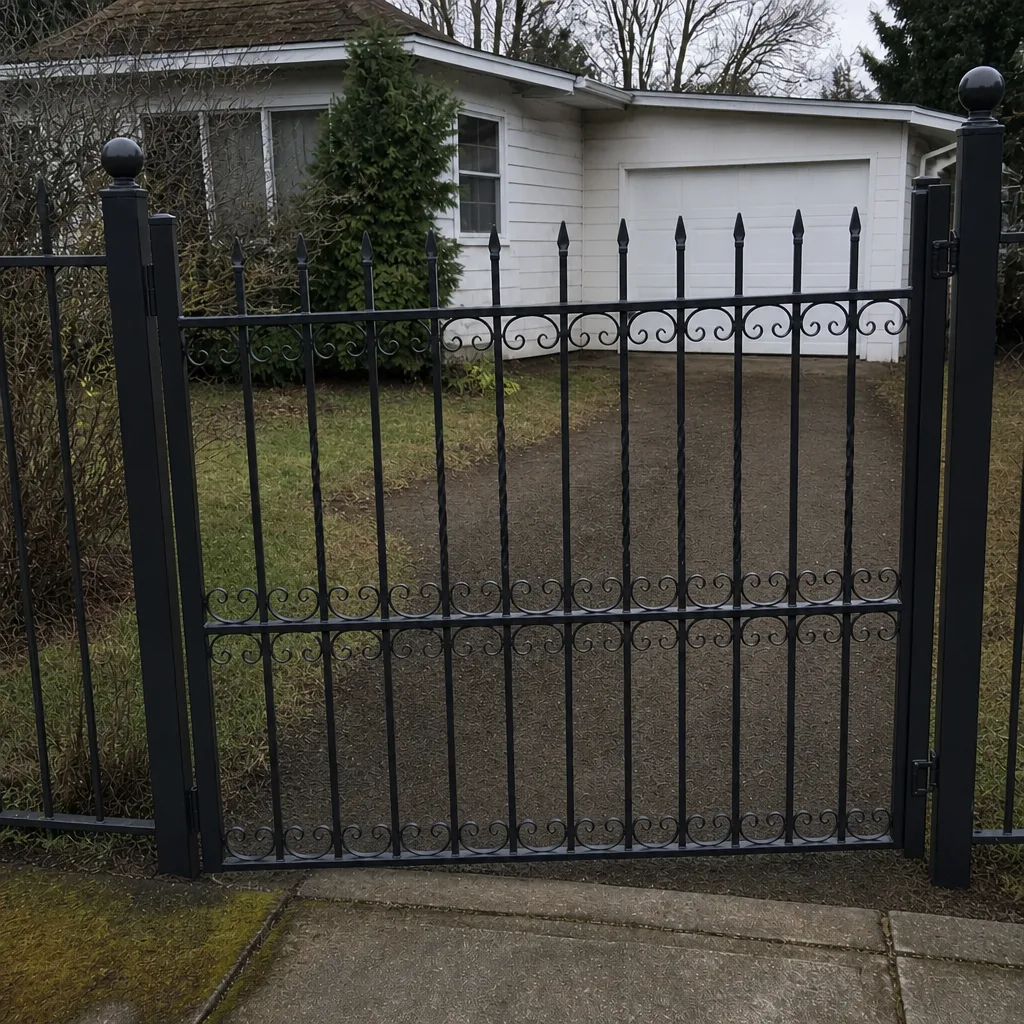
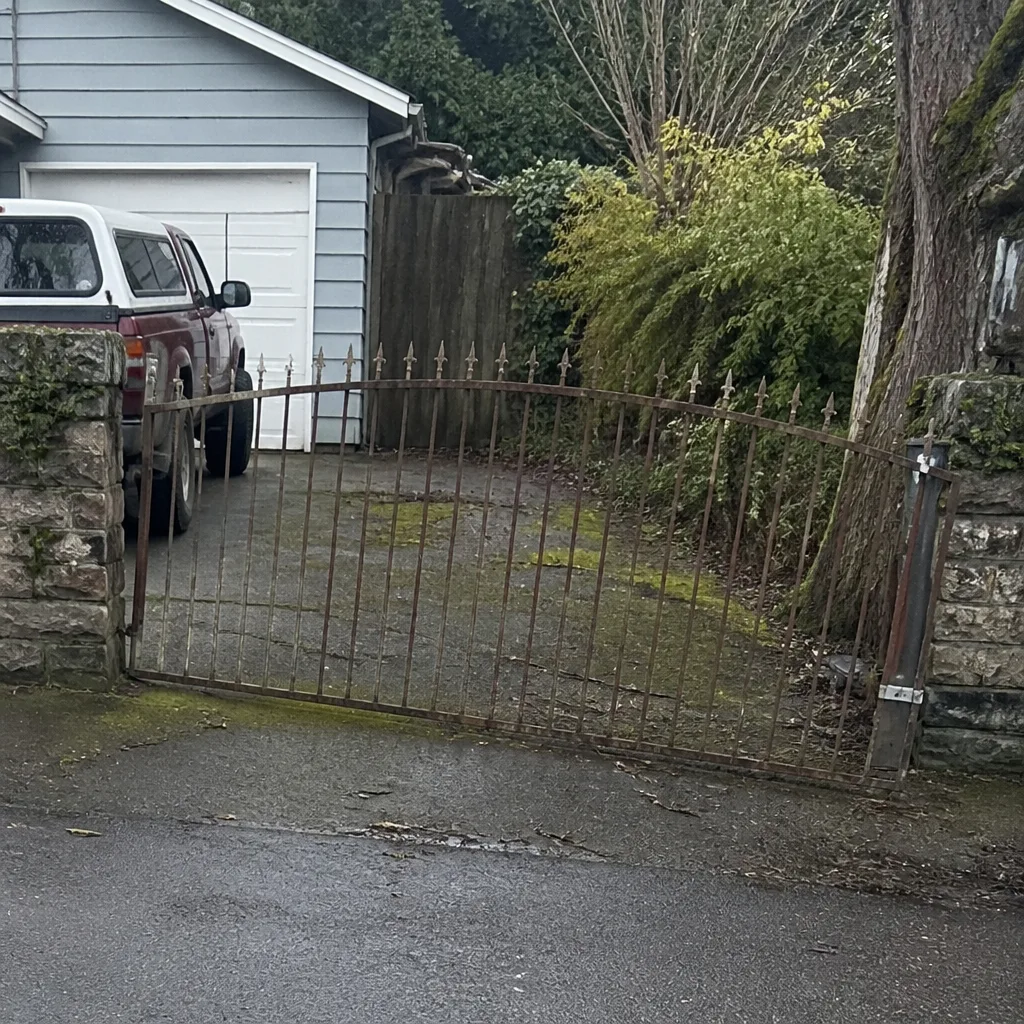
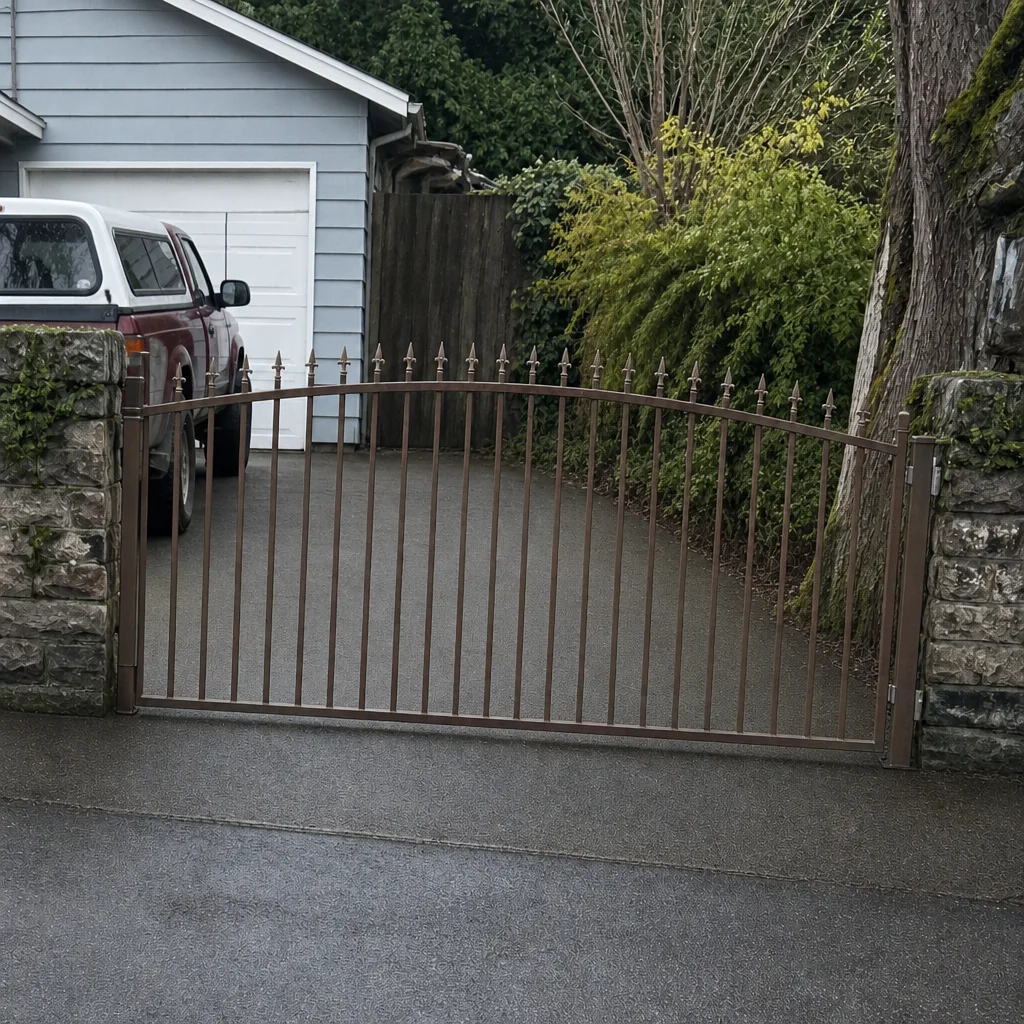
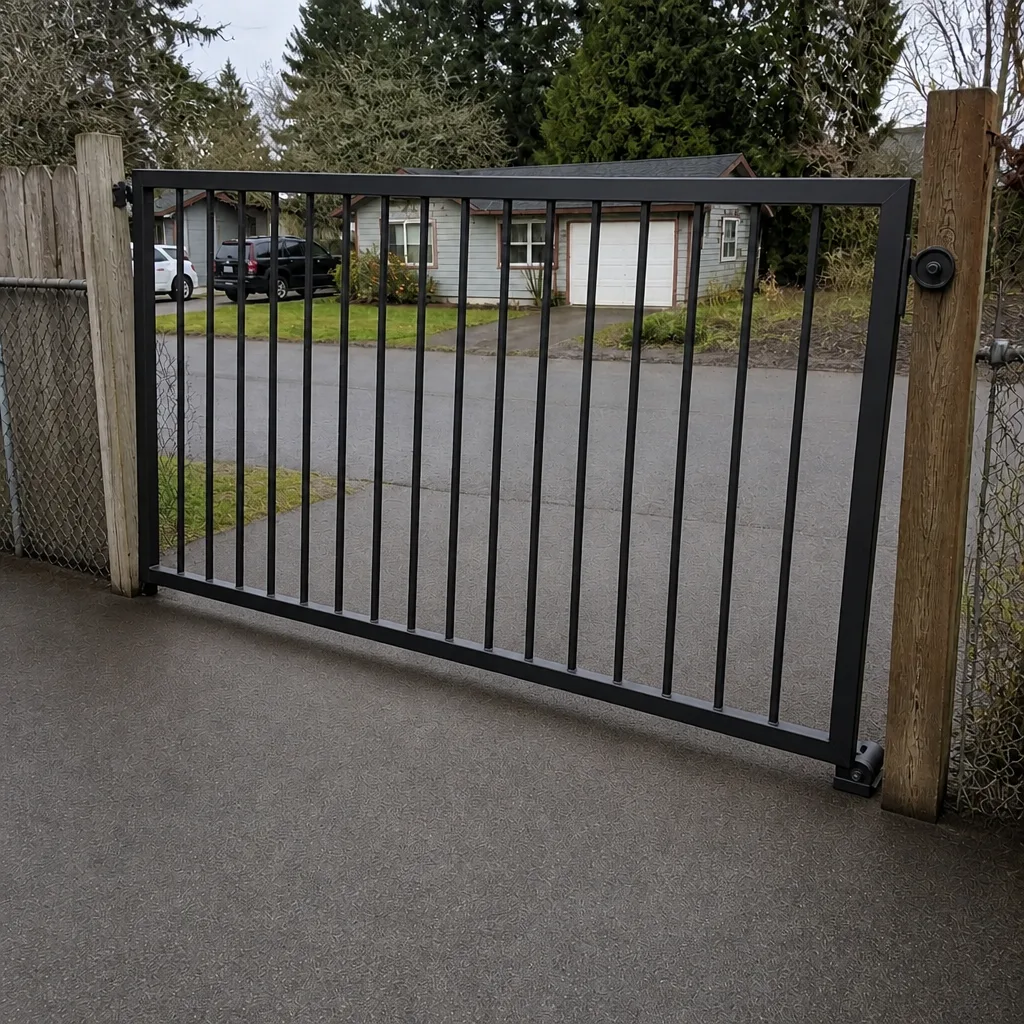
See the difference
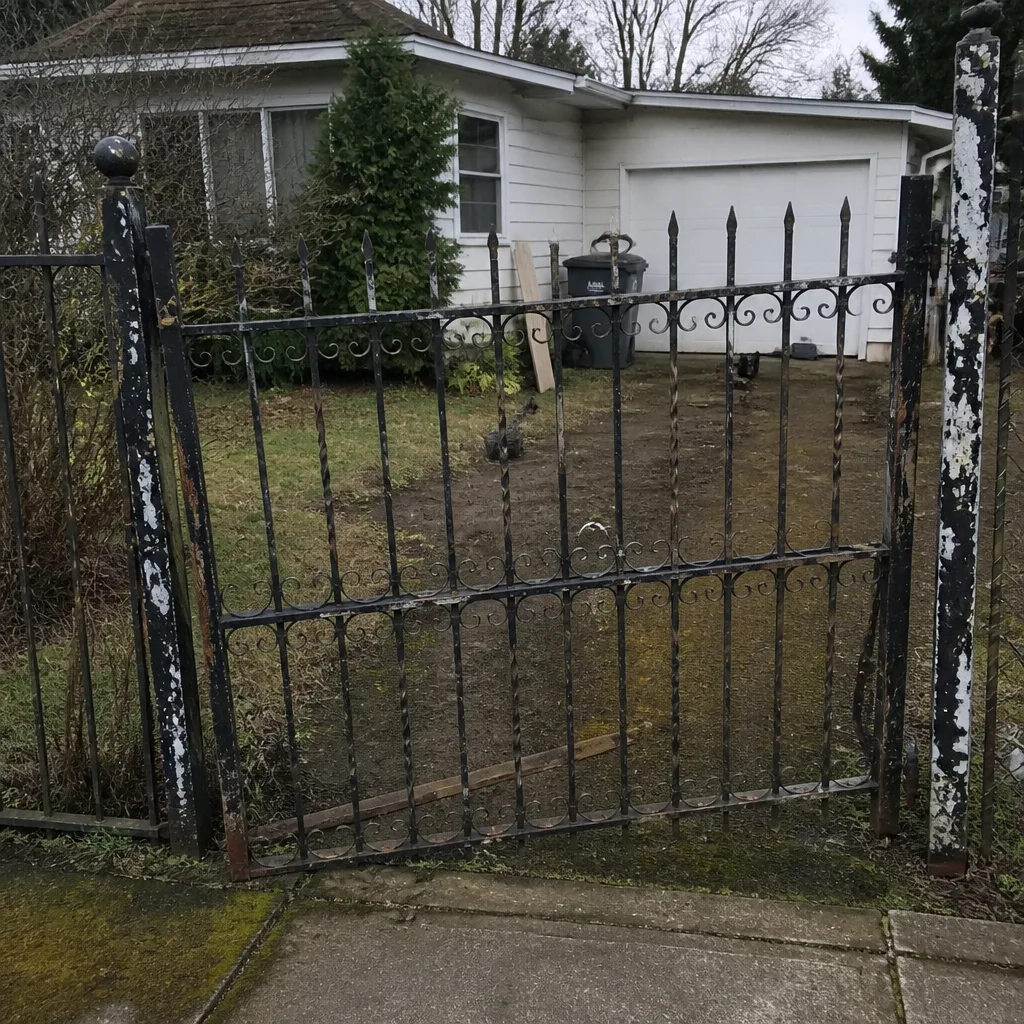 Before
 After
 Before
 After
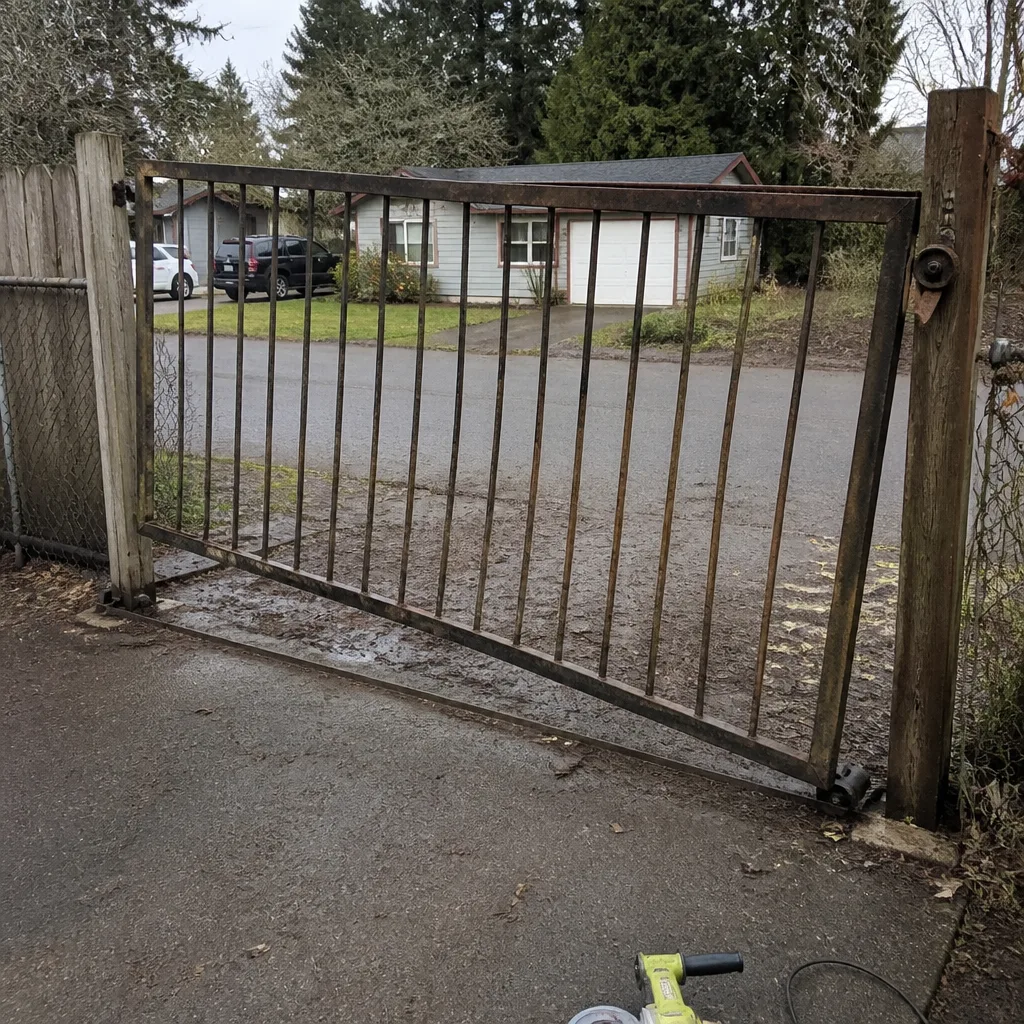 Before
 After
When to Call a Professional
Call a professional for anything that involves opening the operator housing, touching a wire, replacing a control board or receiver, diagnosing a loop detector, adjusting safety-sensor firmware, or replacing an operator. Call when the gate reverses unpredictably, when the breaker trips more than once, when a post has moved, when you can smell something hot near the housing, or when the gate is on a commercial property of any kind. Call when a “simple” repair hasn’t solved the problem in two attempts.
Gate Repair Hillsboro offers free estimates in Hillsboro. Our technicians have up to 8 years of experience across nine major operator brands, from Mighty Mule to commercial-grade FAAC and BFT systems. Call Hillsboro-area gate repair at (855) 251-3899. We answer 24/7. Fast dispatch from 7am to 7pm, Sunday through Friday. The written estimate you get before any work starts is the price you’ll pay, no exceptions and no surprises after the fact.
Frequently Asked Questions
No, not safely or legally. Gate operators connect to 120V household current, and Oregon electrical rules require that work to be done by a licensed electrical contractor under a permit. Beyond the code issue, a replacement operator requires setting obstruction sensitivity, testing the reversal, and adjusting the safety edge, none of which can be validated without diagnostic access. Call (855) 251-3899 for a free estimate on operator replacement.
No. The operator housing contains live line-voltage terminals even when the gate appears off. Opening it exposes you to shock hazard and risks disturbing a functioning board. Leave the housing closed and call for diagnosis. Estimates are free at (855) 251-3899.
A gate that reverses on its own is usually detecting an obstruction the sensor cycle didn’t complete, or it’s reading a current-limit value set too low. On a LiftMaster or FAAC operator this shows up in the diagnostic mode with a specific fault code. Without that code, replacing parts is guessing. Call (855) 251-3899 for a diagnostic visit.
Sometimes yes, but often no, and it’s the wrong starting place. The first step is a fresh battery in the remote. If a fresh battery doesn’t fix it, the remote isn’t the fault, and reprogramming won’t help. That points to the receiver or the operator, both of which need professional diagnosis. Estimates are free at (855) 251-3899.
Mechanical repairs on a manual gate typically don’t need a permit. Electrical work on the operator feed almost always does, and Oregon requires a licensed electrical contractor for that work. Ask the City of Hillsboro building department before any electrical change at the gate. For the mechanical side, call (855) 251-3899 for a free estimate.
Mechanically, roughly half the calls we get turn out to be lubrication, tightening, debris, or remote batteries. Electrically, almost zero are DIY-safe. That’s the honest ratio. If you’re unsure which category your gate falls into, call (855) 251-3899 and describe the symptom, and we can usually tell you within a minute whether it’s an owner-fixable issue or a technician visit.
The Bottom Line
The DIY-versus-professional decision is not about skill. It’s about where the fault lives in the gate system. Owner-serviceable tasks are mechanical, non-energized, and permit-free: lubrication, debris clearing, tightening, remote batteries, and diagnostic documentation. Everything else sits behind a boundary that involves Oregon electrical rules, unpermitted work liability, operator diagnostic passwords, and safety systems that a homeowner can’t validate. The productive path is partial DIY: do the documentation, do the simple mechanical maintenance, and let a specialist handle anything wired. For a gate in Hillsboro, that split keeps you out of the expensive DIY mistakes and inside the safe zone. Call Gate Repair Hillsboro at (855) 251-3899 for a free estimate. We answer 24/7, with fast dispatch from 7am to 7pm, Sunday through Friday.
Written by the team at Gate Repair Hillsboro.